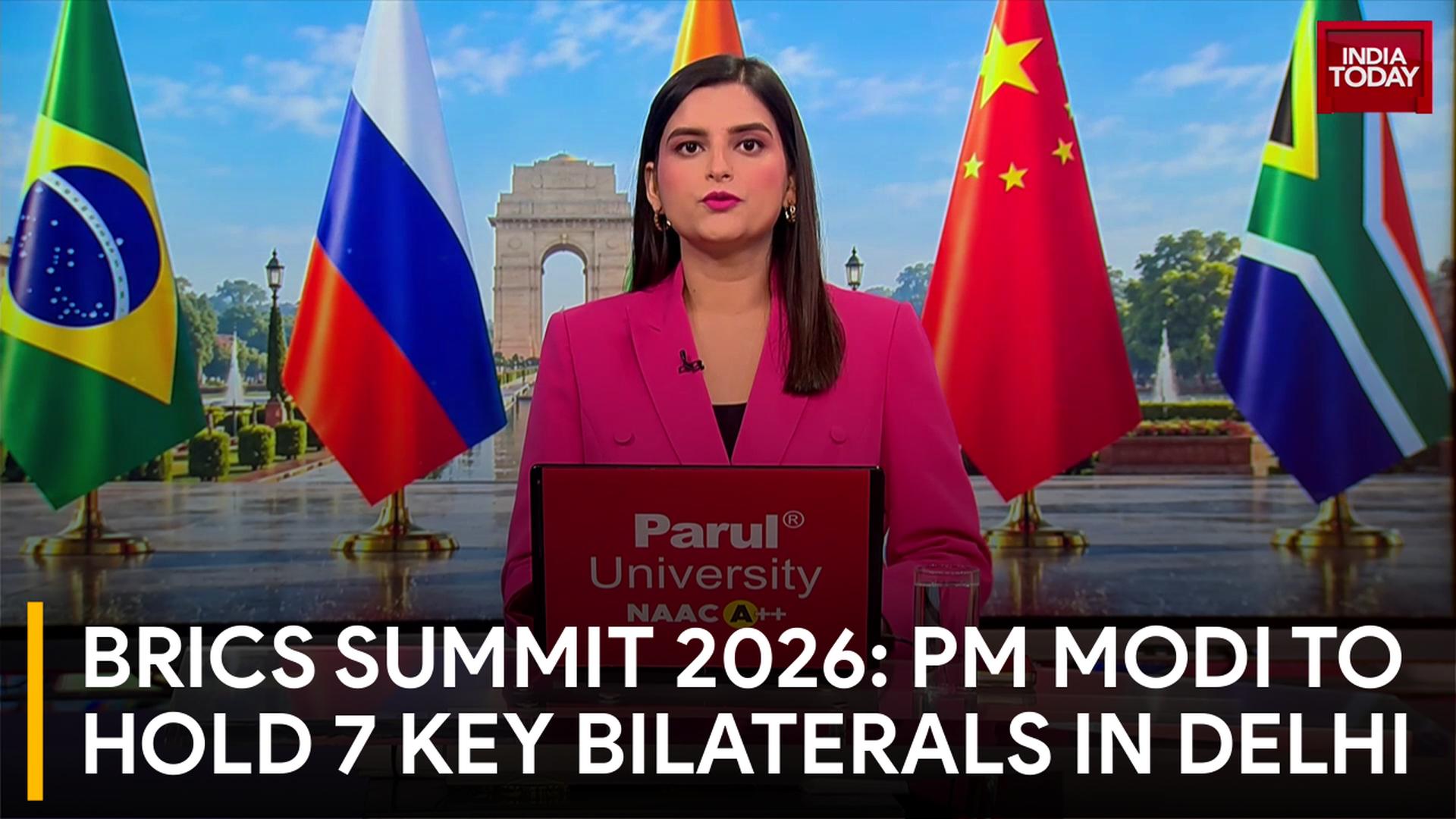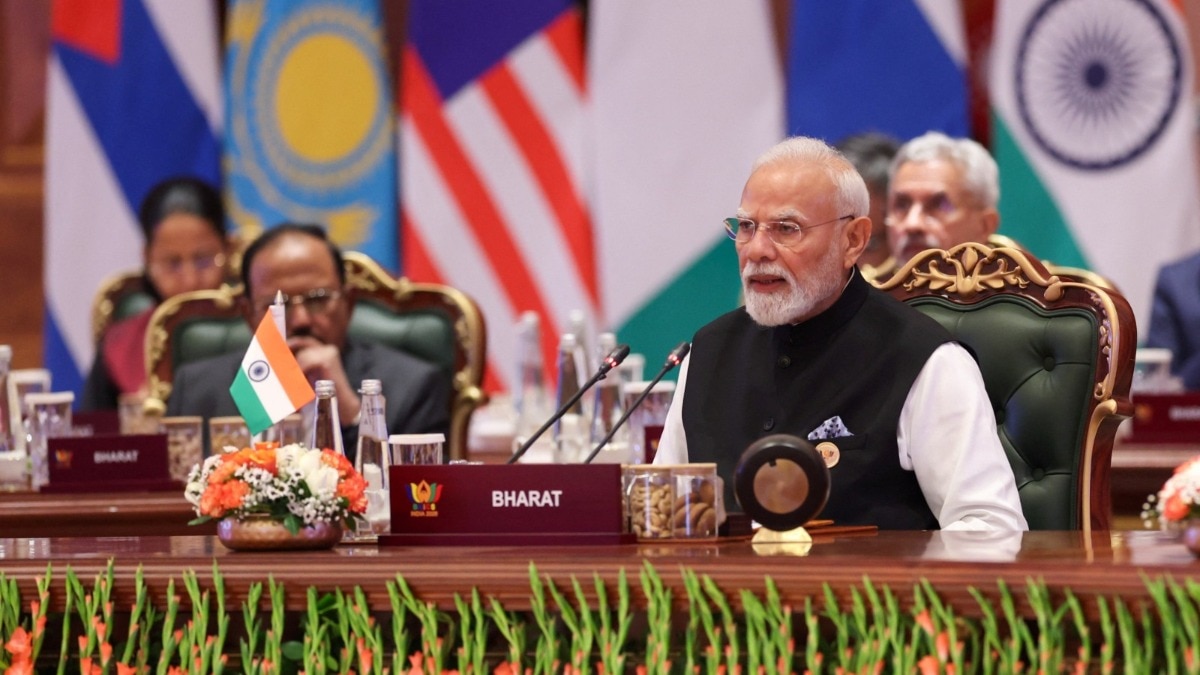
Addressing the 18th BRICS Summit, PM Narendra Modi highlighted the inequality in global governance, comparing it to a pyramid where a few nations decide while the Global South bears the brunt of crises.
- PM Modi compared the current global power structure to a 'pyramid' where decision-making is concentrated at the top.
- He emphasized that the 'Global South' suffers the most from global tensions but has minimal role in decision-making.
- India proposed 10 key reforms for global governance, focusing on representation and responsibility.
- A call for BRICS to develop a roadmap for cooperation in AI, Bio-tech, and trade.
In a powerful address at the 18th BRICS Summit held at Bharat Mandapam, Prime Minister Narendra Modi voiced deep concerns regarding the current state of global governance. The Prime Minister argued that the existing world order functions like a pyramid, where a handful of powerful nations hold the reins of decision-making, while the majority of the world remains marginalized.
PM Modi pointed out that the 'Global South'—comprising developing and emerging economies—finds itself at the bottom of this pyramid. These nations are disproportionately affected by geopolitical tensions, energy crises, and rising inflation, yet they possess little to no influence over the policies that shape their futures. He stressed that this imbalance must be corrected to ensure a more stable and equitable world.
Why This Matters
BozokMedia analysis shows that PM Modi's remarks signal a significant shift in India's foreign policy stance, moving from a participant to a proactive architect of global rules. As the world faces unprecedented volatility, the demand for a more inclusive multilateral system is no longer just a request but a necessity for global survival.
The Global South must transition from being mere 'rule-takers' to becoming 'rule-givers' in the global arena.
The Prime Minister urged BRICS nations to move beyond rhetoric and establish a concrete roadmap before the next summit. He presented 10 strategic proposals aimed at reforming global governance, emphasizing that representation and responsibility must go hand in hand. A key component of this reform includes the urgent need for restructuring the United Nations and ensuring fair voting power for all nations.
On the economic front, PM Modi called for enhanced trade cooperation among BRICS members. He highlighted the importance of technological synergy in fields such as Artificial Intelligence (AI) and Bio-technology. He argued that nations contributing significantly to global trade must also be granted a proportional role in global decision-making processes.
Historical Background
The term 'Global South' has gained immense geopolitical significance in recent years, representing the collective interests of nations in Africa, Latin America, and parts of Asia. Historically, these nations have often been subject to the economic and political dictates of the Global North, a dynamic that BRICS seeks to challenge by fostering South-South cooperation.
Frequently Asked Questions
1. What was PM Modi's main criticism of the current global system?
He criticized the concentration of power in a few nations, which leaves the Global South to suffer the consequences of decisions they did not make.
2. What did PM Modi suggest for the future of BRICS?
He suggested that BRICS should create a clear roadmap focusing on representation, responsibility, and technological cooperation.