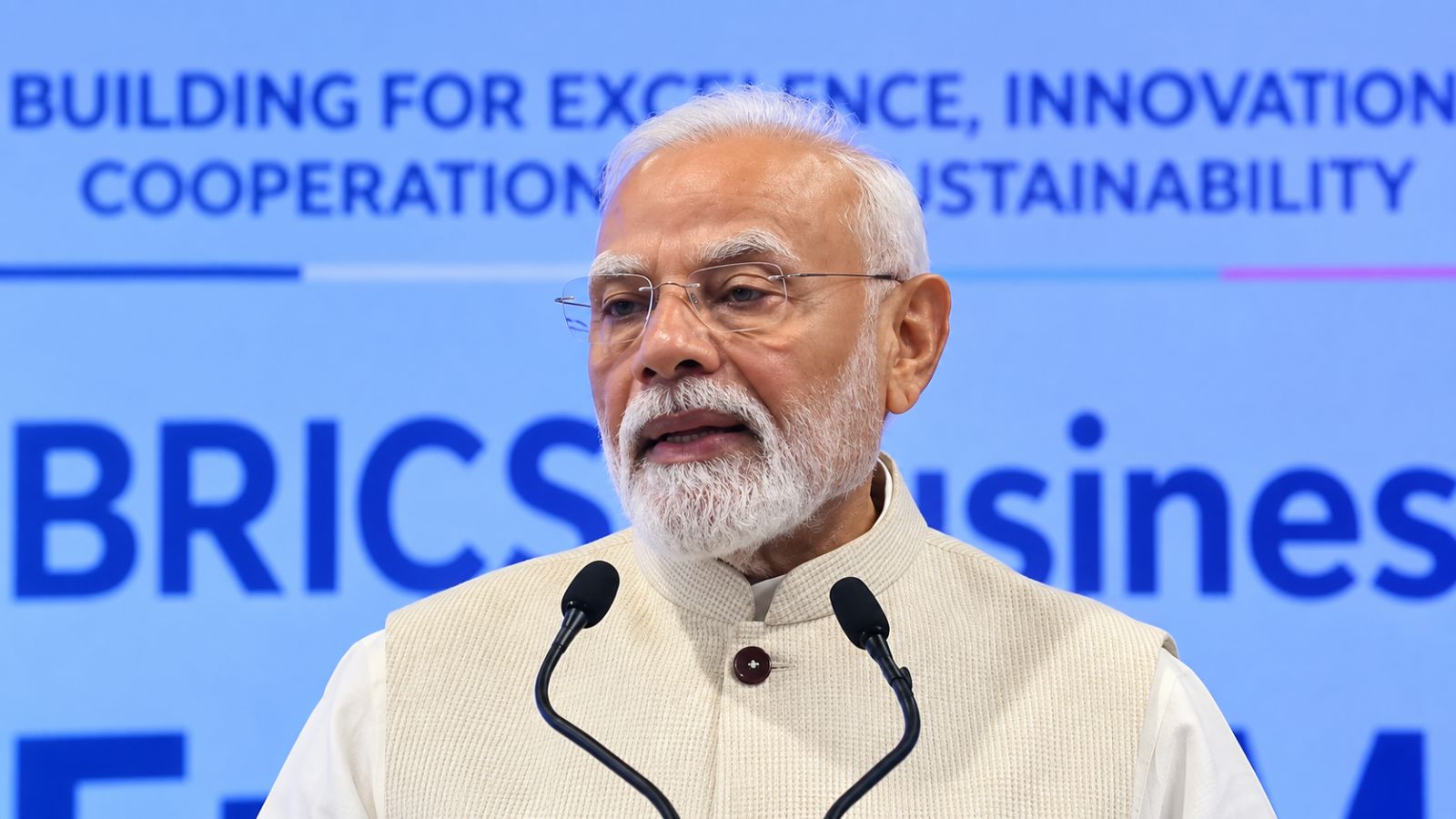
During the BRICS Summit, Prime Minister Narendra Modi proposed a 'Seafarers' Emergency Support Network' to provide medical aid, evacuation, and communication support to crew members working in conflict zones.
- PM Modi proposed a global 'Seafarers' Emergency Support Network' at the BRICS Summit.
- The network aims to provide distress alerts, medical aid, and evacuation support.
- India contributes over 12% of the world's trained maritime workforce.
- Conflict in West Asia and the Black Sea has put Indian sailors at extreme risk.
At the BRICS Leaders’ Summit held on Saturday, Prime Minister Narendra Modi introduced a landmark proposal to establish a 'Seafarers' Emergency Support Network.' Addressing the growing volatility in global maritime corridors, the Prime Minister emphasized that global trade can only flourish when sea lanes are secure and the personnel navigating them are protected from harm.
The proposal comes at a critical juncture where maritime warfare and geopolitical tensions in regions like the West Asia and the Black Sea have turned commercial vessels into unintended targets. Modi highlighted that while seafarers are the unsung heroes of global commerce, they often lack a robust safety net during crises. The proposed network would connect maritime authorities and international missions to facilitate rapid response during emergencies.
Why This Matters
BozokMedia analysis shows that this initiative is a strategic necessity for India. As a major provider of maritime talent, India currently has over three lakh active seafarers. With more than 12% of the world's trained maritime workforce hailing from India, the safety of these individuals is directly linked to India's economic and social stability.
"Global trade can move forward only when sea lanes are secure, supply routes remain open, and seafarers are safe."
The human cost of recent conflicts is stark. Official reports indicate that 15 Indian seafarers have lost their lives due to attacks in West Asia and the Black Sea, with two others still missing. This has forced the Directorate General of Shipping to issue advisories to avoid high-risk zones like the Strait of Hormuz.
Historical Background: The Vulnerability of Sea Lanes
Historically, maritime choke points like the Strait of Hormuz and the Suez Canal have been flashpoints for global conflict. As modern warfare increasingly encroaches upon commercial shipping routes, the distinction between military and civilian vessels has blurred, leaving crew members vulnerable to crossfire and targeted attacks in volatile waters.
| Feature | Current Status | Proposed Network Solution |
|---|---|---|
| Medical Assistance | Delayed or unavailable in conflict zones | Rapid medical aid and tele-health coordination |
| Family Communication | Difficult during distress situations | Immediate communication channels for kin |
| Evacuation | Uncoordinated and high-risk | Structured and rapid evacuation protocols |
Frequently Asked Questions
1. What is the main objective of the Seafarers' Emergency Support Network?
The objective is to provide distress alerts, medical assistance, family communication, and evacuation support to sailors in crisis.
2. Why is India focusing so heavily on this issue?
Because India provides over 12% of the world's trained seafarers, and many Indian nationals are currently at risk in conflict-prone maritime zones.