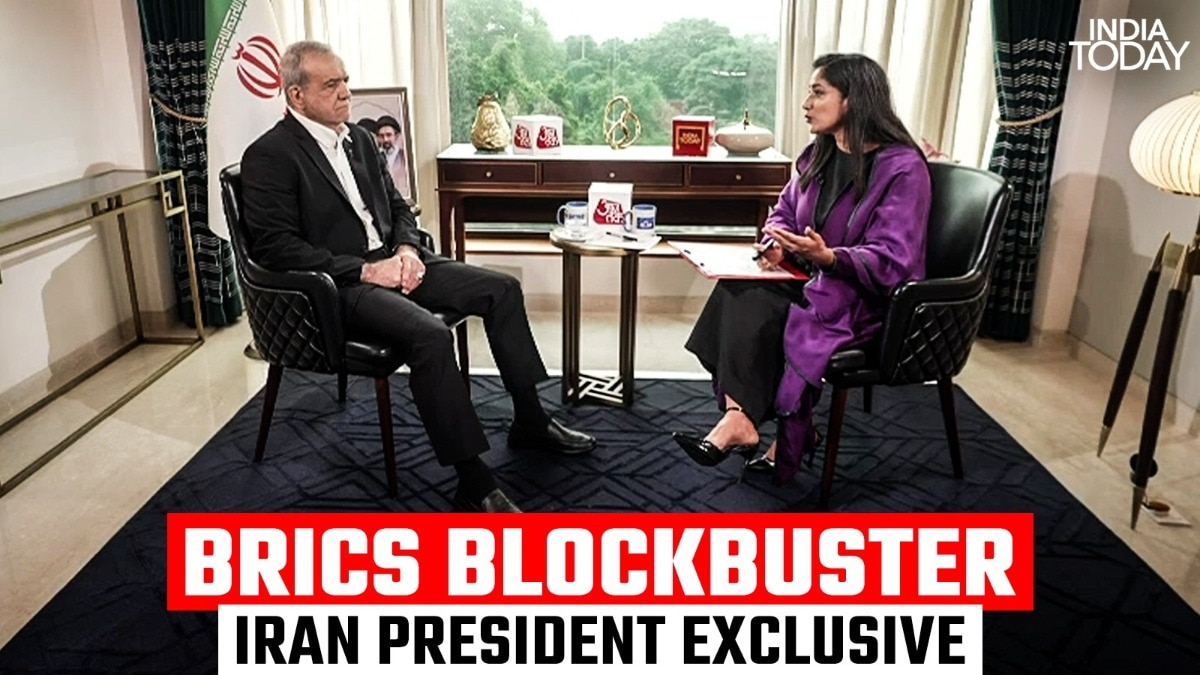
In an exclusive interview, Iranian President Masoud Pezeshkian addressed the security of the Strait of Hormuz, India's investment in Chabahar, and the status of nuclear negotiations with the US.
- The Strait of Hormuz can remain open under international principles if the US ends its regional blockade.
- Iran is negotiating a specific maritime framework with Oman to ensure waterway safety.
- President Pezeshkian invited India to expand its strategic investment in the Chabahar Port.
- Tehran remains committed to the NPT and is open to nuclear talks, provided trust is restored.
In a high-stakes exclusive interview, Iranian President Masoud Pezeshkian has provided critical clarity on the escalating tensions in the Middle East. Speaking on the sidelines of the BRICS summit, he addressed the volatility of the Strait of Hormuz, emphasizing that the waterway's openness is contingent upon the United States terminating its blockade and provocative regional activities.
Pezeshkian revealed that Tehran is currently in active negotiations with Oman to establish a robust maritime framework. This move is seen as a direct response to international concerns regarding the safety of seafarers—particularly Indian vessels—and the potential disruption of global energy supplies. He noted that a high-level meeting involving Arab foreign ministers is expected to further define this maritime security agreement before it is presented to the International Maritime Organization (IMO).
Why This Matters
BozokMedia analysis shows that any instability in the Strait of Hormuz has immediate ripple effects on global oil markets. For India, which relies heavily on Middle Eastern energy, the security of this passage is not just a diplomatic concern but a core national security priority.
The stability of the Strait of Hormuz is the linchpin of global maritime energy security and regional peace.
Regarding bilateral relations, Pezeshkian expressed warmth toward India and Prime Minister Narendra Modi. He specifically highlighted the Chabahar Port as a cornerstone for future economic cooperation. The President urged India to deepen its footprint in the port, describing Iran as a vital geographical crossroads that can reconnect ancient trade routes like the Silk Road to modern global markets.
The President also addressed the sensitive issue of Iran's nuclear program. Rejecting claims that Tehran is pursuing nuclear weaponry, he reaffirmed Iran's status as a member of the Nuclear Non-Proliferation Treaty (NPT). While expressing readiness for negotiations, he underscored that the breakdown of trust with Washington remains a massive hurdle to immediate direct talks.
Furthermore, Pezeshkian dismissed rumors regarding the health and whereabouts of the Supreme Leader, asserting that such speculations are fueled by the inability of Western intelligence to locate him. He reiterated that the Supreme Leader remains the ultimate authority in the Iranian political structure.
Frequently Asked Questions
1. What is Iran's condition for keeping the Strait of Hormuz open?
Iran demands that the US cease its blockade and aggressive activities in the region.
2. How does India benefit from the Chabahar Port?
Chabahar provides India with a strategic gateway to Afghanistan and Central Asia, bypassing traditional routes.

