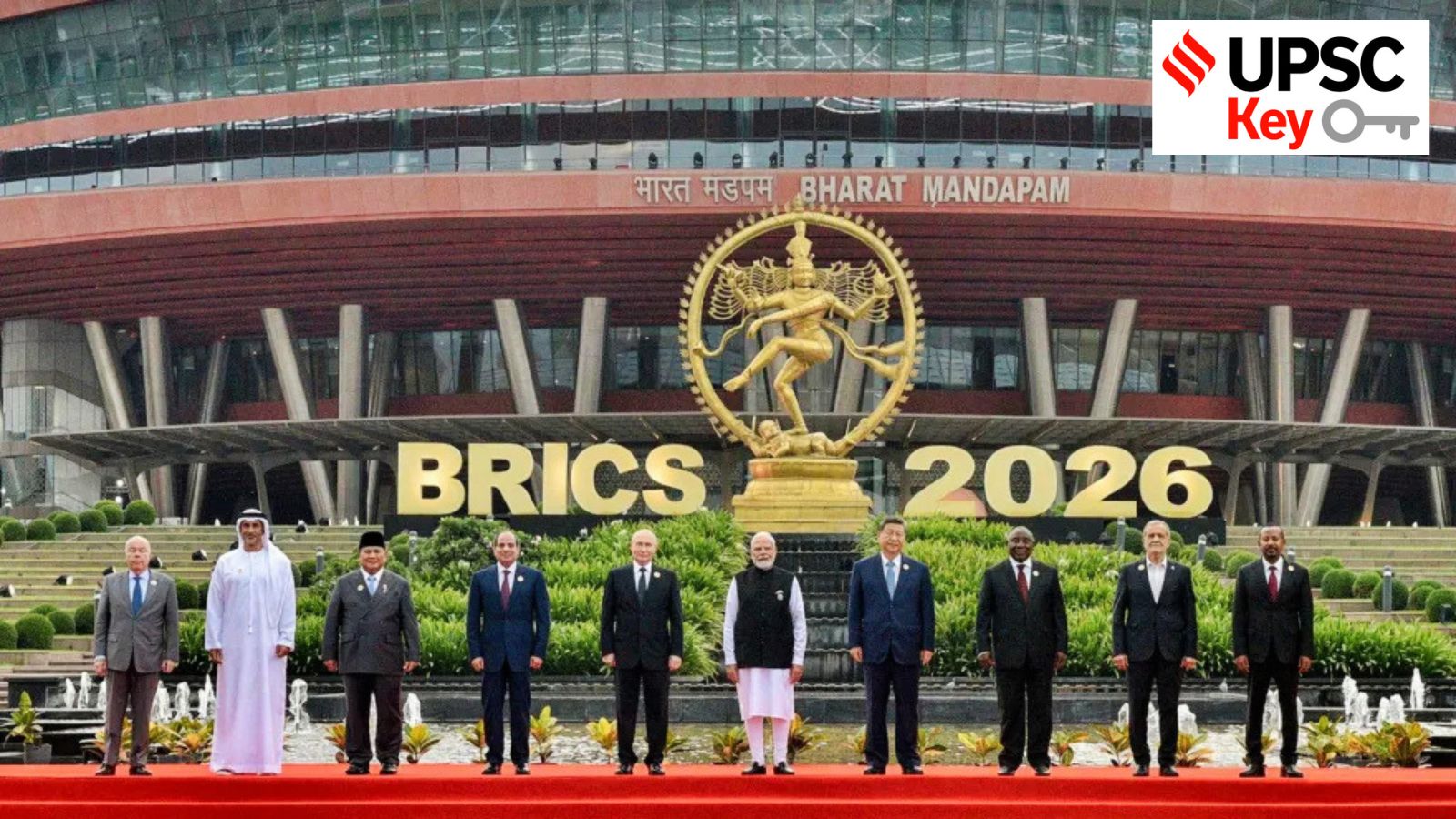
The escalating confrontation between Iran and the UAE has become a critical stress test for the expanded BRICS, exposing the fragility of a consensus-driven model amidst deep strategic divides.
- The Iran-UAE conflict represents the most significant geopolitical challenge for BRICS since its expansion.
- Military escalations in 2026 have transformed diplomatic differences into an institutional crisis.
- India faces a daunting task as chair to prevent the bloc from being paralyzed by member rivalries.
The confrontation between Iran and the UAE has emerged as the most consequential geopolitical stress test for BRICS since its expansion. What was initially presented as an effort to amplify the voice of the Global South has, by 2026, collided with the harsh reality of managing profound strategic divergences among a larger, more heterogeneous membership. The crisis exposes the limits of a consensus-driven model when two full members are on opposing sides of an active conflict.
The rivalry is deeply rooted but reached a breaking point following the US-Israeli military campaign against Iran in early 2026. Iran's subsequent drone and missile strikes on targets in the Gulf, including those within the UAE, brought the conflict directly into the BRICS institutional space. By August, Abu Dhabi had suspended trade and financial ties with Tehran and closed its embassy, while the disruption of the Strait of Hormuz turned a bilateral spat into a global energy security crisis.
Why This Matters
BozokMedia analysis shows that the enlarged BRICS is suffering from a paradox: as it increases its representational breadth, it diminishes its capacity for collective political action. The inability to produce a joint communiqué at the Foreign Ministers' meeting in New Delhi proves that when national security is at stake, the 'lowest common denominator' language of diplomacy fails to provide real solutions.
"The expanded BRICS is increasingly an aggregation of overlapping strategic priorities rather than a cohesive geopolitical coalition."
The BRICS Leaders' Summit in New Delhi on September 12-13 has therefore become a litmus test for the Indian presidency. The goal is to draft a 'Delhi Declaration' on West Asia that satisfies both Tehran's demand for the condemnation of US-Israeli actions and Abu Dhabi's insistence on maritime security and the protection of commercial shipping. With neither side incentivized to dilute its position, the diplomatic tightrope for India is thinner than ever.
This structural problem is not isolated. Previous tensions between India and China, and the Nile dispute between Egypt and Ethiopia, have already shown that BRICS cannot simply ignore the external rivalries of its members. However, the 2026 crisis is distinct due to the intensity of the conflict and its direct impact on global trade and energy flows.
Frequently Asked Questions
Q1: Why is the Iran-UAE conflict a problem for BRICS specifically?
A: Because BRICS operates on a consensus model; if two members are in conflict, the entire organization struggles to issue unified statements or take collective action.
Q2: What is India's objective at the New Delhi Summit?
A: India aims to prevent the organization from becoming paralyzed and to facilitate a diplomatic middle ground through the Delhi Declaration.