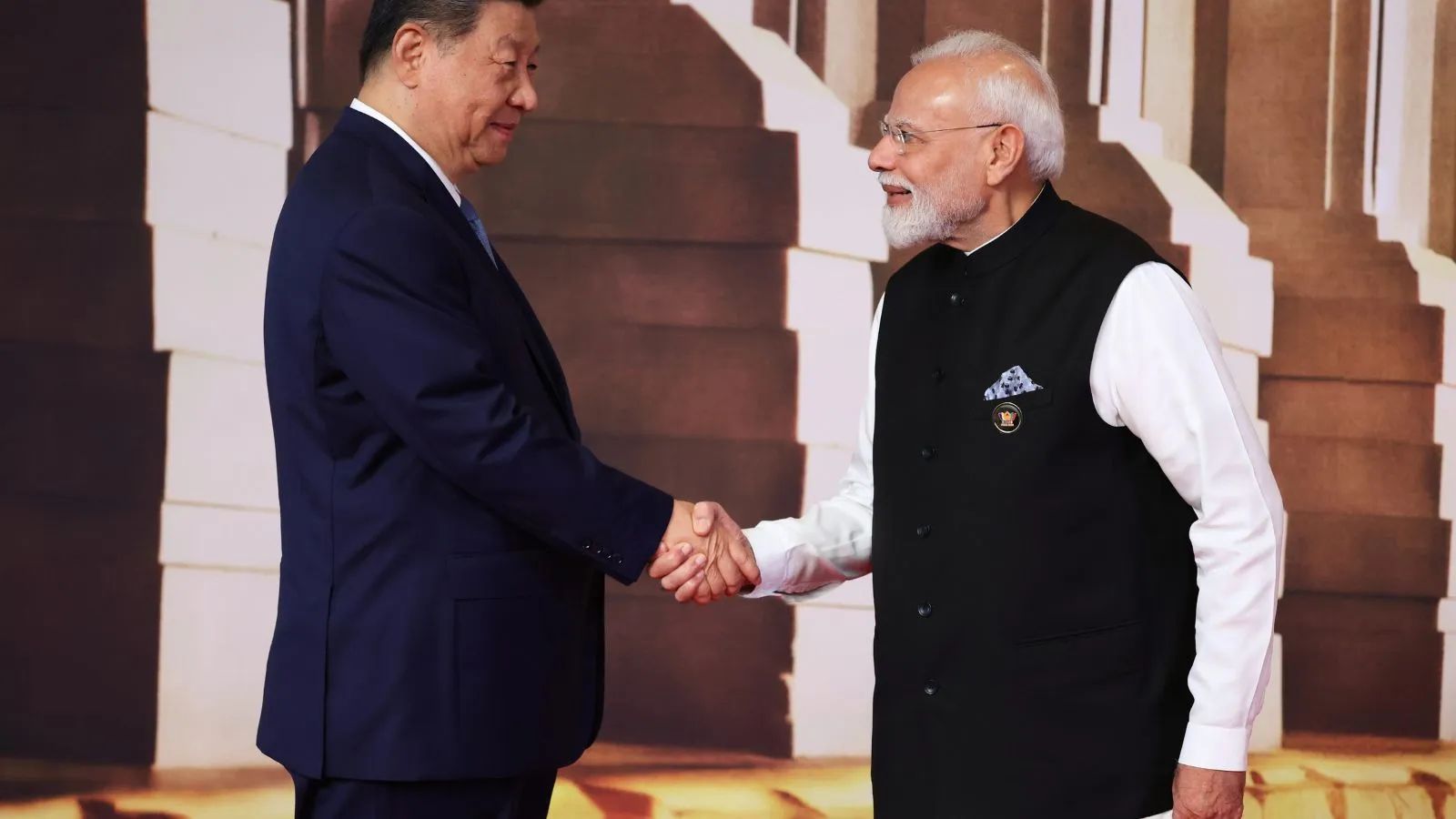
The recent meeting between PM Modi and President Xi Jinping at the New Delhi BRICS Summit signals a subtle realignment in Asia's power structure, balancing rivalry with strategic cooperation.
- India and China are developing a political lexicon that accommodates both competition and cooperation.
- The meeting emphasizes that 'differences should not become disputes' regarding border issues.
- The rise of Asian powers is reshaping the global distribution of power beyond mere bilateralism.
The sidelines meeting between Prime Minister Narendra Modi and President Xi Jinping at the New Delhi BRICS Summit is not a declaration of a dramatic reconciliation, but it is deeply significant. It suggests that the two Asian giants are learning to navigate a complex relationship where rivalry and cooperation can coexist within a broader global realignment.
During the encounter, both leaders expressed a desire for a "fair, reasonable, and mutually acceptable" way forward on boundary issues. While Modi emphasized mutual respect and sensitivity, Xi noted that India and China could act as "partners rather than rivals." This indicates a shift toward managing differences rather than attempting to eliminate them entirely.
Why This Matters
BozokMedia analysis shows that the India-China relationship is inherently positional. Their rivalry is not an identity but a result of the positions they hold in the global system. As China rises, it forces India into closer strategic alignment with the US, Japan, and Australia, yet the shifting sands of global power—including the wars in Eurasia and the rise of the Global South—require both nations to exercise strategic autonomy.
States do not usually make headway in international politics by permanently resolving their differences; they get used to positioning themselves around them.
India's stance on an independent foreign policy is a cornerstone of this new dynamic. By asserting that India is "not affected by any third party" in its dealings with China, New Delhi is reinforcing its commitment to strategic autonomy, ensuring that its ties with Washington do not preclude engagement with Beijing.
The relationship remains fraught with asymmetries in economic power, unresolved territorial disputes, and structural trade imbalances. However, the resumption of institutional contact and the reaching of new peaks in bilateral trade suggest an effort to bring workable order to their competition.
Historical Background
The history of India-China relations has been marked by periods of post-colonial partnership, strategic rivalry, and intense border conflicts, most notably in 1962 and the 2020 Galwan Valley standoff. The current era is defined by a unique paradox: intense military suspicion coupled with deep economic interdependence.
Frequently Asked Questions
1. Does the BRICS summit imply a formal alliance between India and China?
No, BRICS is a multilateral grouping of emerging economies, not a formal military or political alliance between India and China.
2. What is 'Strategic Autonomy' in the context of India's foreign policy?
It refers to India's ability to make independent decisions in its national interest without being constrained by pressure from other major powers.

