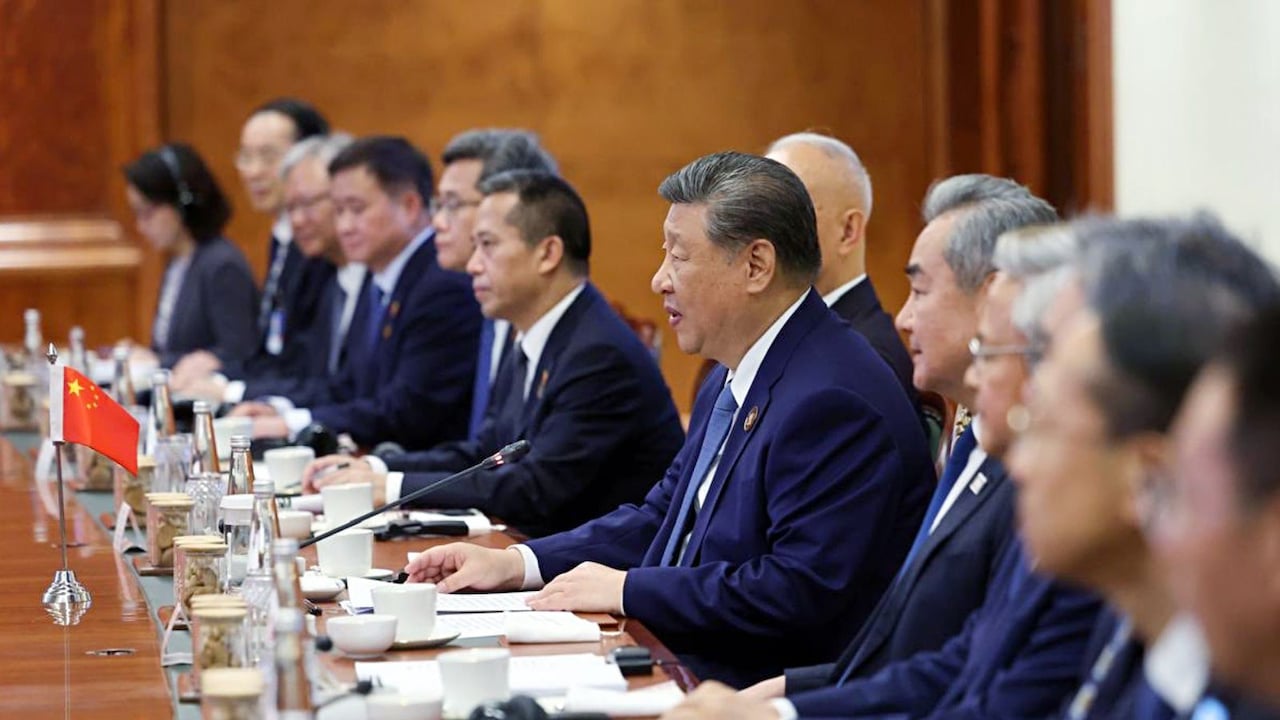
Indian Prime Minister Narendra Modi engaged in high-level bilateral discussions with the leaders of Egypt, South Africa, and the Philippines on the sidelines of the BRICS Summit. The talks focused on strengthening strategic partnerships, expanding trade, and addressing critical regional security issues, including West Asia tensions.
- PM Modi held crucial bilateral meetings with Egyptian President Abdel Fattah el-Sisi and South African President Cyril Ramaphosa to deepen strategic ties.
- Egypt's president urged Iran to de-escalate regional conflicts and halt attacks on Arab nations, highlighting security concerns in West Asia.
- The discussions aimed to solidify India's strategic footprint across Africa, the Middle East, and the Indo-Pacific regions.
Indian Prime Minister Narendra Modi demonstrated India's robust diplomatic clout on the global stage during the 16th BRICS Summit in Kazan, Russia. On the sidelines of the summit, PM Modi held a series of high-profile bilateral meetings with Egyptian President Abdel Fattah el-Sisi, South African President Cyril Ramaphosa, and key representatives from the Philippines. These discussions centered on enhancing trade, defense cooperation, technological exchange, and addressing pressing global security challenges.
The bilateral meeting between India and Egypt was highly significant, reflecting the rapid transformation of their bilateral relationship into a strategic partnership. PM Modi and President El-Sisi reviewed the progress made since El-Sisi's state visit to India. During the talks, Egypt's president strongly advocated for the expansion of concessional financing within the BRICS framework, emphasizing the need to support developing economies facing severe global financial headwinds.
Addressing the volatile situation in West Asia, President El-Sisi urged Iran to take immediate steps toward regional de-escalation and to halt any actions threatening the sovereignty of Arab states. PM Modi reiterated India's consistent stance on peace and stability in the region, advocating for dialogue and diplomacy as the only viable pathways to resolve conflicts. The shared perspective between Cairo and New Delhi highlights their growing alignment on Middle Eastern geopolitical stability.
In his meeting with South African President Cyril Ramaphosa, PM Modi focused on reinforcing the historic ties between the two nations. The leaders discussed expanding bilateral trade, defense cooperation, and joint initiatives within multilateral forums. Both nations reaffirmed their commitment to championing the interests of the Global South, ensuring that the voices of developing nations are not sidelined in global governance reforms.
The diplomatic engagements also extended to the Philippines, aligning with India's robust 'Act East' policy. The discussions focused on bolstering maritime security, defense procurement, and disaster management cooperation in the Indo-Pacific. Strengthening ties with Manila is widely viewed by analysts as a strategic move by New Delhi to foster a stable, rules-based order in the Indo-Pacific region.
Why This Matters
BozokMedia analysis shows that PM Modi's strategic bilateral engagements on the sidelines of the BRICS Summit are a masterclass in multi-alignment. By deepening ties with key regional anchors like Egypt, South Africa, and the Philippines, India is effectively positioning itself as the bridge between the Western world and the Global South, balancing complex geopolitical rivalries while securing its own national interests.
"India's proactive bilateral engagement at BRICS underscores its emergence as a crucial diplomatic bridge-builder between the developed world and the Global South."
| Partner Country | Primary Focus Area | Strategic Importance |
|---|---|---|
| Egypt | Trade, Defense, and Middle East Stability | Access to the Suez Canal and influence in the Arab world |
| South Africa | Bilateral Trade and Global South Advocacy | Strengthening multilateral cooperation within BRICS and G20 |
| Philippines | Maritime Security and Defense Cooperation | Balancing geopolitical dynamics in the Indo-Pacific region |
Frequently Asked Questions
Q1: What economic reforms did Egypt advocate for during the BRICS Summit meetings?
A1: Egyptian President Abdel Fattah el-Sisi called for the expansion of concessional financing mechanisms within BRICS to assist developing nations in overcoming economic crises.
Q2: How do India's talks with the Philippines align with its broader foreign policy?
A2: The discussions with the Philippines directly support India's 'Act East' policy, focusing on maritime security and defense cooperation to maintain stability in the Indo-Pacific.