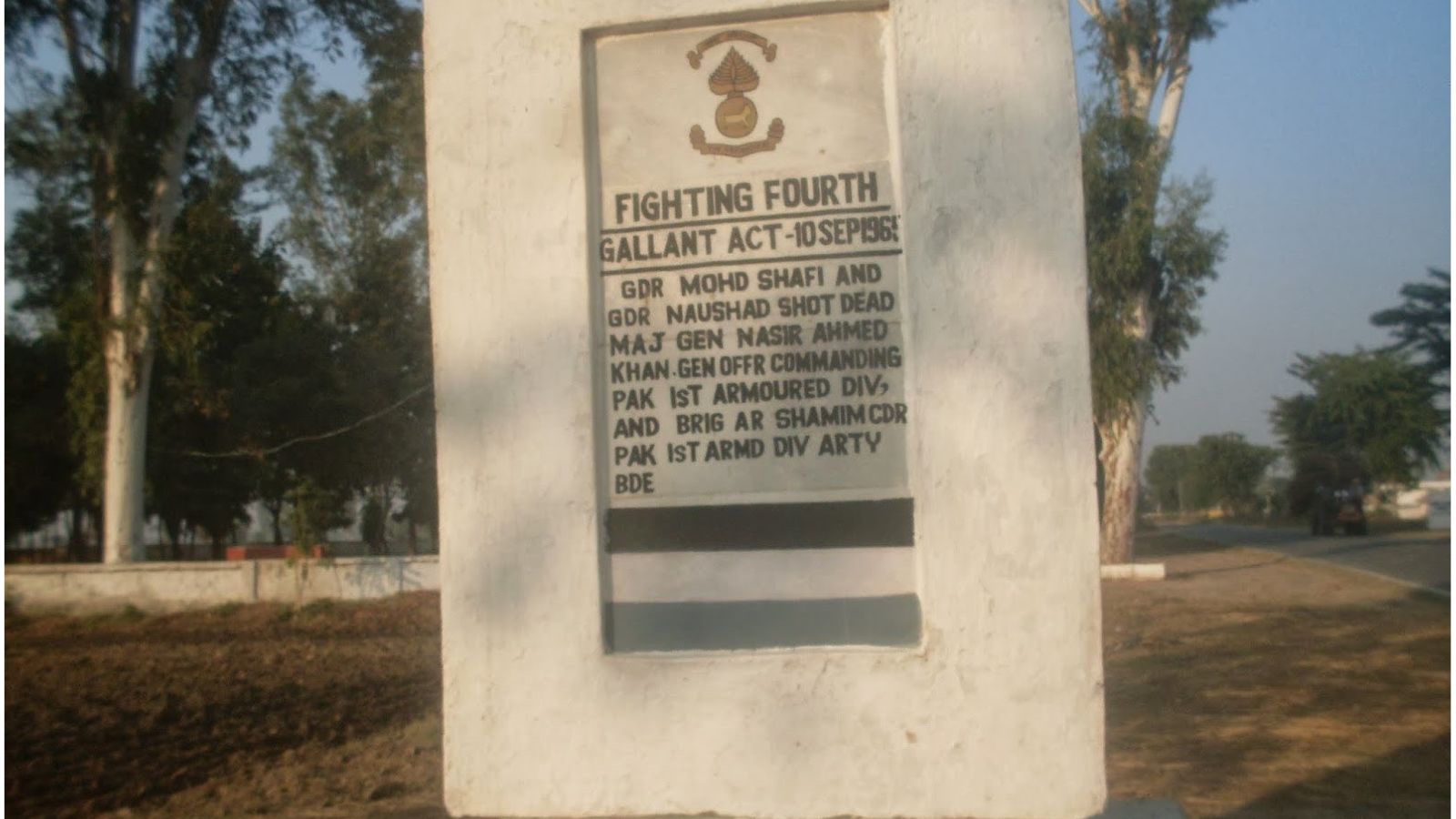
An analytical deep dive into the enduring myth regarding the death of Maj Gen Naseer Ahmad Khan during the Battle of Asal Uttar. Separating tactical reality from wartime misinformation.
- Disputed claims regarding the death of Pakistan's 1 Armoured Division GOC, Maj Gen Naseer Ahmad Khan.
- Confirmed death of Brig A R Shami during an ambush on the Amritsar-Khemkaran road.
- Discrepancies between intercepted radio messages and actual command movements.
On the Amritsar-Khemkaran road in Punjab’s Tarn Taran district, a memorial stands to honor the 4 Grenadiers and the legendary Havildar Abdul Hamid, who played a pivotal role in the 1965 Battle of Asal Uttar. While the bravery of these soldiers is undisputed, a persistent historical debate surrounds the fate of Pakistan’s 1 Armoured Division commander, Maj Gen Naseer Ahmad Khan.
For decades, a narrative has circulated suggesting that the General Officer Commanding (GOC) was killed in action during the intense fighting in September 1965. However, a closer look at military records and officer memoirs suggests this might be one of the great 'myths' of the conflict.
Why This Matters
BozokMedia analysis shows that wartime propaganda and the fog of war often create lasting misconceptions. In the heat of battle, a single misinterpreted radio signal can rewrite the perceived history of an entire military division.
According to Brigadier Z A Khan, a cavalry officer, the chaos began on September 10, 1965. While advancing to reconnoitre, the divisional artillery commander, Brigadier A R Shami, was killed in a devastating ambush. While the loss of a Brigadier was a significant blow, there is scant evidence that the GOC, Maj Gen Naseer Ahmad Khan, was part of that fatal encounter.
The confusion between the death of a Brigadier and a General Officer can alter the entire historical perception of a battle.
The misconception was fueled by an intercepted radio message: "Bara Imam Mara Gaya" (The senior officer has been killed). Following the deaths of high-ranking officers like Brig Shami and Lt Col Sahibzada Gul, it was logically assumed by many—including Indian intelligence at the time—that the message referred to the GOC himself.
However, contradictory evidence exists. Pakistani accounts indicate that the GOC was still issuing orders on September 11, the day after the alleged incident. Furthermore, the fact that he was relieved of his command on September 11 suggests he was alive to face administrative action, rather than having fallen on the battlefield.
Frequently Asked Questions
1. Who was the most decorated hero of the Battle of Asal Uttar?
Company Quarter Master Havildar Abdul Hamid of the 4 Grenadiers was awarded the Param Vir Chakra for his extraordinary gallantry.
2. What caused the confusion regarding the Pakistani commander's death?
The confusion stemmed from intercepted radio messages regarding the death of senior officers like Brig Shami, which were incorrectly attributed to the GOC.