US President Donald Trump has expressed his desire to see a 'unified' Ireland, sparking political debate. Learn about the historical struggle, the partition, and the current geopolitical tension.
- Donald Trump expressed support for the reunification of Ireland.
- The partition was driven by religious and political divisions between Catholics and Protestants.
- UK Prime Minister Andy Burnham has previously dismissed the idea of a unification referendum.
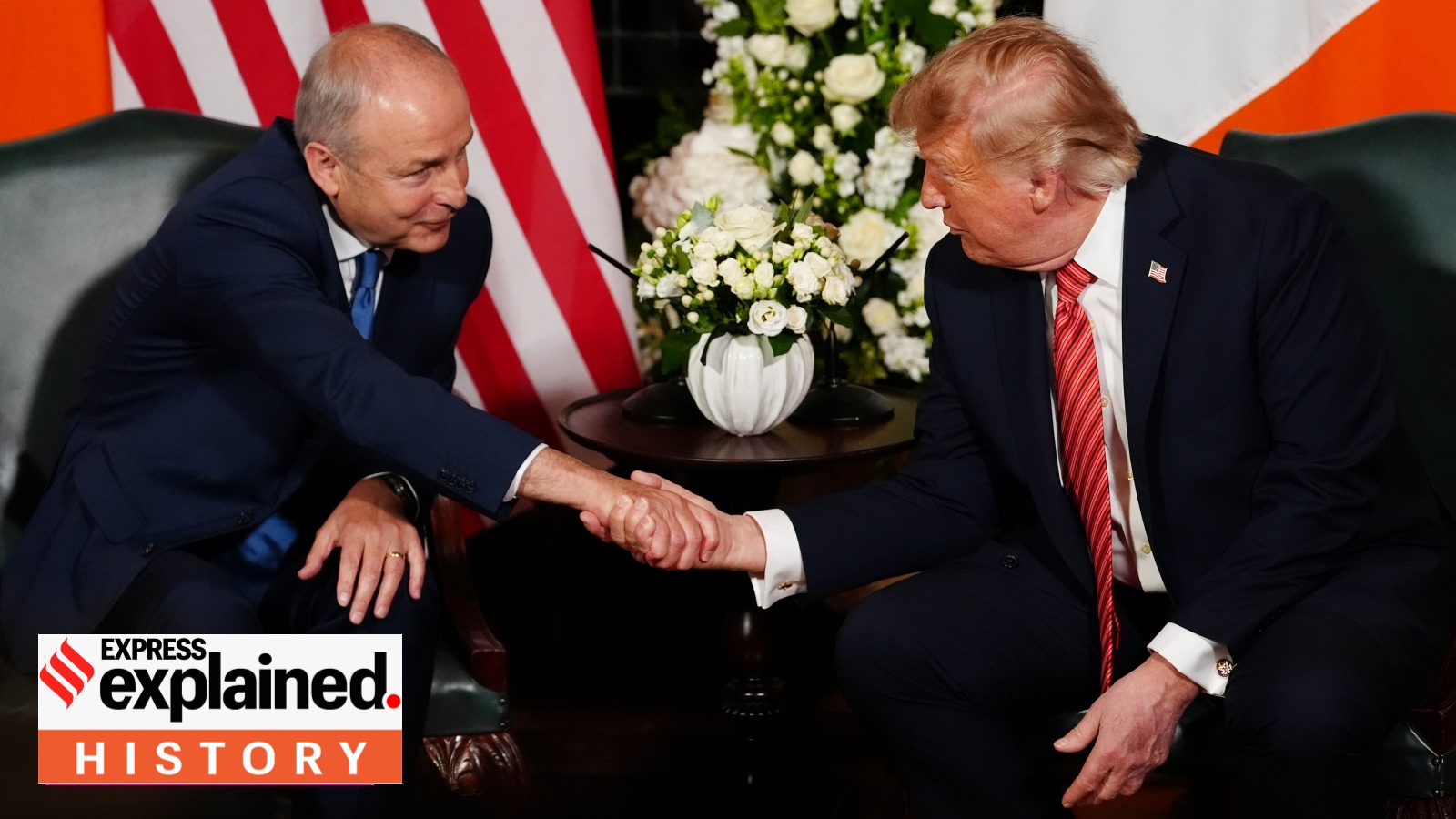
In a significant diplomatic statement, US President Donald Trump expressed his support for the reunification of Ireland during his visit to Dublin on September 12, 2026. Speaking to reporters, Trump stated, "I don’t want to cause any problems, but I will tell you, I’d love to see it unified... It may as well happen now."
Trump's comments specifically target the division between the Republic of Ireland and Northern Ireland, the latter being a constituent part of the United Kingdom. This stance comes at a sensitive time, following UK Prime Minister Andy Burnham's recent assertion that a referendum on Irish unification is currently "off the table."
The Historical Roots of Partition
The division of Ireland is rooted in centuries of British rule and deep-seated religious differences. The conflict primarily pitted the Catholic majority, who sought independence, against the Protestant minority, who identified as Unionists and wished to remain part of the UK.
The Irish Nationalist movement, driven by the desire for 'Home Rule,' eventually gained momentum in the early 20th century. Following the Anglo-Irish War (1919-21), the British government passed the Government of Ireland Act 1920, which formally partitioned the island into Northern Ireland and Southern Ireland.
Why This Matters
BozokMedia analysis shows that Trump's intervention adds a layer of American influence to a long-standing European territorial issue. While the UK maintains that unification is not on the immediate agenda, Trump's rhetoric could embolden reunification movements within Northern Ireland.
The legislation that partitioned Ireland was the same legislation later used to partition India and Pakistan.
The partition remains one of the most complex geopolitical legacies of the British Empire, influencing modern-day relations within the UK and the European Union. The tension between the nationalist desire for a single state and the unionist desire for British sovereignty continues to shape the region's politics.
Frequently Asked Questions
1. What is the main cause of the Irish partition?
The partition was primarily caused by religious differences (Catholic vs. Protestant) and conflicting political loyalties to Ireland versus the UK.
2. Has the UK agreed to a unification referendum?
No, the UK government has recently stated that a referendum on unification is not currently being considered.