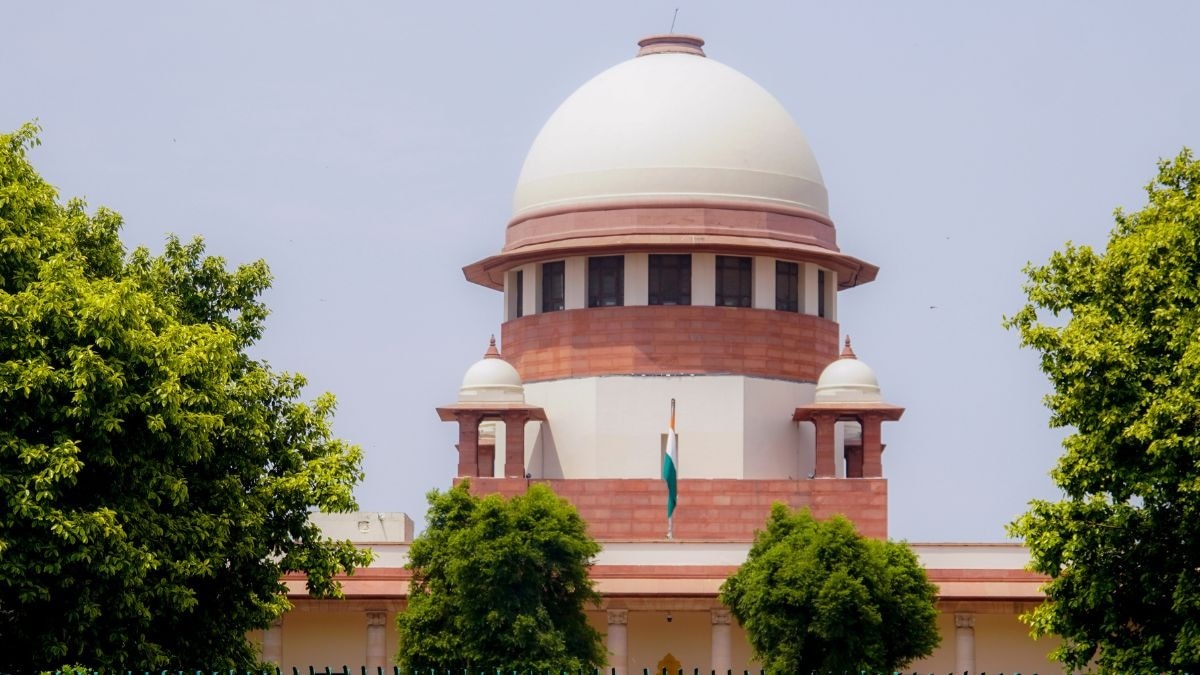
The Supreme Court of India has intervened to halt proceedings in the Allahabad High Court regarding allegations of disproportionate assets against Congress leader Rahul Gandhi, restraining the CBI and ED from filing further reports.
- Supreme Court stayed Allahabad High Court proceedings regarding Rahul Gandhi's alleged disproportionate assets.
- CBI and ED restrained from filing reports based on previous High Court directions.
- Senior Advocate Kapil Sibal termed the legal proceedings a 'witch-hunt process'.
- The Court raised concerns over the adherence to the principles of natural justice.
In a significant judicial development, the Supreme Court of India has provided substantial relief to Congress MP Rahul Gandhi by directing the Allahabad High Court to pause proceedings in a case alleging that the politician possesses disproportionate assets. The apex court's intervention comes as a shield against a series of directions previously issued by the High Court to central investigative agencies.
A bench comprising Chief Justice Surya Kant, Justice Joymalya Bagchi, and Justice V Mohana issued notices to the petitioner, S Vignesh Shishir, as well as the Central Bureau of Investigation (CBI) and the Enforcement Directorate (ED). The court explicitly ordered the High Court to defer its next hearing until the Supreme Court has had the opportunity to examine the merits of the matter.
Why This Matters
BozokMedia analysis shows that this case transcends a simple asset dispute; it highlights the ongoing tension between political figures and central investigative agencies in India. By questioning whether the 'principles of natural justice' were followed, the Supreme Court is signaling a cautious approach toward judicial directions that may bypass standard procedural safeguards for the accused.
During the hearing, senior advocate Kapil Sibal, representing Rahul Gandhi, launched a scathing attack on the proceedings, characterizing them as a "witch-hunt process" not recognized by law. Sibal questioned the credentials and the legal standing (locus standi) of the petitioner, S Vignesh Shishir, arguing that the process was an attempt to harass the Congress leader through repetitive and baseless petitions.
The judiciary's focus on 'natural justice' in this instance serves as a critical check against the potential misuse of investigative agencies for political leverage.
On the other hand, Additional Solicitor General SV Raju argued that the CBI and ED had not yet played an active role in the proceedings. However, Justice Bagchi challenged this stance, questioning why the agencies had not taken suo motu action if the allegations were indeed as serious as claimed by the petitioner.
Historical Background
The current legal friction stems from a July 20 order by the Lucknow bench of the Allahabad High Court. The High Court had expressed dissatisfaction with the CBI's initial response and demanded a fresh affidavit from a senior officer. This inquiry was not only focused on assets but also touched upon allegations concerning Gandhi's citizenship status, adding a layer of political complexity to the legal battle.
Frequently Asked Questions
What did the Supreme Court order regarding the CBI and ED?
The Supreme Court restrained both agencies from filing any reports in pursuance of the directions previously issued by the Allahabad High Court.
Who is the petitioner in this case?
The plea was filed by S Vignesh Shishir, a resident of Karnataka.