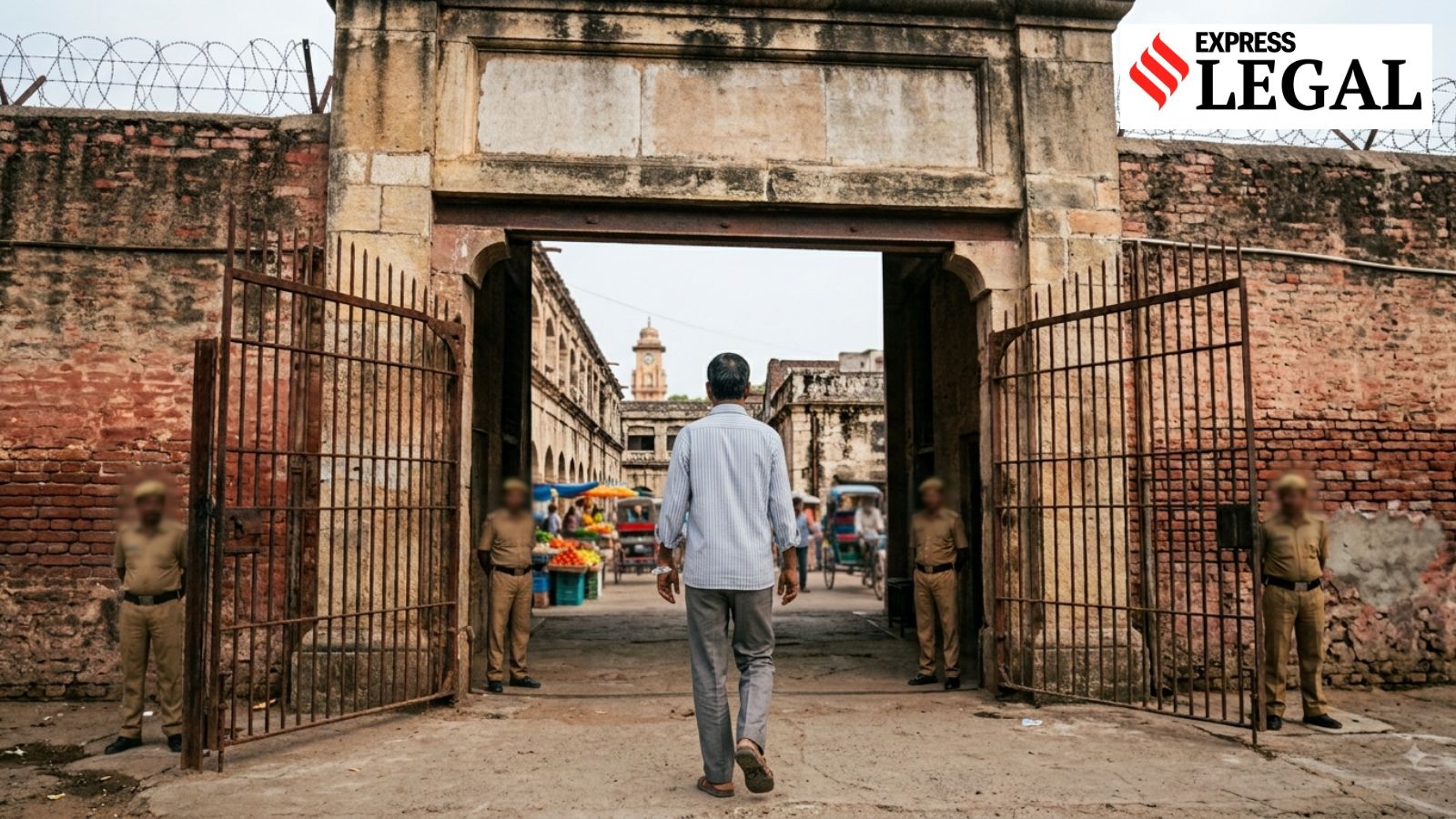
The Himachal Pradesh High Court has ruled that Nepalese citizenship alone cannot be a ground to deny parole to a convict, highlighting the importance of family ties and reformative justice.
Key Takeaways
- Himachal Pradesh High Court granted 4 weeks of parole to a life convict in a murder-dacoity case.
- The court ruled that Nepalese citizenship is not a valid reason to deny parole if family ties exist in India.
- The convict's family has resided in Nainital, Uttarakhand, for over 30 years.
- The court emphasized a reformative approach over purely punitive measures.
In a landmark judgment, the Himachal Pradesh High Court has granted four weeks of parole to a life convict involved in a dacoity-murder case. Justice Rakesh Kainthla observed that the prisoner's Nepalese citizenship cannot be used as a sole justification to deny relief, especially considering his deep-rooted family connections in India.
Legal Grounds and Family Ties
The court was hearing a petition challenging a previous order that had rejected the prisoner's parole application on the grounds of his nationality. The court noted that the petitioner's family has been living in Nainital, Uttarakhand, for more than three decades and owns property there. Justice Kainthla stated, "The parole could not have been rejected on the ground that the petitioner is a citizen of Nepal when his family members are residing at Nainital for 30-35 years."
Why This Matters: BozokMedia Analysis
BozokMedia analysis shows that this ruling reinforces the principle of 'Reformative Justice' in the Indian legal system. By prioritizing social and familial ties, the judiciary acknowledges that maintaining human connections is crucial for a prisoner's rehabilitation. This judgment prevents authorities from using administrative technicalities, like citizenship, to indefinitely obstruct the rehabilitative process of a prisoner with no proven threat to national security.
"Parole serves as a vital tool in the reformative approach, helping prisoners maintain the social ties necessary for reintegration."
The court also pointed out that the state failed to provide any "cogent and convincing material" to suggest that the prisoner's release would pose a threat to public order or state security. Relying on the Supreme Court's ruling in Asfaq v State of Rajasthan, the court emphasized that the seriousness of an offense alone is not a sufficient reason to deny parole if the prisoner's conduct in jail has been satisfactory.
Historical Context of Parole in India
Parole in India is governed by various state-specific rules, such as the Himachal Pradesh Good Conduct Prisoners (Temporary Release) Act, 1968. Unlike bail, which is a right during trial, parole is a discretionary relief granted to convicts to allow them to attend to family emergencies or social obligations. The objective is to ensure that the punishment does not result in total social alienation.
Frequently Asked Questions
1. Can the state oppose parole based on the risk of a prisoner fleeing?
Yes, the state can oppose parole if there is credible evidence that the prisoner might abscond, but they must provide convincing material to support this claim.
2. What are the conditions usually attached to parole?
Courts often require a personal bond, surety bonds, and regular monitoring by a probation officer to ensure the convict returns to jail on time.