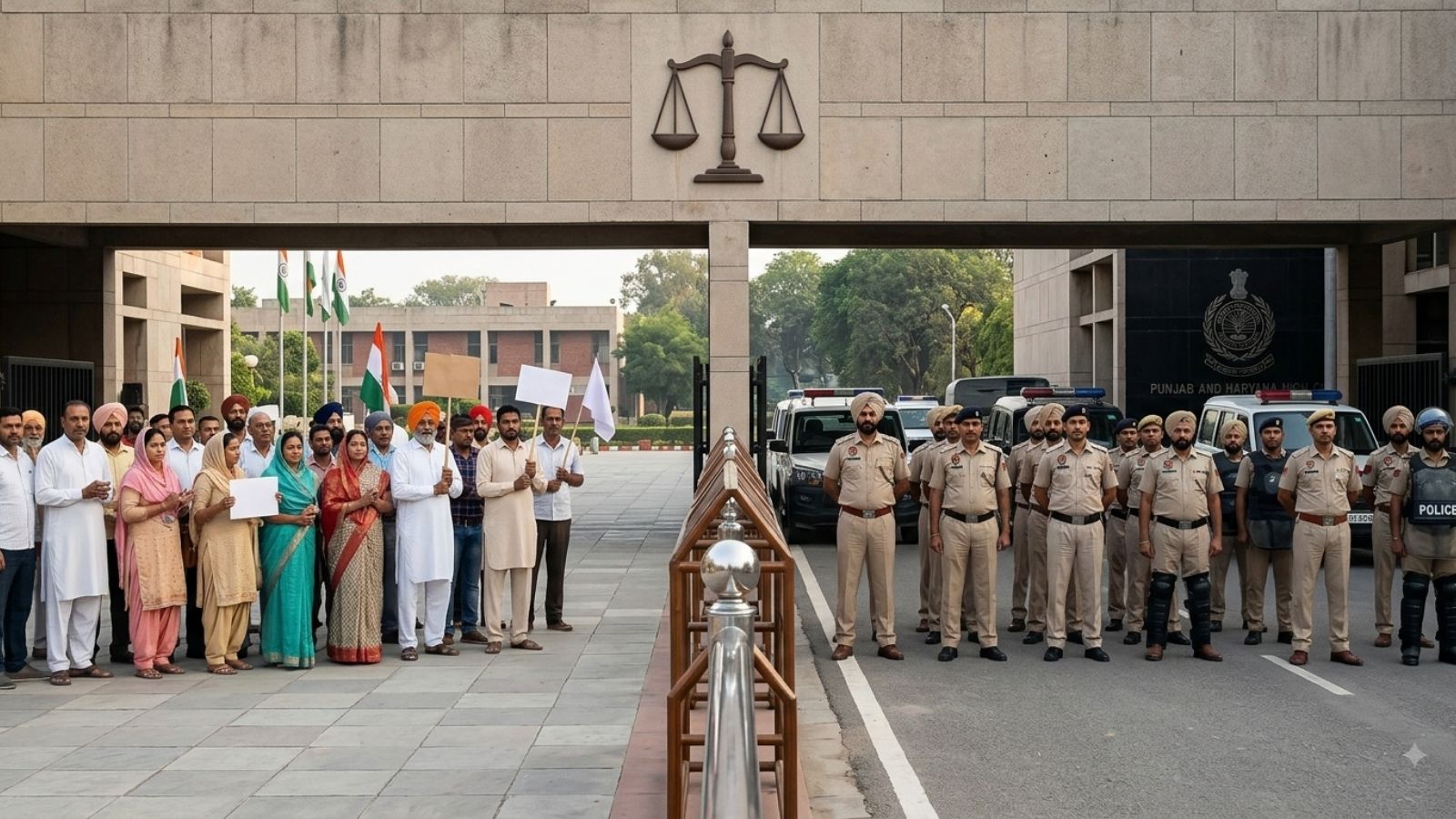
The Punjab and Haryana High Court reaffirmed peaceful protest as a fundamental right, but warned that authorities must act when demonstrations turn violent. The bench set a deadline of August 20 for status reports from the states.
Key Takeaways
- Peaceful protest is a fundamental right.
- Authorities must intervene if protests become violent.
- The PHHC set a deadline of Aug 20 for status reports.
On August 15, 2026, the Punjab and Haryana High Court reiterated that the right to assemble peacefully is enshrined in the Constitution, but stressed that law‑enforcement agencies have a duty to act when public safety is threatened.
A division bench comprising Acting Chief Justice Ashwani Kumar Mishra and Justice Rohit Kapoor heard a public interest litigation filed by Chandigarh advocate Vivek Singla, seeking directions to curb large‑scale gatherings linked to the Quami Insaf Morcha.
Why This Matters
BozokMedia analysis shows that the judgment clarifies the balance between civil liberties and public order, guiding police across Punjab, Haryana and Chandigarh on lawful crowd‑control measures.
"The court’s emphasis on preventive action sets a vital precedent for democratic societies." – Prof. Ananya Sharma, Constitutional Law expert.
The court ordered the Haryana Home Secretary to be impleaded as a respondent and directed the administration to keep transit corridors open, disperse unauthorized blockades, and hold violators accountable under law.
Frequently Asked Questions
Q1: What constitutes a violent protest?
A: Any act that threatens public safety, damages property, or disrupts essential services.
Q2: Can authorities pre‑emptively ban a protest?
A: They may impose restrictions only after assessing a credible threat, as mandated by law.