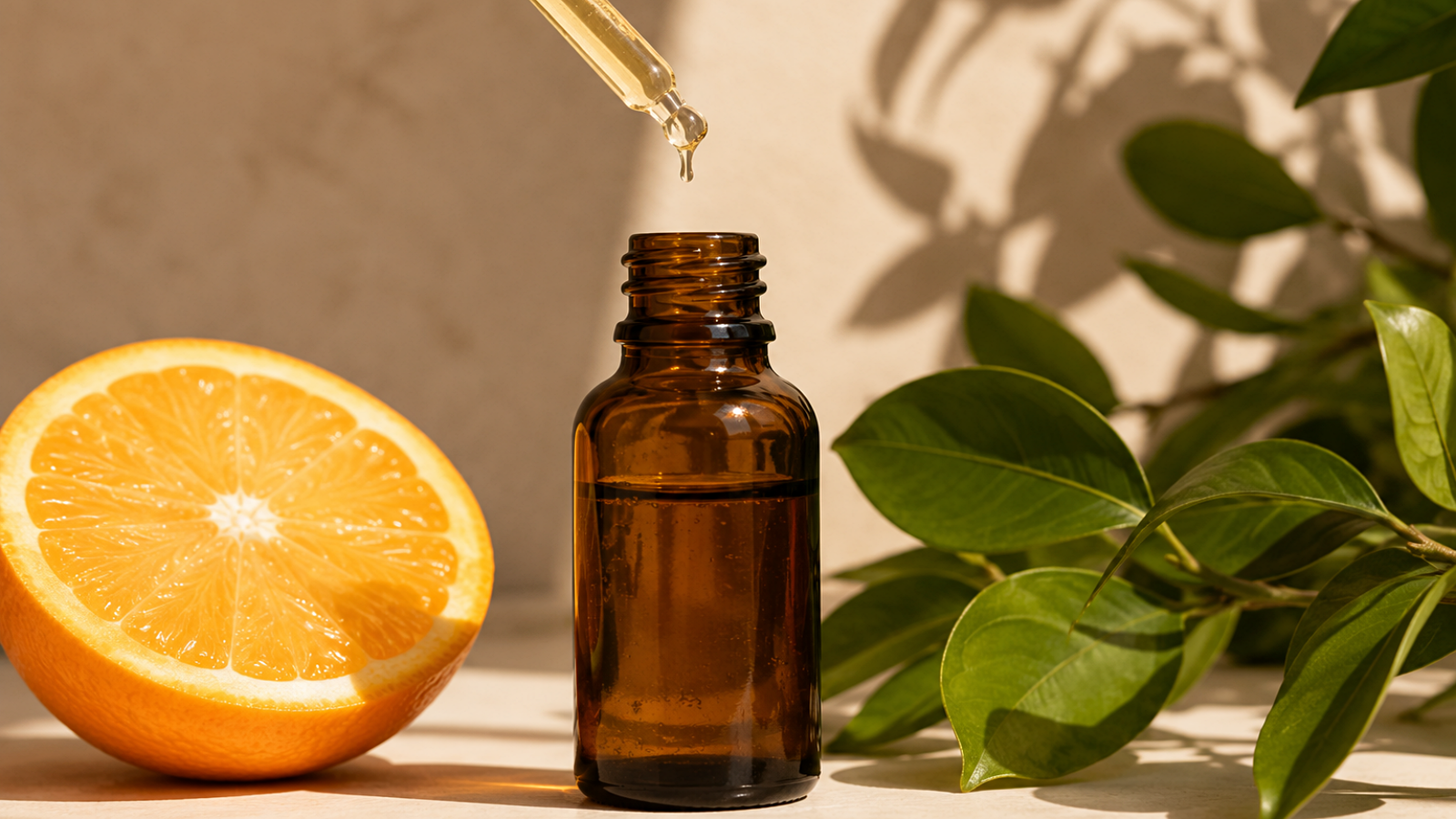
The dark amber bottles used for vitamin C serums are not a branding gimmick but a scientifically driven choice to preserve potency. Light and oxygen accelerate degradation, and proper packaging slows this process, ensuring the serum remains effective.
Key Takeaways
- Vitamin C degrades rapidly when exposed to light and oxygen.
- Amber or dark bottles and airtight droppers significantly slow degradation.
- Formulation type (ascorbic acid vs stable derivatives) is equally critical for efficacy.
Most vitamin C serums on the market arrive in amber, brown, or otherwise dark‑coloured bottles. While this may appear to be a purely aesthetic decision, the reality is rooted in chemistry: the packaging is designed to shield the active ingredient from light‑induced breakdown.
Light‑Sensitivity Explained
According to Dr. Saurabh Arora, Managing Director of Auriga Research, “Vitamin C degrades much faster in the presence of light. Ultraviolet rays react with ascorbic acid and accelerate the degradation, rendering the antioxidant inactive.” Dark glass therefore acts as a basic but essential barrier, preserving the serum’s potency for months.
Oxygen’s Role and Dual‑Protection Packaging
Light is not the only enemy. Vitamin C is an antioxidant that readily reacts with atmospheric oxygen. When a serum is exposed to air, oxidation begins, and light merely speeds up this process. A tightly sealed dropper combined with a dark bottle limits both light and oxygen exposure, dramatically slowing the degradation curve.
Stability Testing and Real‑World Use
Dr. Arora stresses that manufacturers conduct rigorous stability and “in‑use” studies. These tests confirm that, provided the dropper is properly sealed, repeated opening does not significantly diminish efficacy. The packaging is therefore optimized for everyday consumer behaviour.
Formulation Matters More Than Packaging
While packaging is crucial, the serum’s formulation holds equal, if not greater, importance. Different vitamin C derivatives—magnesium ascorbyl phosphate, ethyl ascorbic acid, sodium ascorbate, and tetrahexyldecyl ascorbate—exhibit varied stability profiles. A well‑engineered serum often blends several of these forms to maximize longevity and skin benefits.
Spotting a Degraded Serum
If a vitamin C serum begins to turn yellow or brown, it is a clear sign of oxidation. A slight darkening over time is normal, but rapid or extreme colour changes indicate that the active ingredient is breaking down and the product may no longer be effective.
Storage Recommendations
Dr. Arora advises storing vitamin C serums in a cool, dry place—mirroring the storage conditions of medicines. This simple step further protects the product from heat‑induced degradation, ensuring that users receive the full antioxidant benefit.