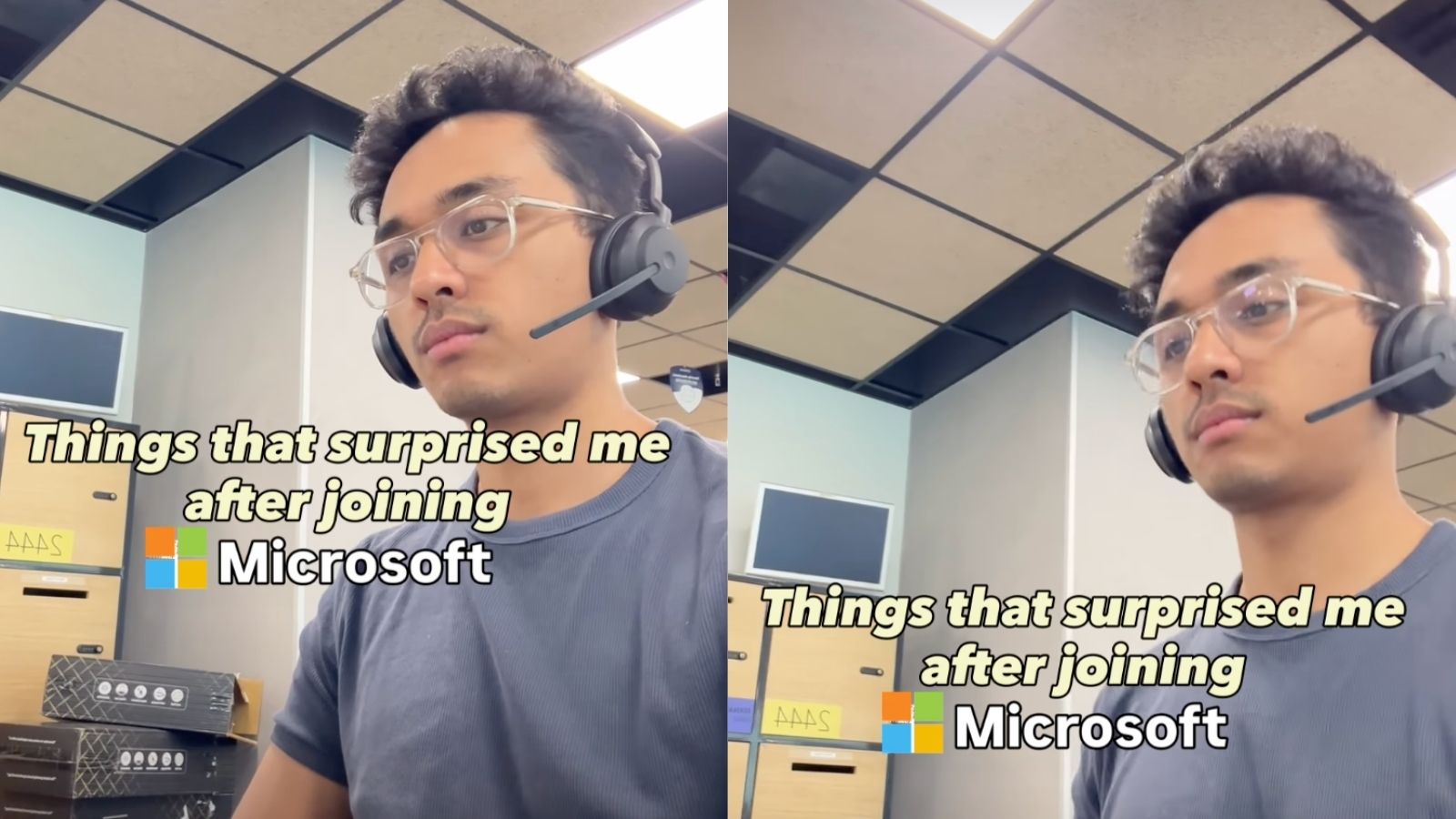
A software engineer's viral account of moving from TCS to Microsoft exposes the stark contrast between service-based and product-based corporate cultures, focusing on hierarchy, ownership, and employee wellness.
- Microsoft features a flatter hierarchy, enabling easier collaboration across teams.
- Product-based roles offer end-to-end ownership compared to shift-based tasks in service firms.
- Greater flexibility in dress code and workplace amenities enhances employee experience.
- A shift from 'process-following' to 'innovation-driving' accelerates professional growth.
A professional has sparked a widespread conversation online after detailing his transition from Tata Consultancy Services (TCS) to Microsoft. In a viral video, Sailesh Gurung explains how the shift fundamentally altered his perception of corporate life, moving from a rigid, structured environment to one centered on flexibility and empowerment.
The Shift in Workplace Hierarchy
Gurung, who started his career at TCS as a fresher, described his early experience as being heavily process-oriented. He noted that in a service-based environment, hierarchy is highly visible, with multiple layers of management and a strict approval chain. At Microsoft, however, he describes the structure as 'flat,' where employees are encouraged to reach out to anyone in the organization and feel their voices are genuinely heard.
Wellness and Workplace Flexibility
Beyond the organizational structure, Gurung highlighted the physical and cultural environment. While TCS required a strict formal dress code, Microsoft offers employees the freedom to dress comfortably. He also praised the 'human-centric' design of the Microsoft campus, citing gaming zones, massage chairs, and the ability to bring family members to the office as key differentiators.
Why This Matters
BozokMedia analysis shows that this narrative reflects a broader industry trend where top talent is migrating toward 'Product-First' cultures. The emphasis is shifting from mere 'labor efficiency' (the hallmark of service firms) to 'intellectual ownership,' which directly impacts employee retention and mental health in the high-stress tech sector.
"The transition from a process-driven environment to an ownership-driven one is the most critical leap for any engineer's professional growth."
Ownership vs. Execution
The most significant professional change noted by Gurung was the level of responsibility. In his previous role, work felt 'shift-based'—doing a specific part of a task before passing it to the next person. At Microsoft, he describes the work as 'end-to-end,' meaning he owns the project from inception to completion. While this increases responsibility, he notes it has led to faster growth and better compensation.
| Feature | TCS (Service-Based) | Microsoft (Product-Based) |
|---|---|---|
| Hierarchy | Rigid & Multi-layered | Flat & Accessible |
| Work Approach | Process-driven/Shift-based | Ownership-driven/End-to-End |
| Dress Code | Primarily Formal | Flexible/Casual |
| Campus Vibe | Structured & Disciplined | Innovation & Wellness focused |
Frequently Asked Questions
1. What is the primary difference between service-based and product-based companies?
Service-based companies provide customized solutions for clients (focusing on execution), while product-based companies build their own software products (focusing on innovation and scalability).
2. Does more ownership mean more stress?
While end-to-end ownership increases accountability and pressure, it is generally viewed as more rewarding as it provides a clearer sense of achievement and higher career trajectory.