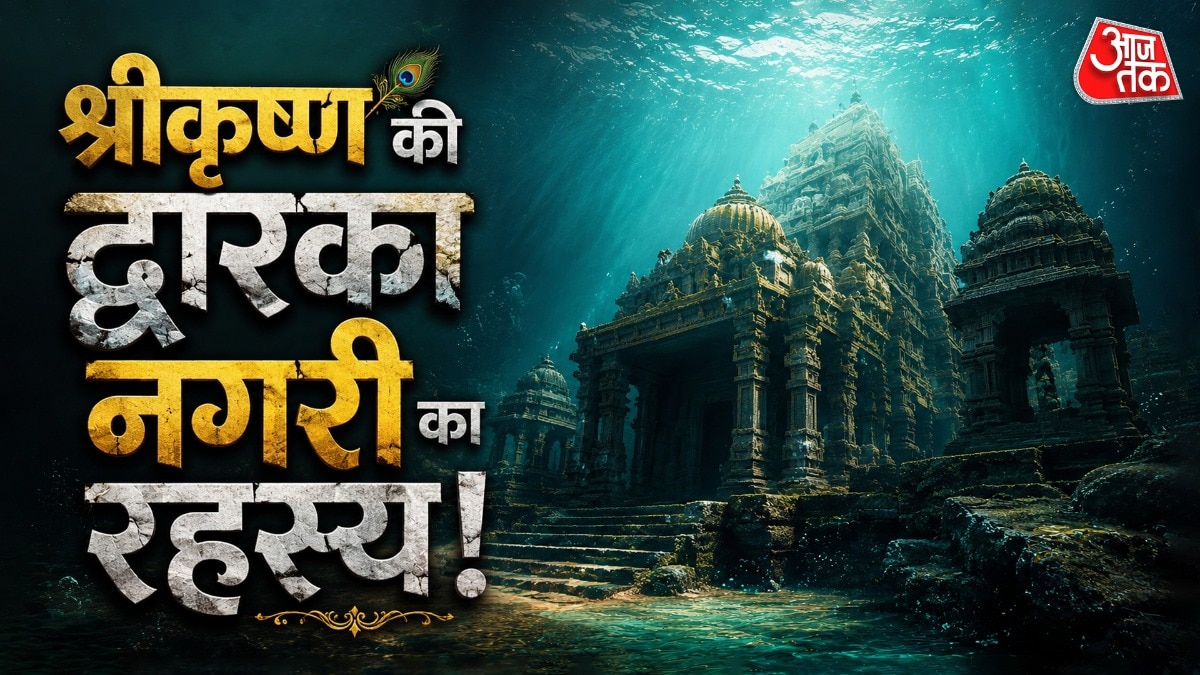
Was Lord Krishna's Dwarka merely a legend, or does a sophisticated ancient city truly lie beneath the waves? Explore the intersection of faith and science in this divine mystery.
- Dwarka is described as a magnificent capital in texts like the Mahabharata, Harivamsa, and Shrimad Bhagavatam.
- Mythology suggests the city was submerged following Gandhari's curse and Lord Krishna's departure from Earth.
- 20th-century marine excavations off the coast of Gujarat have uncovered ancient stone structures and anchors.
The city of Dwarka stands as a beacon of curiosity and devotion in Indian history. According to ancient scriptures, after leaving Mathura, Lord Krishna established a secure and opulent city for the Yadavas on the coast of the Arabian Sea. This city was not merely a residential hub but a powerhouse of trade, culture, and governance, featuring wide roads and magnificent palaces that mirrored the architectural brilliance of the era.
The Mythological Fall of the Golden City
The decline of Dwarka is inextricably linked to the aftermath of the Kurukshetra War. It is believed that Queen Gandhari, consumed by grief over the loss of her sons, cursed Lord Krishna, prophesying that the Yadava clan would meet a similar fate of internal destruction. Following the fulfillment of his divine mission and his subsequent departure from the physical realm, the sea is said to have reclaimed the city, swallowing the golden spires and bustling markets into the depths of the ocean.
Underwater Exploration: The Scientific Perspective
For centuries, the existence of Dwarka was relegated to the realm of mythology. However, in the 20th century, the National Institute of Oceanography and other researchers began exploring the waters off the Gujarat coast. Using advanced diving techniques and sonar, they discovered massive stone walls, ancient anchors, and remnants of human habitation. These findings suggest that a highly developed urban center did indeed exist in this region before being submerged by rising sea levels.
"The search for Dwarka is not just a quest for ruins, but an attempt to revive the evidence of ancient India's sophisticated maritime engineering."
Why This Matters
BozokMedia analysis shows that the discovery of underwater ruins in Dwarka parallels global legends of submerged civilizations, such as Atlantis. This indicates that ancient Indian societies possessed advanced knowledge of urban planning and oceanic navigation. The synthesis of these findings suggests that the boundaries between 'myth' and 'history' are more porous than previously thought.
Historical Comparison: Myth vs. Archaeology
| Feature | Mythological Account | Archaeological Evidence |
|---|---|---|
| Construction | Created by divine powers/Vishwakarma | Remnants of stone and ancient masonry |
| Cause of Fall | Gandhari's Curse / Divine Will | Sea-level rise or catastrophic Tsunami |
| Appearance | Golden City with opulent palaces | Stone walls and maritime anchors |
Frequently Asked Questions
Q1: Has it been scientifically proven that these ruins belong to Lord Krishna's Dwarka?
A: While the structures are compelling, historians are divided on the exact dating. It is a strong possibility, but definitive scientific consensus is still being pursued.
Q2: Where is the city of Dwarka located today?
A: The modern Dwarkadhish Temple is in the Devbhumi Dwarka district of Gujarat, while the ancient submerged city is believed to be just offshore.