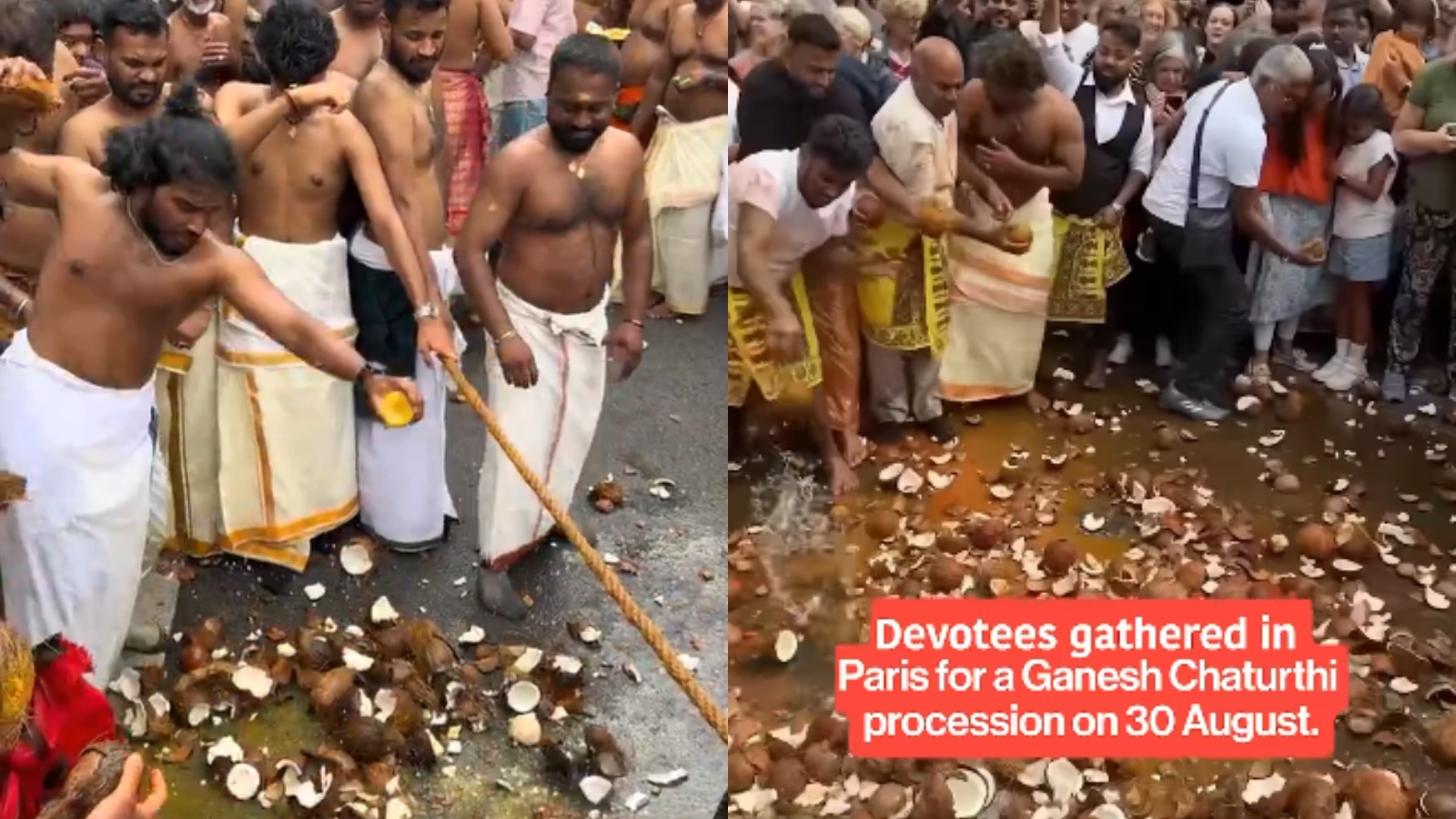
A traditional coconut-breaking ritual during a Ganesh Chaturthi procession in Paris has gone viral, triggering a polarized debate over public cleanliness and the reputation of the Indian diaspora.
- The annual Ganesh Festival was organized by the Sri Manicka Vinayakar Alayam temple in Paris's La Chapelle district.
- Viral footage of devotees smashing coconuts on public streets led to mixed reactions on social media.
- Critics raised concerns over urban cleanliness and the potential impact on the image of Indian expats.
The streets of Paris recently witnessed a vibrant display of faith and culture as hundreds of Hindu devotees gathered to celebrate Ganesh Chaturthi. The event, organized by the Sri Manicka Vinayakar Alayam temple in La Chapelle—recognized as France’s largest Hindu temple—transformed the neighborhood into a hub of South Asian spirituality. A beautifully adorned chariot carrying the idol of Lord Ganesha, draped in flowers and garlands, led the grand procession.
The festivities were a sensory explosion of color and sound, featuring traditional singers, dancers, and musicians. As the chariot moved through the city, blessed offerings and sweets were distributed to participants and curious onlookers alike. This annual event has become a staple of the Parisian cultural calendar, drawing not only devotees but also tourists eager to experience the depth of Indian traditions.
The Ritual at the Center of Controversy
While the procession was largely celebratory, a specific ritual involving the breaking of coconuts in front of the deity's chariot became the focal point of a viral storm. Videos circulating on platforms like Instagram showed devotees smashing coconuts with significant force on the asphalt. While this is a common practice in many parts of India, its execution on the streets of a European capital sparked an immediate divide among netizens.
BozokMedia analysis shows that this incident highlights the friction between the preservation of ethnic identity and the expectations of host-country civic norms. The debate transcends religion, touching upon the sociological pressure placed on diaspora communities to 'assimilate' while maintaining their heritage in a highly scrutinized digital age.
"The tension arises when deeply rooted spiritual practices clash with the rigid urban sensibilities of Western metropolitan centers."
Critical voices on social media expressed concern that such public displays could lead to negative stereotypes. Some users went as far as suggesting that these actions could inadvertently affect visa approvals or professional opportunities for Indians abroad, citing a lack of 'civic sense' regarding public cleanliness.
Conversely, residents of Paris who participate in the event defended the practice. They emphasized that the procession is conducted in close coordination with the city council, the police, and the Red Cross. According to these participants, comprehensive cleaning operations follow the event, ensuring that the streets are restored to their original state immediately after the festivities.
Q1: Which organization hosted the Ganesh procession in Paris?
A: The event was organized by the Sri Manicka Vinayakar Alayam temple in the La Chapelle neighborhood.
Q2: Why did the coconut-breaking ritual cause a debate?
A: It caused a debate due to concerns over public cleanliness and how such traditional acts are perceived by the local population and global observers.