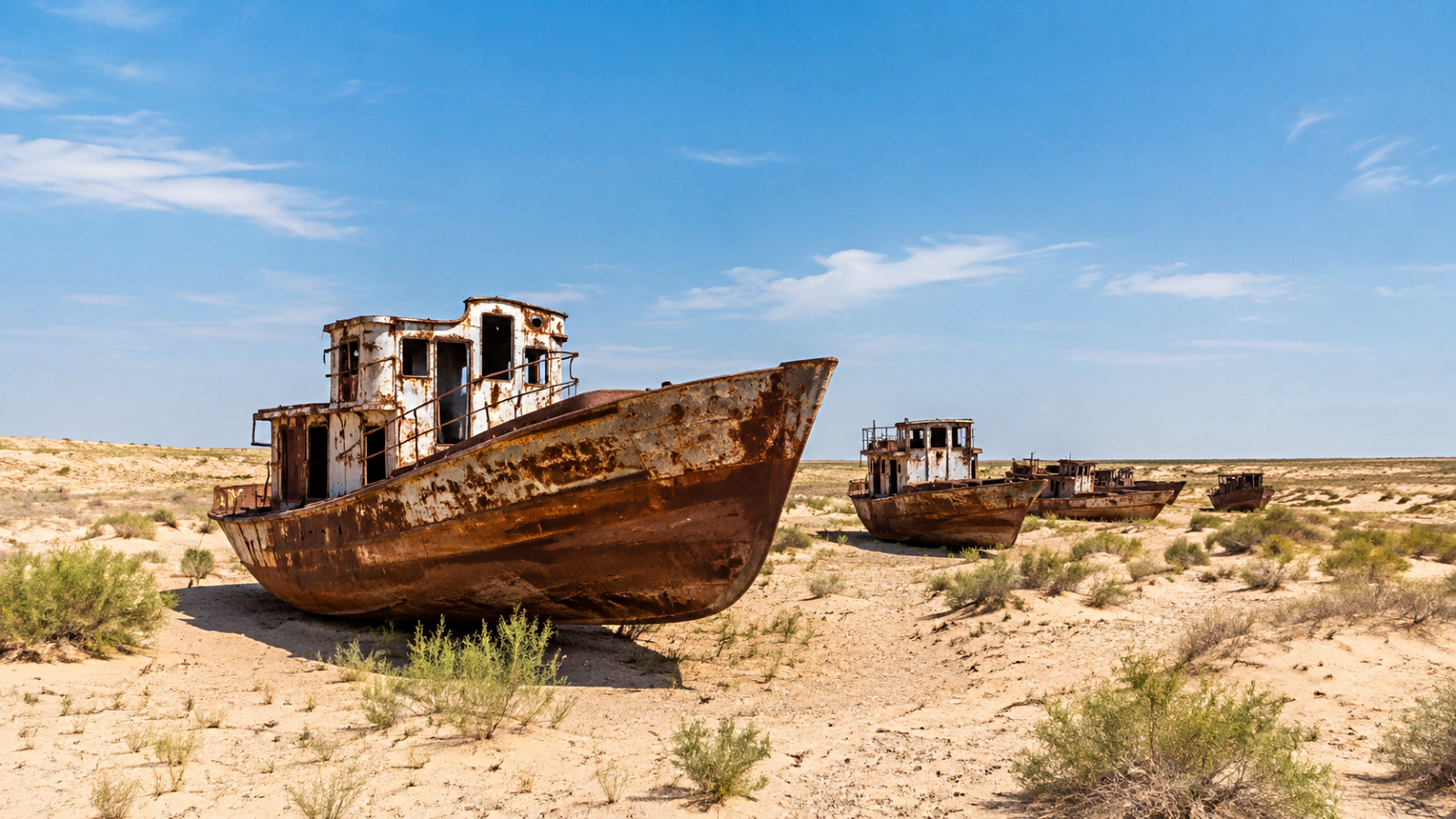
Once a thriving fishing hub, the town of Moynaq in Uzbekistan now stands amidst a desert, featuring a haunting graveyard of rusting ships left behind by the receding Aral Sea.
- The Aral Sea was once the world's fourth-largest inland water body.
- Soviet irrigation projects diverted essential river water, causing the sea to shrink.
- Moynaq has transitioned from a bustling port to a desert destination.
- The 'Ship Graveyard' is now a major site for disaster tourism.
Imagine arriving at a seaside town only to find an endless expanse of sand where waves should be. This is the surreal reality of Moynaq, located in Karakalpakstan, Uzbekistan. Once a prosperous fishing port on the shores of the Aral Sea, the town is now a haunting monument to one of the greatest environmental catastrophes in human history.
The Collapse of an Ecosystem
The Aral Sea was once a massive, life-sustaining body of water, supporting a vast fishing industry and a thriving local economy. However, starting in the 1960s, the Soviet Union began diverting water from the Amu Darya and Syr Darya rivers to irrigate vast cotton plantations. This decision proved fatal for the sea.
As the water levels plummeted, the shoreline retreated miles away from the town. By the 1980s and 90s, the fishing industry had completely collapsed. The water that once sustained thousands of families simply evaporated, leaving behind a landscape that looks more like a wasteland than a coast.
Why This Matters
BozokMedia analysis shows that Moynaq serves as a global warning sign for water mismanagement. The transition from a productive maritime hub to a desolate desert highlights the irreversible impact of large-scale human intervention on natural resources.
The rusting hulls in Moynaq are not just relics of industry; they are skeletal remains of a lost ecosystem.
Today, the site is famously known as the Moynaq Ship Graveyard. These rusting fishing vessels, stranded in the sand, have become a magnet for photographers and 'disaster tourists' seeking to witness the scale of the environmental fallout. The area has even seen the rise of the Aralkum Desert, a new desert formed by the receding waters.
Interestingly, the site has found a new, unexpected life through culture. Events like the Stihia electronic music and art festival use this bleak backdrop to raise awareness about the environmental crisis, blending art with the grim reality of the landscape.
Frequently Asked Questions
1. What caused the Aral Sea to disappear?
The diversion of its feeding rivers for large-scale agricultural irrigation by the Soviet Union.
2. Is Moynaq still a fishing town?
No, the fishing industry collapsed decades ago due to the loss of the sea.