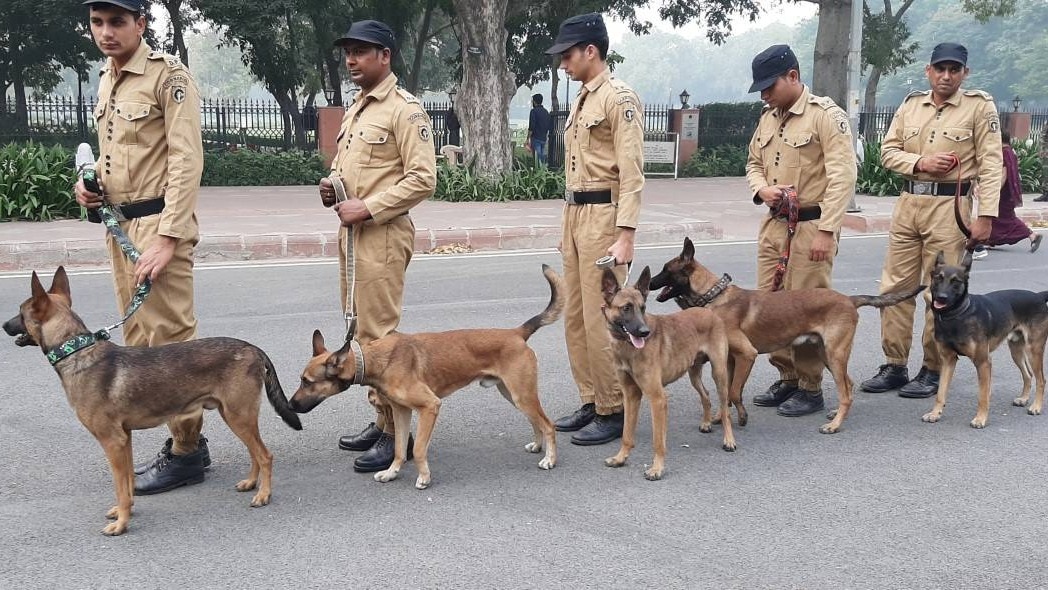
In a landmark move, the Maharashtra government has decided that retired police dogs will remain with the force for life. Following an order by Devendra Fadnavis, the department will now ensure their lifelong care, food, and medical needs.
- Retired police dogs will no longer be sent to adoptive homes but will stay with the force.
- Deputy CM Devendra Fadnavis directed the Home Department to implement this change.
- The police department will bear all costs for food, healthcare, and maintenance.
- The decision aims to prevent psychological distress in dogs separated from their handlers.
Mumbai: The Maharashtra government has taken a compassionate and historic step to ensure the dignity of its most loyal canine members. Following a directive from Deputy Chief Minister Devendra Fadnavis, retired police dogs will now be permitted to remain with the police force for the rest of their lives instead of being handed over to adoptive families.
Currently, police dogs are retired after completing 10 years of rigorous service and are placed with suitable adopters. However, a recent report by the Home Department revealed a heartbreaking reality: many dogs struggled to adapt to new environments after retirement. In several instances, the trauma of being separated from their long-term handlers led these animals to refuse food and exhibit signs of severe distress.
Why This Matters
BozokMedia analysis shows that this policy shift addresses both animal welfare and the psychological well-being of police personnel. Police dogs are indispensable assets in detecting explosives, narcotics, and conducting search-and-rescue operations during disasters. The bond between a handler and a canine partner is profound; ensuring the dog stays in a familiar environment preserves the mental health of both the animal and the officer.
"After giving 10 years of dedicated and loyal service to the police force, it is not right that such dogs should suffer. Though they are animals, we must take care of them." - Devendra Fadnavis
Historical Context: Police dogs typically enter the force at just six to nine weeks of age. They undergo intensive training to master specialized tasks, from tracking criminals to locating victims trapped under debris. While their active duty usually spans a decade, their specialized training makes them unique members of the law enforcement community.
Under the new arrangement, the police department will take full responsibility for the dogs' post-retirement life. This includes providing consistent nutrition, specialized veterinary care, and a comfortable living environment within the police establishment—the only home they have known for years.
Frequently Asked Questions
Question 1: Who will pay for the medical expenses of the retired dogs?
Answer: The Maharashtra Police Department will now cover all food, medical, and maintenance costs.
Question 2: Why was the old adoption system changed?
Answer: The adoption system was changed because many dogs suffered from depression and health issues after being separated from their handlers.