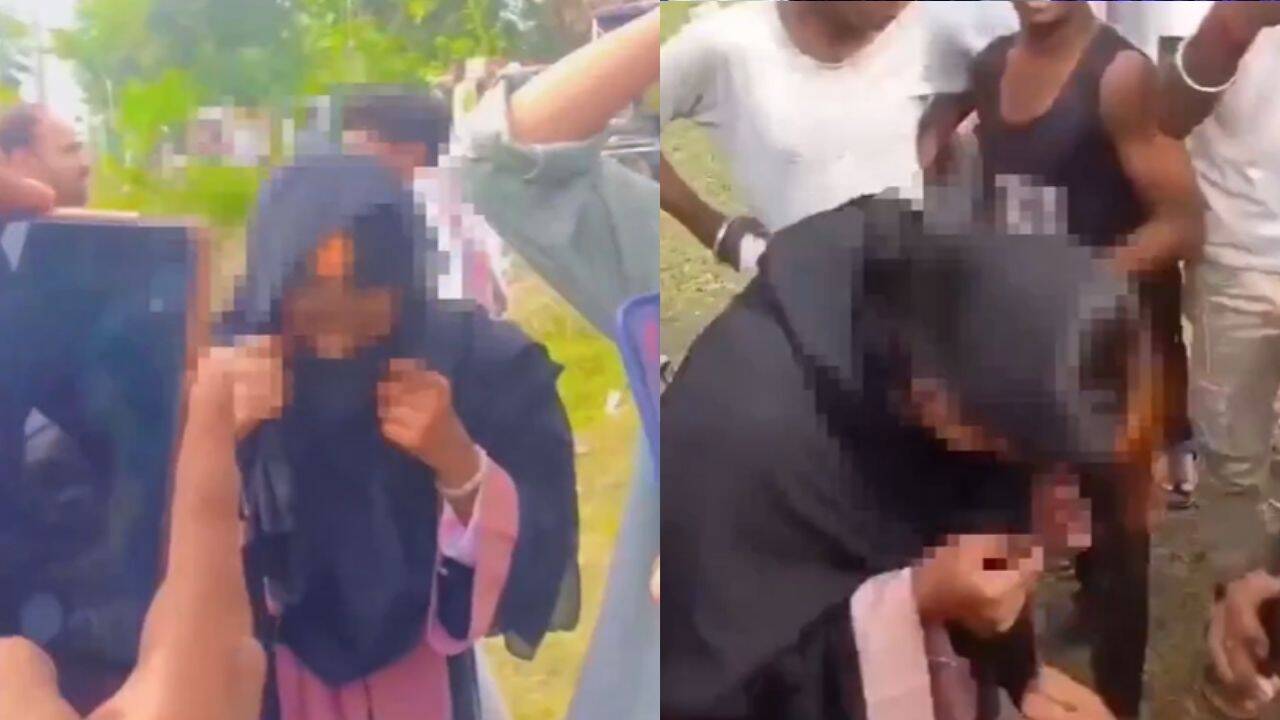
A viral video from Nawada, Bihar shows a woman being compelled to remove her burqa while her companions are forced to apply sindoor. Police identified and arrested two suspects, bringing the incident under legal scrutiny.
Incident Overview
On July 8, near Madhopur village in Nawada district, Bihar, a couple stopped to rest on a motorcycle when a local mob intervened. The video, which quickly went viral, captures a woman being forced to take off her burqa and her male companion being compelled to apply sindoor, a traditional red vermilion mark. The act reflects a disturbing blend of gender‑based intimidation and cultural coercion.
Details Captured in the Video
The footage shows the assailants physically confronting the woman, demanding she remove her veil, and then ordering her companion to apply sindoor on his forehead, a symbolic act associated with marriage. Such forced rituals not only violate personal freedoms but also highlight the misuse of cultural symbols to exert control.
Police Response and Arrests
Law enforcement officials traced the motorcycle’s registration number displayed in the video, leading to the identification of two suspects: Rahul Kumar, 23 and Amit Singh, 27. Both were apprehended and booked under sections 354 (outraging the modesty of a woman) and 509 (act intended to insult the modesty of a woman) of the Indian Penal Code. Their detention underscores the police’s commitment to curbing mob‑justice incidents.
Legal and Social Context
India’s legal framework provides robust protections against gender‑based violence, yet enforcement remains uneven, especially in semi‑rural settings where patriarchal norms dominate. The forced removal of a burqa and the imposition of sindoor are not merely personal affronts; they are emblematic of broader attempts to dictate women’s attire and marital status.
Implications and Way Forward
The incident has sparked widespread debate on social media, prompting civil‑rights groups to demand swift justice and stronger preventive measures. Experts argue that beyond punitive action, sustained community outreach, gender‑sensitivity training for police, and public awareness campaigns are essential to dismantle the underlying biases that fuel such mob behavior.