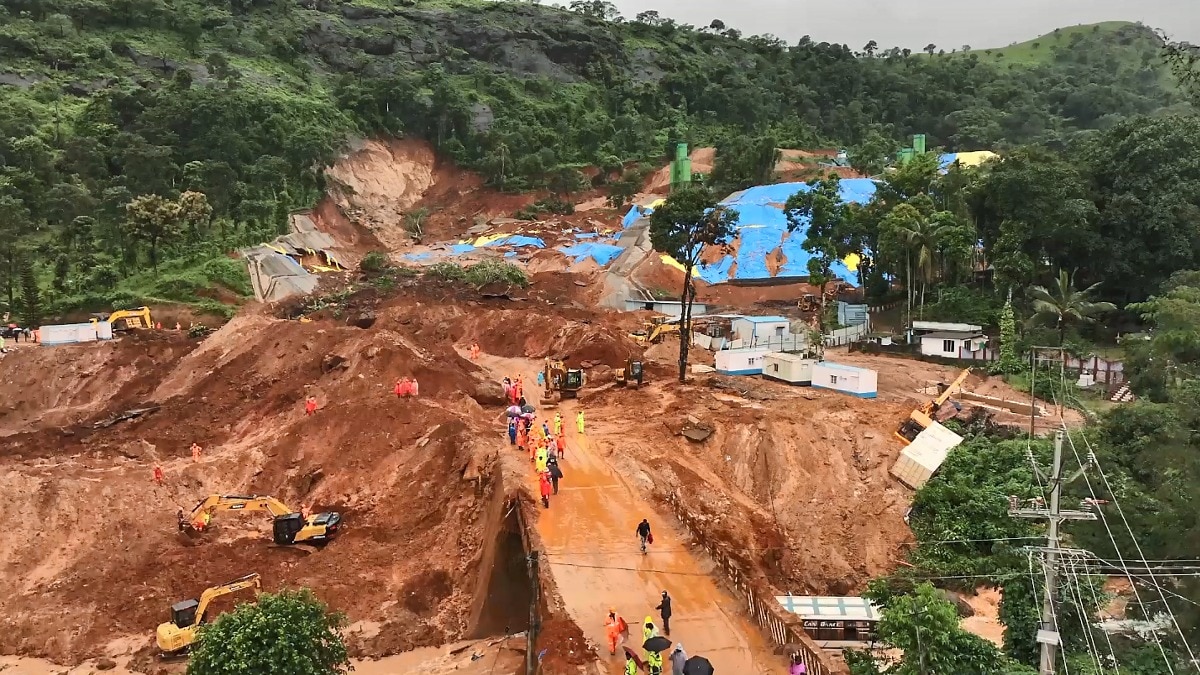
The fatal landslide in Kerala’s Wayanad district has claimed six lives, with rescue teams recovering three additional bodies. The disaster, linked to unscientific earth dumping at a tunnel construction site, highlights serious safety lapses.
On Tuesday, July 7, a catastrophic landslide struck the under‑construction Anakkompoyil‑Meppadi tunnel project in Kerala’s Wayanad district, a major infrastructure effort aimed at linking Wayanad and Kozhikode. The sudden collapse has turned a promising development into a tragic scene of loss and confusion.
Increased Casualties and Search Operations
By Thursday, the death toll had climbed to six. Kerala ministers AP Anil Kumar and T Siddique reported that, in the early hours, a body was recovered from Zone 1 of the search area, while another was found inside the nearby river. A third body was still pending recovery at the time of the announcement. Rescue teams are intensifying efforts in both Zone 1 and Zone 2, with a particular focus on the riverine zone.
Out of the ten injured, three have been discharged, four remain hospitalized in a stable condition, and three are in the ICU—two of whom are in critical condition. With the latest recoveries, only two individuals remain missing.
Political Response and Investigation
Chief Minister V. D. Satheesan prioritized the search for the missing and convened a review meeting that included ministers Siddique and Anil Kumar, as well as Congress MP Priyanka Gandhi Vadra. He announced a forthcoming police investigation to determine any contractor negligence and stressed that blame would be withheld until the committee reports are finalized.
During the meeting, the CM highlighted that contractors had ignored directives from the Public Works Department and the District Collector to clear accumulated mud at the site. Earlier, Siddique and fellow minister Ramesh Chennithala had described the incident as a “man‑made” landslide caused by “unscientific dumping” of excavated earth.
Environmental and Safety Implications
This tragedy underscores the critical importance of rigorous environmental compliance in large‑scale construction projects. Uncontrolled soil removal and inadequate site management not only endanger lives but also compromise the structural integrity of future infrastructure.
Lessons for Future Projects
Wayanad’s disaster serves as a stark reminder that sustainable engineering practices and strict adherence to safety protocols are non‑negotiable. Policymakers and contractors alike must adopt proactive risk assessments to prevent similar calamities.