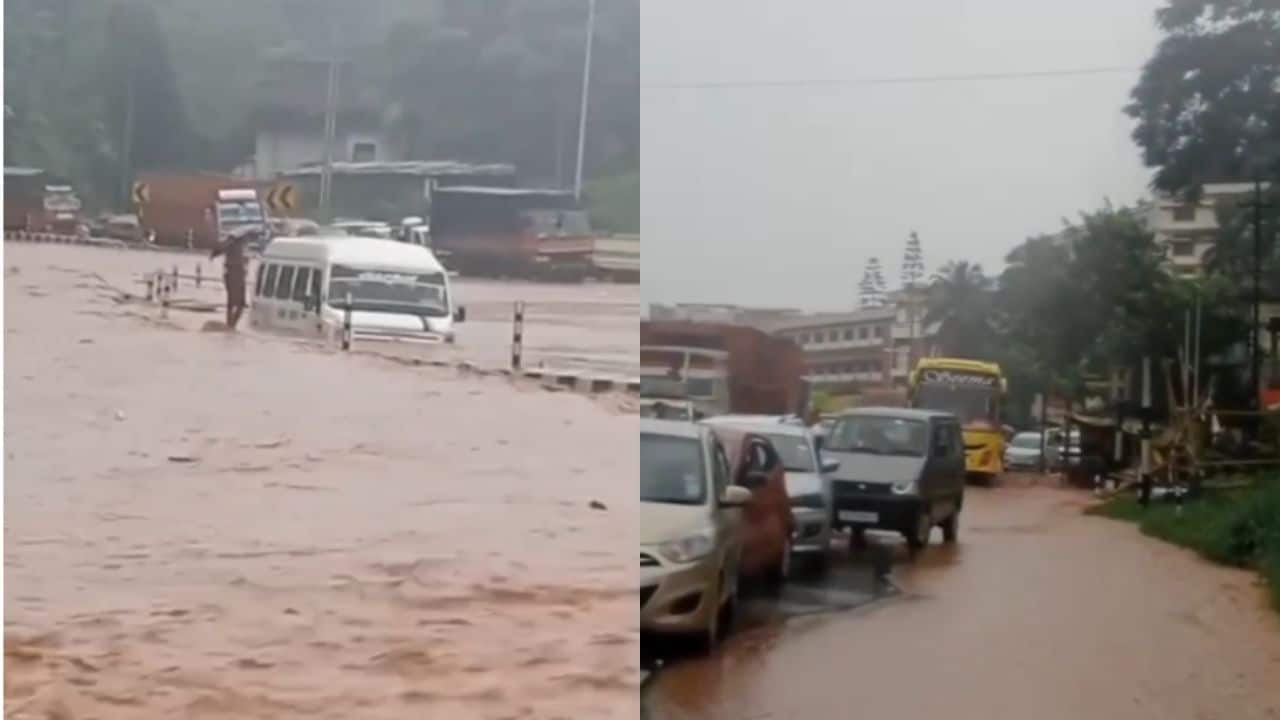
Severe waterlogging at the strategic Jorabat area along the Assam-Meghalaya border has triggered massive traffic congestion, forcing vehicular diversions and leaving commuters stranded for hours. The recurring drainage crisis highlights ongoing infrastructure challenges in the Northeast corridor.
Key Takeaways
- Severe waterlogging at Jorabat on the Assam-Meghalaya border has paralyzed vehicular movement.
- Commuters faced massive delays, forcing local authorities to divert traffic through alternative routes.
- The recurring drainage issue at this critical transit point highlights the need for long-term infrastructural intervention.
Heavy and relentless rainfall has once again triggered severe waterlogging at the strategic Jorabat junction, a vital transit point lying on the border of Assam and Meghalaya. The sudden accumulation of water on the National Highway-37 (GS Road) has completely paralyzed vehicular movement, causing massive traffic snarls stretching over several kilometers. Commuters, including long-distance trucks carrying essential commodities and daily passengers, found themselves stranded for hours as water levels rose rapidly.
Emergency Response and Traffic Diversions
In response to the escalating crisis, local traffic authorities and administration officials rushed to the spot to manage the chaos. Police personnel were seen navigating through waist-deep water to guide stranded vehicles. To prevent further gridlock, authorities initiated emergency traffic diversions, rerouting light motor vehicles through alternative interior roads. However, heavy commercial vehicles remained stuck, exacerbating the bottleneck at the interstate border.
Geographical and Infrastructural Context
Jorabat serves as the primary gateway connecting Guwahati to Shillong and other parts of Meghalaya, Mizoram, and Tripura. The topography of the region, combined with unplanned urbanization and inadequate drainage systems, makes it highly susceptible to flash floods during monsoon showers. Runoff water from the surrounding hills of Meghalaya flows down to the low-lying areas of Jorabat, overwhelming the existing drains which are often choked with silt and plastic waste.
Public Outrage and the Need for a Permanent Solution
The recurring nature of this waterlogging has sparked widespread outrage among locals and frequent travelers. Many have criticized the National Highways Authority of India (NHAI) and local state departments for their failure to implement a permanent drainage solution. Experts suggest that a coordinated bilateral effort between the governments of Assam and Meghalaya is imperative to address the cross-border ecological and infrastructural challenges that lead to this annual nightmare.