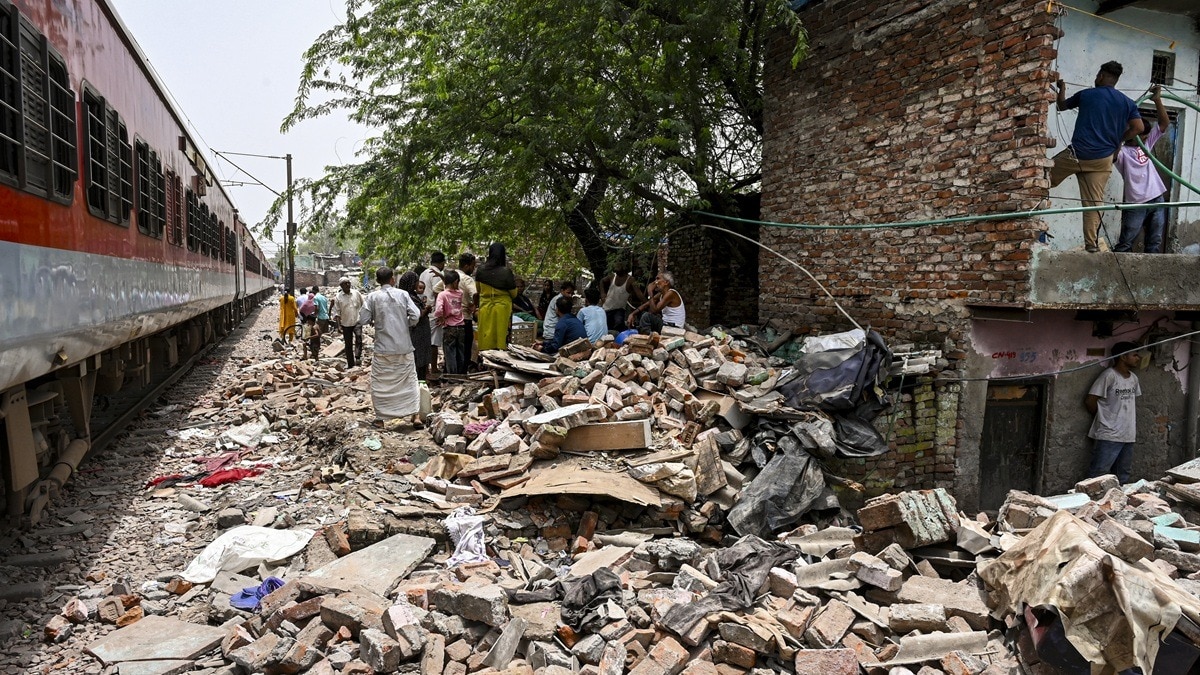
A Railway Board RTI response reveals that as of March 2025, about 1,068.54 hectares of railway land are illegally occupied, a size comparable to 42 Narendra Modi cricket stadiums. Encroachments have risen 32% in five years while reclamation remains minimal.
Key Takeaways
- 1,068.54 hectares under encroachment – equivalent to 42 Narendra Modi Stadiums
- Encroached area grew by 32% over the last five years
- Only 98 hectares reclaimed during the same period
The Railway Board’s recent RTI reply has laid bare the scale of India’s railway land‑encroachment problem. By March 2025, 1,068.54 hectares (approximately 2,639 acres) of railway property were under illegal occupation – a footprint that could accommodate 42 of the world’s largest cricket arena, the Narendra Modi Stadium.
Escalating Issue Over Five Years
Data shows a jump from 810.31 hectares in FY 2020‑21 to 1,068.54 hectares in FY 2024‑25, marking a 32 % increase. After a brief dip in FY 2021‑22, the encroached area surged to 1,078.55 hectares in FY 2023‑24 – the biggest single‑year rise in the five‑year window.
Reclamation Efforts Lag Behind
During the same period, only 98.02 hectares were reclaimed, leaving a backlog of more than 1,068 hectares. Recovered land is earmarked for critical railway projects such as multi‑tracking, workshops, passenger and freight terminals. Surplus parcels are transferred to the Rail Land Development Authority (RLDA) for commercial development.
Data Gaps and Policy Shortcomings
The RTI also highlighted a glaring deficiency: the Railway Board maintains encroachment data for only five years, rejecting a request for a 25‑year trend. Moreover, location‑wise records are absent, forcing applicants to approach individual zonal railways for state‑specific details.
Implications for Future Infrastructure
If unchecked, the encroachment crisis could stall ambitious expansion plans, including high‑speed corridors and new line projects. Experts argue that a centralized, long‑term land‑encroachment database and dedicated reclamation task forces are essential to mitigate the risk and free up land for critical railway infrastructure.