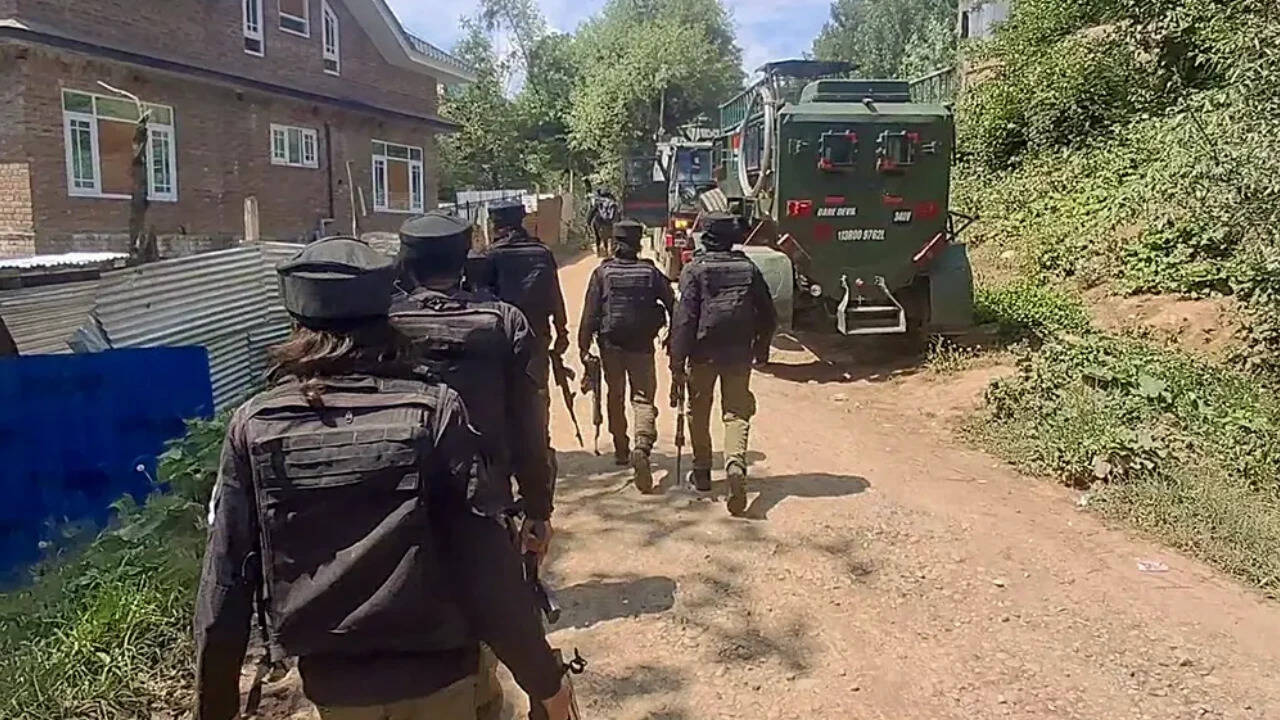
Security forces in Jammu & Kashmir recovered 215 rounds of Pika gun ammunition from a terrorist hideout in Poonch. A second‑day search operation in Rajouri is underway to locate two suspects captured on CCTV footage.
Key Takeaways (मुख्य बिंदु)
- 215 Pika gun rounds confiscated from a hideout in Poonch.
- Joint cordon‑and‑search in Rajouri enters its second day to trace two terror suspects.
- Operation Sheruwali reaches day 54, intensifying pressure on elusive militant cells.
In the border district of Poonch, Jammu & Kashmir, security personnel recovered 215 rounds of Pika gun ammunition from a terrorist hideout in Sawajian Gagranga village, Mandi tehsil. The seizure was made by a Special Operations Group (SOG) team during a routine patrol, underscoring the persistent flow of prohibited weapons into the frontier region.
Extended Search Operations in Rajouri
A cordon‑and‑search operation launched on Wednesday in Thanamandi, Rajouri district, to apprehend two terror suspects captured on CCTV, entered its second day on Thursday. Army units, J&K Police SOG, and CRPF forces combed the forested terrains of Bhanghai Top, Karyote, and Kopra Top, as well as adjoining villages. The surveillance footage, which went viral after showing the suspects crossing a road late Sunday, prompted an immediate joint response.
Operation Sheruwali: A Prolonged Counter‑Insurgency Drive
Since May 23, Operation Sheruwali has been sweeping the Dorimal‑Gambhir‑Mughlan belt in Rajouri's Manjakote sector, targeting a small but dangerous network of two‑to‑three ultra‑radical militants. The operation marked its 54th day on Wednesday, reflecting a sustained commitment to dismantle covert cells that operate from dense forest cover.
Implications and Future Challenges
The ongoing seizures and search missions illustrate the relentless effort required to neutralize cross‑border infiltration. Successful confiscation of ammunition and the continued pursuit of suspects can deter future militant logistics, bolster local confidence, and reinforce national security objectives. However, experts caution that without robust intelligence sharing and community cooperation, fully eradicating such networks remains a formidable challenge.