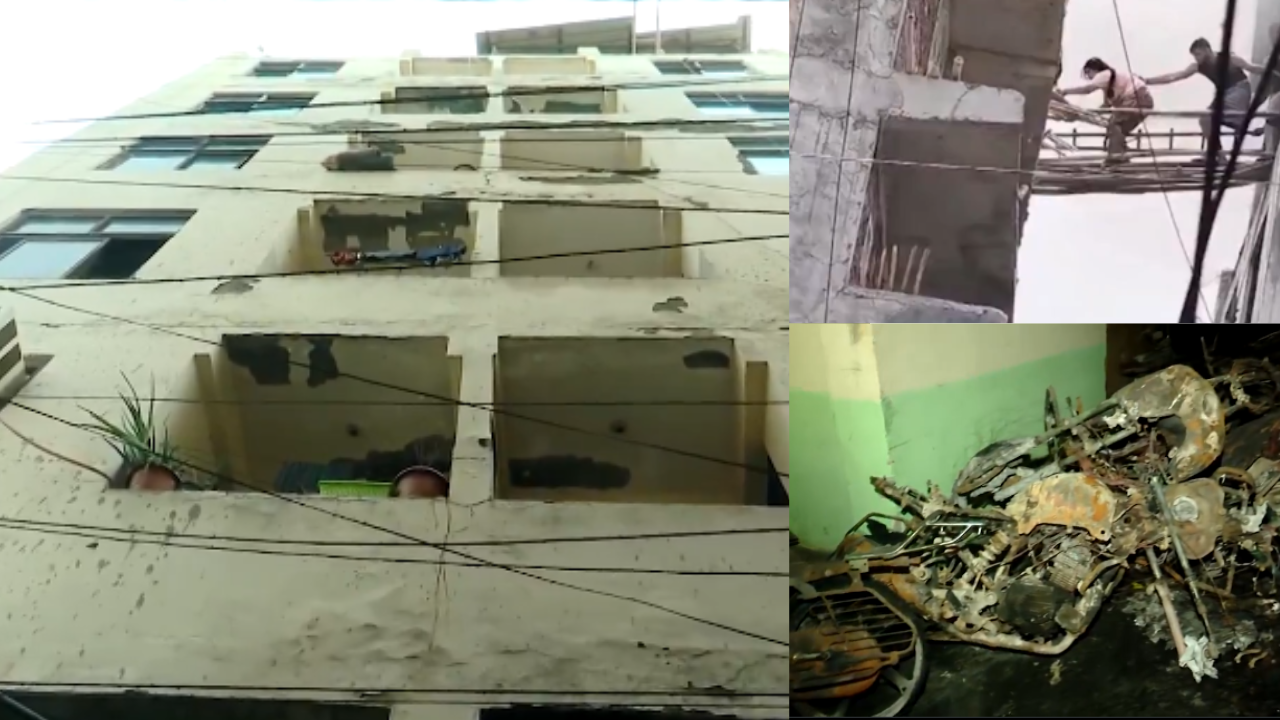
A fire that broke out in a multi‑storey residential building in Noida's Mamura village claimed two lives and forced the evacuation of around fifty tenants. Investigators suspect an e‑scooter being charged on a regular socket sparked the blaze, leading to the landlord's arrest on safety violation charges.
Key Takeaways (मुख्य बिंदु)
- E‑scooter charging sparked fire
- Two fatalities, ~50 tenants evacuated
- Landlord arrested on safety violation charges
A blaze erupted on 27 April in a multi‑storey residential complex in Mamura village, Noida, killing two people and safely evacuating nearly fifty occupants. Local authorities indicate that the fire likely originated when an e‑scooter was plugged into an ordinary electrical socket, a practice that bypasses dedicated EV charging infrastructure.
Origin and Spread of the Fire
The initial flame quickly engulfed petrol‑powered vehicles parked on the ground floor, turning the area into a raging inferno. Experts warn that charging electric two‑wheelers on standard sockets without proper load‑balancing can overload circuits, especially in densely populated buildings lacking robust fire‑safety systems.
Regulatory Gaps and Future Safety Measures
This incident underscores the glaring absence of clear standards for electric‑vehicle charging in Indian residential complexes. While the National Electrical Code (NEC) recommends dedicated EV charging points for multi‑unit dwellings, enforcement remains uneven, leaving many apartments vulnerable to similar hazards.
Legal Action and Immediate Response
Police detained the building’s owner, Mr Aman Verma, on charges of negligence and illegal electric charging practices. Preliminary investigations revealed multiple overloaded sockets throughout the property, a condition that significantly heightened fire risk.
Municipal Reaction and Public Sentiment
Noida Municipal Corporation praised the swift response of fire‑rescue teams, yet residents are demanding stricter oversight and mandatory installation of certified EV charging stations. The tragedy has sparked a broader conversation on retrofitting older structures with safe, modern electrical infrastructure.