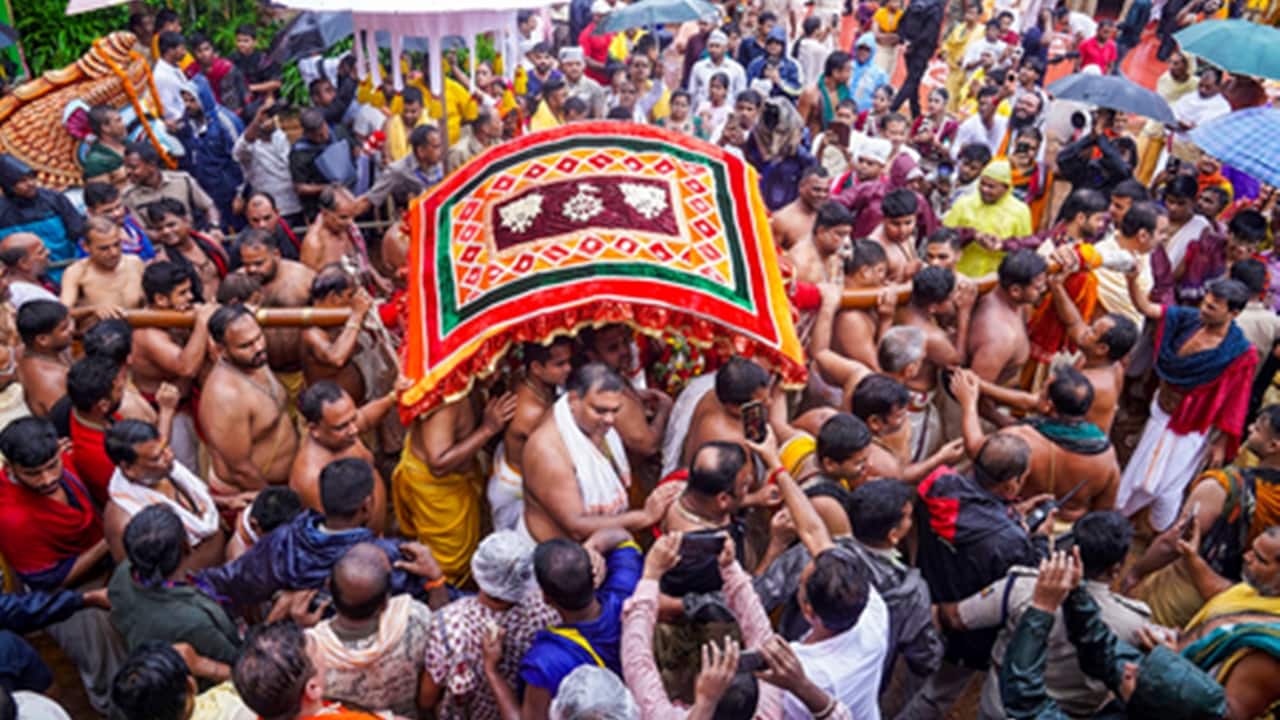
During the 149th Jagannath Rath Yatra in Ahmedabad, 41 medical emergencies were reported, with fainting being the most prevalent issue among pilgrims.
Key Takeaways
- 41 medical emergency cases were recorded during the 149th Jagannath Rath Yatra in Ahmedabad.
- Fainting was the most common emergency, accounting for 15 incidents.
- Emergency teams from EMRI 108 provided on-site first aid and coordinated hospital transfers.
- Authorities deployed over 31,000 police personnel and AI-enabled surveillance for crowd control.
Ahmedabad: The 149th annual Jagannath Rath Yatra in Ahmedabad, recognized as India's second-largest procession after Puri, witnessed significant medical challenges due to the massive influx of devotees. As of Thursday afternoon, emergency response teams reported a total of 41 medical emergencies along the procession route. According to reports from EMRI 108, the majority of these incidents were related to fainting, likely triggered by the intense heat and heavy congestion.
Breakdown of Medical Incidents
The medical data revealed a diverse range of health issues encountered by first responders. Out of the 41 cases, 15 instances of fainting were reported, followed by five cases requiring immediate first aid. Respiratory difficulties and falls were also noted, with four incidents each. Other reported emergencies included three road traffic accidents, two cases of abdominal pain, two instances of convulsions, and isolated cases of chest pain, dehydration, vomiting, and headaches. Medical personnel acted swiftly, providing on-site stabilization—including vital sign monitoring and oral rehydration—before transferring patients to facilities like Sardaben Hospital and LG Hospital.
High-Tech Security and Crowd Management
To manage the logistical complexities of such a massive spiritual event, the administration implemented a multi-layered security framework. More than 31,000 police personnel were deployed to maintain order along the traditional route starting from the historic Shree Jagannath Temple in Jamalpur. In a significant move toward modern policing, authorities utilized AI-enabled surveillance, drones, and extensive CCTV monitoring to track crowd density and prevent potential stampedes or bottlenecks.
Integrated Emergency Response
The success of the emergency medical services relied heavily on the seamless coordination between EMRI 108, local police, civic authorities, and hospitals. Ambulances and rapid response teams were strategically stationed at high-risk points, such as the Kalupur Bridge and Saraspur, ensuring that medical assistance reached pilgrims within minutes. This integrated approach is crucial for large-scale religious gatherings where the safety of lakhs of devotees is the highest priority.


