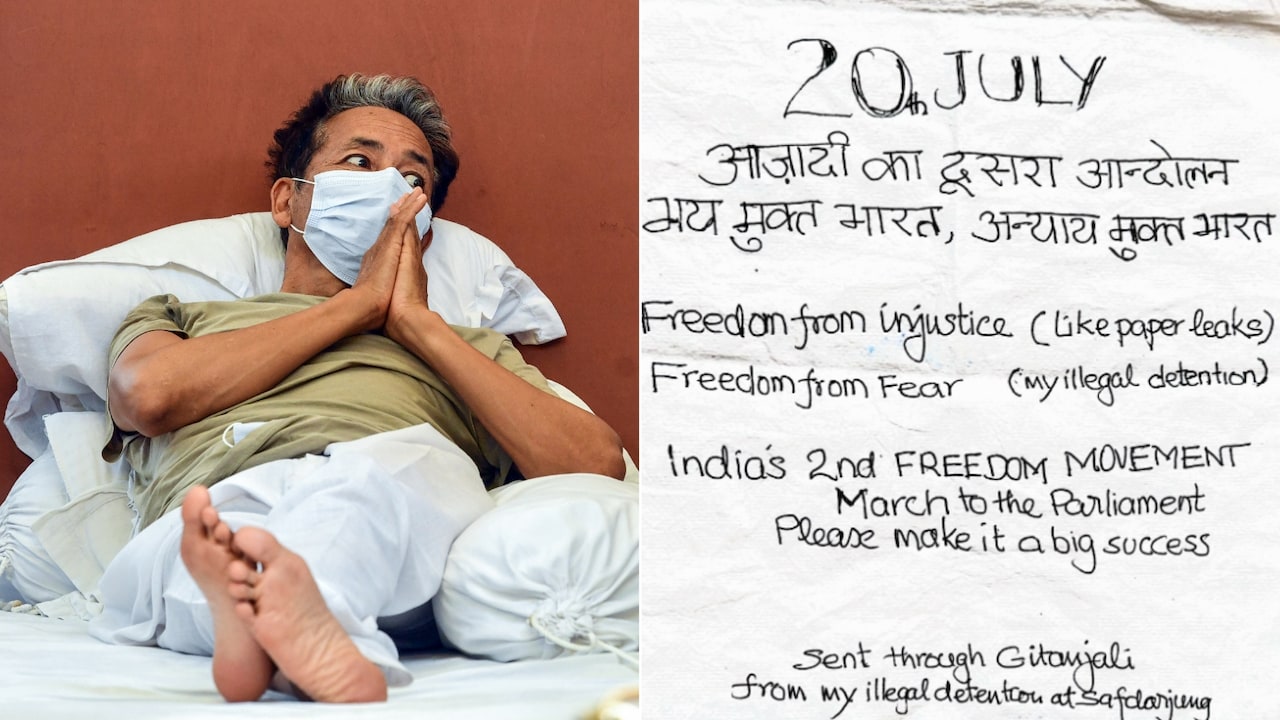
Following the detention of climate activist Sonam Wangchuk, his wife has vowed to lead the protest march to Parliament. The movement demanding constitutional safeguards for Ladakh continues to intensify ahead of the Monsoon Session.
Key Takeaways
- Sonam Wangchuk was detained by Delhi Police at the border during his peaceful march.
- His wife has vowed to lead the Parliament march during the Monsoon Session in his absence.
- Protesters are demanding Sixth Schedule status and full statehood for Ladakh.
Renowned education reformist and climate activist Sonam Wangchuk has sent a powerful message from what he terms "illegal detention," ahead of a planned march to the Parliament. As the Monsoon Session of Parliament is set to resume, Wangchuk's wife has resolutely vowed to lead the march in his absence, signaling a major escalation in the ongoing civil demonstrations.
Wangchuk, along with dozens of supporters from Ladakh, was detained by Delhi Police at the border while leading the 'Delhi Chalo' padyatra (foot march). The march was organized to urge the Union Government to resume talks on Ladakh's four-point agenda, which includes statehood, the implementation of the Sixth Schedule of the Indian Constitution, and separate Lok Sabha seats for Leh and Kargil. The sudden detention has sparked widespread outrage across political and social spectrums.
| Feature / Demand | Current Union Territory Status | Protesters' Demand (Sixth Schedule) |
|---|---|---|
| Autonomy | Administered directly by the Center via Lt. Governor. | Autonomous district councils with legislative powers over land and culture. |
| Representation | Single Lok Sabha constituency for the entire region. | Separate Lok Sabha seats for Leh and Kargil districts. |
| Land Protection | No specific constitutional bar on outside land ownership. | Strict constitutional protection under the Sixth Schedule. |
Historical Background
Sonam Wangchuk's activism is deeply rooted in the ecological and cultural preservation of the Himalayan region. Since the abrogation of Article 370 in 2019, which led to the creation of Ladakh as a separate Union Territory without a legislature, local leaders have expressed fears of demographic changes and ecological exploitation. Wangchuk's previous 21-day climate fast drew global attention to the melting glaciers of Ladakh and the urgent need for local governance.
Why This Matters
The detention of Sonam Wangchuk and the subsequent leadership of his wife in the Parliament march represent a critical juncture in Center-state relations and regional autonomy movements. This protest is no longer just a regional issue; it has snowballed into a national conversation about democratic representation and ecological conservation. BozokMedia analysis shows that the government's handling of these peaceful protesters could significantly influence public sentiment in border regions, where political stability is of paramount strategic importance.
Furthermore, the visual of a prominent environmentalist being detained just as Parliament convenes puts the ruling administration under immense pressure from opposition parties. By continuing the march under the leadership of Wangchuk's wife, the movement demonstrates resilience, ensuring that the demands of Ladakh remain at the forefront of the national legislative agenda during the Monsoon Session.
"Detaining peaceful marchers from a sensitive border region like Ladakh only deepens the democratic deficit and alienates communities that are crucial for national security."
Frequently Asked Questions
Q1: Why is Sonam Wangchuk protesting?
A1: Sonam Wangchuk is protesting to demand statehood for Ladakh, constitutional safeguards under the Sixth Schedule to protect the region's fragile ecology and indigenous culture, and better democratic representation.
Q2: What is the Sixth Schedule of the Indian Constitution?
A2: The Sixth Schedule provides for the administration of tribal areas in certain states, establishing autonomous district councils that have the power to make laws on land, public health, and agriculture to protect indigenous rights.