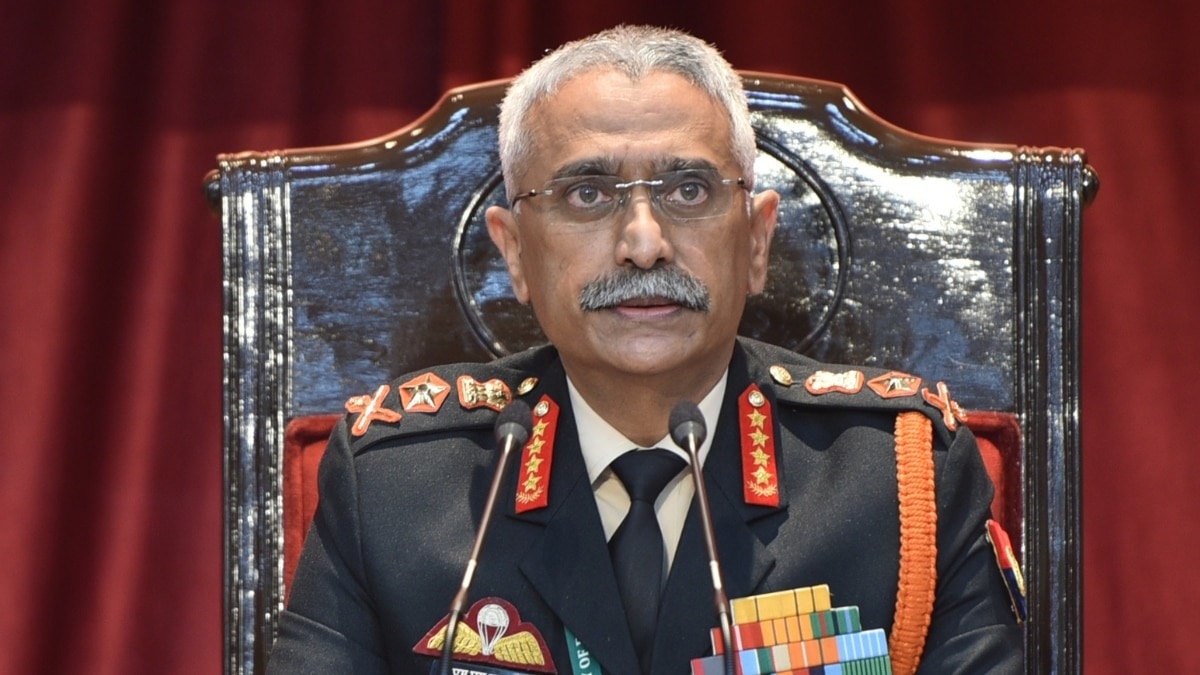
Former Army Chief General Manoj Naravane has drawn a sharp distinction between the immediate terrorist threat from Pakistan and the long-term multi-dimensional competition posed by China.
- Pakistan remains an immediate security threat due to persistent terrorism.
- China is emerging as India's primary long-term competitor in political, economic, and military spheres.
- Diplomacy must be backed by a credible military deterrent.
- Stability in neighboring countries like Myanmar and Bangladesh is vital for India's security.
Former Indian Army Chief General Manoj Naravane has provided a profound strategic assessment of India's security landscape. Speaking at the launch of his new book, 'The Curious and the Classified: Unearthing Military Myths and Mysteries', he differentiated the nature of challenges posed by India's two most significant neighbors.
According to Naravane, the threat from Pakistan is immediate and direct. The ongoing specter of terrorism and unsettled borders necessitate a constant focus on India's western frontier. He emphasized that the continuous support provided to terror groups makes Pakistan a persistent challenge that cannot be ignored.
Why This Matters
BozokMedia analysis shows that Naravane's distinction between an 'enemy' and a 'competitor' is crucial for India's grand strategy. While Pakistan represents a traditional security threat, China represents a systemic challenge that seeks to compete with India across every facet of national power.
"If you want peace, prepare for war."
Regarding China, Naravane deliberately chose the term 'competitor' rather than 'enemy.' He noted that the rivalry will transcend the military domain, encompassing political, economic, and trade sectors. He advocated for a balanced approach: utilizing dialogue and diplomatic mechanisms to resolve differences, while simultaneously maintaining a robust military deterrent to prevent any 'misadventure.'
Historical Background
India's security architecture has long been shaped by the dual challenges of a hostile Pakistan and a rising China. From the 1962 Sino-Indian War to the recent standoffs in Eastern Ladakh, the border dynamics have remained volatile. Simultaneously, decades of cross-border terrorism from Pakistan have necessitated a high state of military readiness along the Line of Control (LoC).
Furthermore, the General touched upon the importance of regional stability. He argued that India must play a proactive role in ensuring stability in Nepal, Bhutan, Bangladesh, and Myanmar. He warned that instability in these regions leads to spillover effects, including refugee influxes, drug trafficking, and illegal arms smuggling.
Frequently Asked Questions
1. How does General Naravane view the China-India relationship?
He views China as a long-term competitor in political, economic, and military spheres, rather than a traditional enemy.
2. Why is stability in Myanmar important for India?
Instability in neighboring countries like Myanmar can lead to direct consequences for India, such as refugee flows and smuggling.