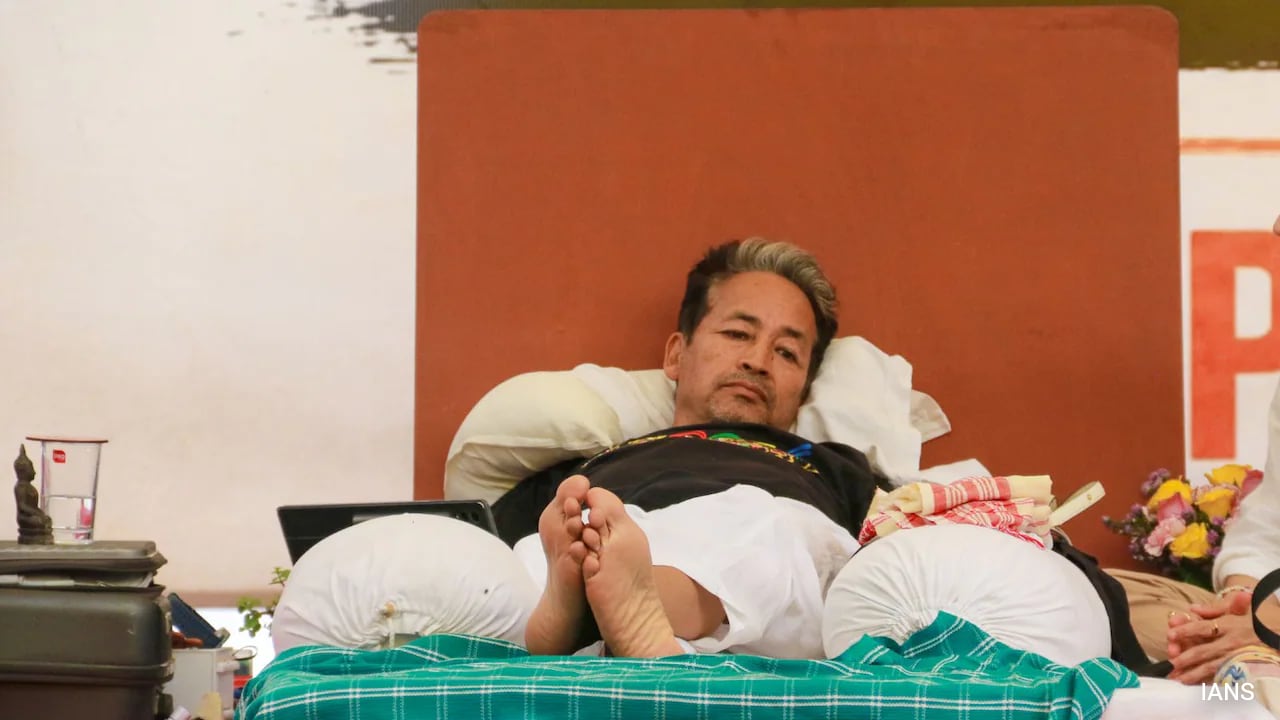
Activist Sonam Wangchuk, undergoing a hunger strike for over 20 days, has set three specific conditions for ending his protest.
Key Takeaways
- Sonam Wangchuk has been on a hunger strike for over 20 days.
- He has laid down three specific conditions for ending the fast.
- The core issue involves the Sixth Schedule and environmental protection for Ladakh.
Renowned environmental activist and innovator Sonam Wangchuk has taken a decisive stance regarding his prolonged hunger strike. After more than 20 days of fasting, which has garnered intense national attention, Wangchuk has announced that he will only terminate his protest if his three fundamental conditions are met and addressed by the government.
The Struggle for Ladakh's Identity
This movement is far more than a personal protest; it is a systemic battle for the ecological and constitutional safeguards of the Ladakh region. At the heart of Wangchuk's demands is the inclusion of Ladakh under the Sixth Schedule of the Indian Constitution. This measure is intended to protect the unique tribal culture and the extremely fragile Himalayan ecosystem from uncontrolled industrial exploitation.
"The future of Ladakh depends not just on political decisions, but on our collective will to protect its ecological integrity."
Why This Matters
BozokMedia analysis shows that this issue transcends local politics. If the administration fails to address these demands, it could lead to heightened civil unrest and long-term instability in a region that is strategically vital to India's national security. The geopolitical sensitivity of the Ladakh border makes local stability a matter of national importance.
Furthermore, from an economic perspective, the demand for the Sixth Schedule is a preemptive strike against unsustainable development. It seeks to ensure that the rapid influx of industrial projects does not deplete the scarce water resources and agricultural viability that the local population relies upon for survival.
Historical Background
Since the reorganization of Jammu and Kashmir in 2019, Ladakh has existed as a Union Territory without its own legislature. This change left many locals feeling disenfranchised, fearing that their land, jobs, and cultural heritage would be vulnerable to outsiders. This sense of insecurity has fueled the ongoing movement led by various local groups and activists to secure constitutional protections similar to those in the Northeast Indian states.
| Feature | Current Status | Wangchuk's Demand |
|---|---|---|
| Constitutional Protection | Union Territory (Limited Autonomy) | Sixth Schedule Safeguards |
| Land Rights | Central Government Controlled | Local Tribal Control |
| Environmental Policy | Open to Industrial Expansion | Strict Ecological Protections |
Frequently Asked Questions (अक्सर पूछे जाने वाले प्रश्न)
Question 1: What is the main demand of Sonam Wangchuk?
Answer: His primary demand is the implementation of the Sixth Schedule to provide constitutional safeguards for Ladakh's land and culture.
Question 2: Why is this protest being widely covered?
Answer: It highlights the tension between rapid industrial development and the preservation of fragile mountain ecosystems and indigenous rights.