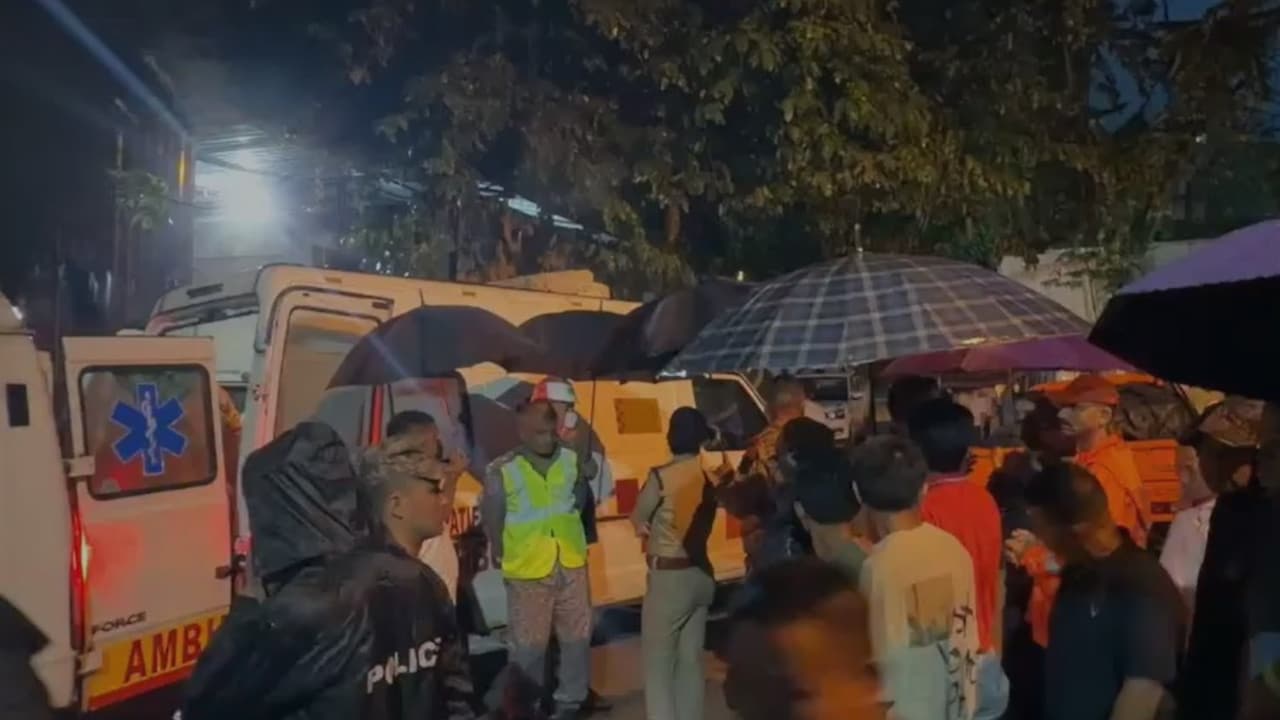
A catastrophic tunnel collapse in Sikkim's Namchi district has claimed 20 lives, with 5 workers still trapped under debris following a suspected methane gas blast.
Key Takeaways
- Massive tunnel collapse reported in Namchi district, Sikkim.
- At least 20 workers confirmed dead due to a suspected methane gas explosion.
- Rescue operations are ongoing for 5 workers still trapped under rubble.
- The incident highlights critical safety concerns in underground construction.
In a devastating incident in the Namchi district of Sikkim, a tunnel under construction collapsed following a suspected methane gas explosion. The tragedy, reported on Tuesday, has resulted in the confirmed deaths of at least 20 workers. For over 24 hours, rescue teams have been battling difficult terrain and unstable conditions to reach 5 other workers who remain trapped beneath the debris.
Local authorities and police officials have confirmed that the identification process is underway, with seven bodies having been identified so far. The rescue operation is being hampered by the structural instability of the tunnel and the potential presence of lingering hazardous gases, making the environment extremely volatile for the emergency responders.
Why This Matters (इसके मायने क्या हैं)
BozokMedia analysis shows that this incident is a stark reminder of the extreme risks associated with infrastructure development in ecologically sensitive and geologically unstable Himalayan regions. The collapse underscores a potential failure in real-time gas monitoring and ventilation protocols, which are essential in preventing such catastrophic explosions in confined underground spaces.
Beyond the immediate human loss, this tragedy will likely trigger intense scrutiny of safety compliance and oversight for major construction contracts in North-East India. For the economy and the construction industry, it highlights the urgent need for investing in advanced sensor technology and rigorous safety training to prevent recurring loss of life and project delays.
In high-altitude tunnel engineering, real-time atmospheric monitoring is the thin line between a successful project and a mass casualty event.
Historical Background
Tunneling in the Himalayan belt is one of the most challenging engineering feats in the world. Due to the complex tectonic activity and the presence of organic matter in the soil, pockets of methane and other flammable gases are frequently encountered. Historically, many infrastructure projects in states like Sikkim and Uttarakhand have faced delays or accidents due to landslides and underground gas pockets, necessitating specialized 'Explosion Proof' equipment and advanced geological mapping.
| Safety Element | Standard Requirement | Incident Observation |
|---|---|---|
| Gas Detection | Continuous automated sensing | Suspected failure/absence |
| Ventilation | High-capacity forced air systems | Insufficient for gas buildup |
| Emergency Response | Pre-planned evacuation drills | Delayed by structural collapse |
Frequently Asked Questions (अक्सर पूछे जाने वाले प्रश्न)
Question 1: What caused the tunnel to collapse?
Answer: Preliminary investigations suggest a sudden explosion caused by the accumulation of methane gas within the tunnel.
Question 2: What is the current status of the rescue mission?
Answer: Rescue teams are actively working to extricate the 5 trapped workers, though the process is slowed by unstable debris.