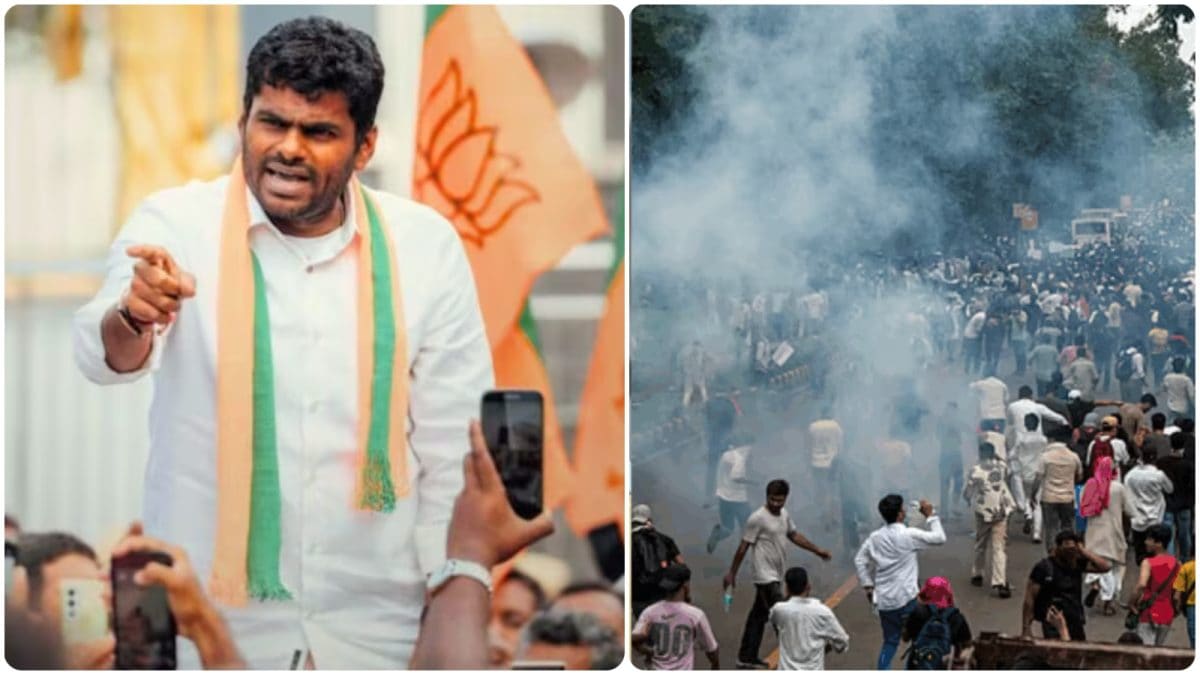
Former BJP Tamil Nadu chief K Annamalai stood with students protesting the NEET paper leak in Delhi, lambasting the central government's slow response. He called for transparent dialogue and swift action to safeguard the exam's integrity.
Key Takeaways
- Annamalai champions students' rights
- Criticizes the central government's delayed response
- Calls for transparency in the NEET examination process
In Delhi, where students have taken to the streets against the NEET paper leak, former BJP Tamil Nadu president K Annamalai raised his voice in support. In a tweet, he emphasized that the right to protest is a cornerstone of democracy and urged the government to engage in immediate dialogue with the demonstrators. Annamalai labeled the government's handling as "inconsistent" and a "failure of responsibility."
Historical Background
The National Eligibility cum Entrance Test (NEET) determines entry into medical colleges across India, shaping the futures of millions. Over the past five years, the question paper has been leaked three times, causing widespread anxiety and eroding confidence in the system. While NEET aims to provide equal opportunity, repeated breaches threaten its core objective.
Annamalai reiterated, "NEET has brought uniformity to student selection nationwide, but recurring leaks jeopardize this very fairness." He stressed that transparency is essential not only for academic justice but also for social equity.
Comparison Table
| Aspect | Government Stance | Student Demands |
|---|---|---|
| Response Time | Delayed, statements after days | Immediate dialogue and action |
| Transparency | Partial disclosures | Full public disclosure of processes |
| Accountability | Unclear responsibility | Clear accountability mechanisms |
“A lack of transparency in education undermines the very foundations of democracy.” – Education policy expert Prof. Rohit Sharma
Why This Matters
BozokMedia analysis shows that this student movement highlights the urgent need to reassess educational policies and exposes deep-rooted social inequities. When students lose faith in a trusted examination system, both individual futures and the nation's human capital suffer.
The government's hesitation erodes trust not only in educational institutions but also in political accountability. This protest could set a precedent for future rights‑based challenges, compelling policymakers to adopt stronger safeguards.
Frequently Asked Questions
Q1: What impact did the NEET paper leak have on students?
A: The leak caused confusion, uncertainty during the exam, and heightened mental stress, prompting many to protest.
Q2: What is Annamalai's primary demand?
A: He demands immediate dialogue, complete transparency, and concrete measures to prevent future leaks.