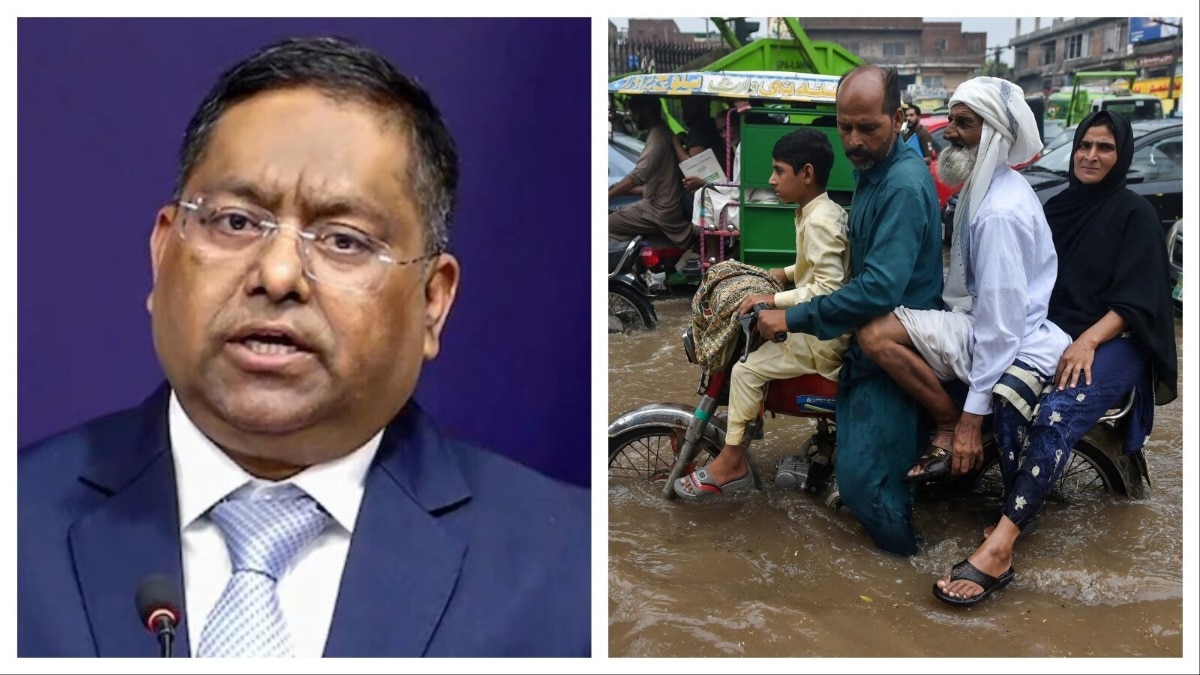
India has dismissed Pakistan's allegations of intentionally releasing water into the Chenab river, labeling them 'baseless.' The Ministry of External Affairs confirmed the rising water levels are due to heavy monsoon rains in Jammu.
Key Takeaways
- India rejected Pakistan's claims of intentional water release as 'factually incorrect.'
- Rising water levels in the Chenab river are a direct result of heavy monsoon rains in Jammu.
- Pakistan's own flood forecasting division attributed the rise to rainfall.
- India reaffirmed that J&K and Ladakh are integral parts of the nation.
New Delhi: The Government of India has decisively refuted allegations made by Pakistan claiming that India intentionally released water to trigger floods. The Ministry of External Affairs (MEA) described these accusations as 'baseless and contrary to facts,' stating that the increased water level in the Chenab River is solely due to intense monsoon rainfall in the Jammu region and surrounding catchment areas.
MEA spokesperson Randhir Jaiswal, during a media briefing, clarified that heavy precipitation occurred between July 20 and July 23, 2026. He emphasized that the surge in the river's flow is a natural hydrological process and not the result of any deliberate human intervention by India.
Why This Matters
BozokMedia analysis shows that this dispute transcends mere water management; it touches upon the sensitive Indus Waters Treaty and regional sovereignty. Pakistan's attempt to raise bilateral issues on multilateral platforms like the ASEAN Regional Forum is seen by India as a strategic move to internationalize the Kashmir issue.
"The rise in river levels is a natural seasonal phenomenon, not a result of artificial intervention."
India also countered the claim that it failed to provide advance flood warnings. According to the MEA, the water levels had not reached the critical threshold that would necessitate a special flood alert. Furthermore, India maintained a firm stance on territorial integrity, stating that Jammu & Kashmir and Ladakh are inseparable parts of India, and Pakistan has no standing to comment on them.
Historical Background
The Indus Waters Treaty (IWT), signed in 1960, governs the distribution of the Indus River system waters between India and Pakistan. Tensions regarding water sharing and dam construction frequently arise, often becoming a focal point in the broader geopolitical rivalry between the two neighbors.
Frequently Asked Questions
1. What were Pakistan's specific allegations?
Pakistan claimed that India released excess water into the Chenab river to cause flooding in Pakistani territories.
2. What is India's official response?
India states the flooding is due to natural heavy monsoon rains and that Pakistan's claims are politically motivated and factually wrong.