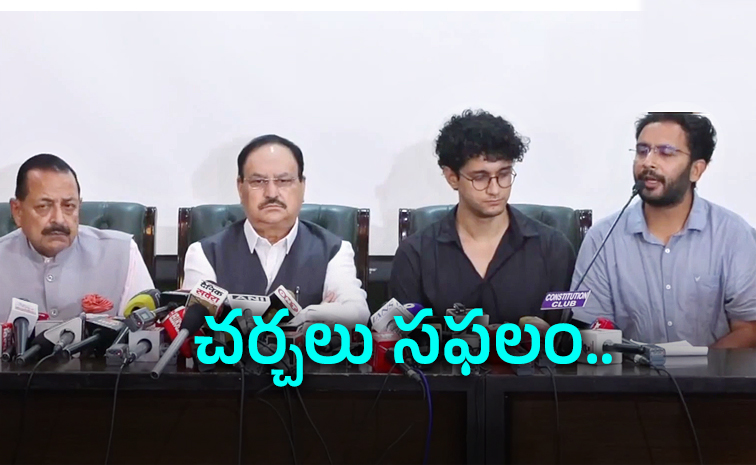
The CJP protest at Jantar Mantar has been called off following successful negotiations with the Central Government. The Centre has agreed to withdraw cases against students and provide compensation.
Key Takeaways
- The third round of talks between CJP and the Centre concluded successfully.
- The government agreed to withdraw legal cases filed against protesting students.
- The resignation of Education Minister Dharmendra Pradhan was a major milestone for the movement.
- The Centre assured no punitive action would be taken against the protesters.
New Delhi: In a significant breakthrough, the Cockroach Janata Party (CJP) has announced the end of its ongoing protest at Jantar Mantar. After nearly two hours of intense negotiations between CJP representatives and Central Ministers JP Nadda and Jitendra Singh, a consensus was reached on the core demands of the movement.
CJP leaders Sourav Das and Ashutosh Hazra confirmed that the government has conceded to three major demands. Most notably, the Centre has agreed to drop all criminal cases registered against the students involved in the protests. Furthermore, the government has promised to initiate compensation for those affected and has guaranteed that no retaliatory legal action will be taken against the protesters.
Why This Matters
BozokMedia analysis shows that this resolution marks a pivotal moment in student-led activism in India. The resignation of Union Minister Dharmendra Pradhan served as a catalyst, forcing the administration to shift from a stance of confrontation to one of dialogue and concession.
This movement has transcended a mere protest, evolving into a powerful demand for structural reform in the national education system.
Renowned activist Sonam Wangchuk hailed the development as a positive step for 'New India,' congratulating the youth for their resilience. He emphasized the need for radical changes in the education sector and urged students to maintain restraint as they transition back to normalcy. CJP has advised students to return home safely and plans to reconvene discussions with the government in four weeks.
Frequently Asked Questions
Q1: What were the primary demands of the CJP?
A: The main demands included the withdrawal of cases against students, the resignation of the Education Minister, and financial compensation.
Q2: What happens next for the protesters?
A: The CJP has called for students to disperse peacefully and return home, with a follow-up meeting scheduled with the government in a month.