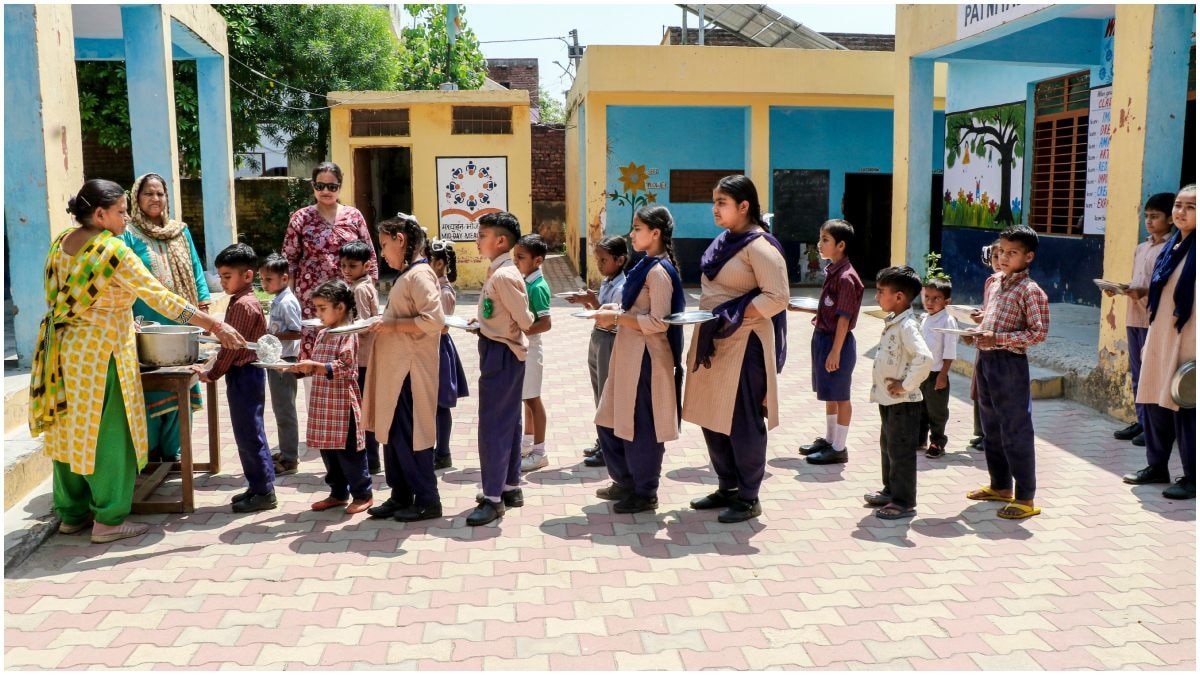
From its humble beginnings in 1920 to the modern PM Poshan scheme, explore how India's Mid-Day Meal menu has transformed from raw grains to nutritious meals including eggs and biryani.
Key Takeaways
- Tamil Nadu proposes serving chicken biryani once a week in schools.
- The concept dates back to 1920 with the Madras Corporation's initiatives.
- In 2021, the scheme was rebranded as 'PM Poshan'.
- It is now the world's largest school meal program, serving over 120 million children.
The menu of India's Mid-Day Meal scheme is once again at the center of national debate. A recent proposal from the Tamil Nadu government to introduce chicken biryani once a week in schools has sparked widespread discussion. Simultaneously, political debates regarding the inclusion of eggs in West Bengal have brought the scheme back into the limelight.
Historical Background: From Madras to PM Poshan
The journey of school feeding in India is long and storied. While the large-scale national program began in 1995, the concept was pioneered much earlier. The first major initiative was taken by the Madras Corporation in 1920. Following independence, Tamil Nadu's Chief Minister K. Kamaraj played a pivotal role in 1956 with the 'School Feeding Scheme'. Kerala followed suit, officially taking over the program in 1984, making it the second state to implement such a scheme.
Why This Matters
BozokMedia analysis shows that the Mid-Day Meal scheme is more than just a food program; it is a critical tool in India's fight against malnutrition. By providing consistent nutrition, the scheme directly impacts school enrollment, attendance, and dropout rates. However, as menus evolve to include proteins like eggs or meat, they often become flashpoints for socio-political discussions.
The evolution of the Mid-Day Meal reflects India's shifting nutritional priorities and its complex socio-political landscape.
In 2021, the Modi government rebranded the scheme as 'PM Poshan Shakti Nirman'. Today, it serves over 12 crore (120 million) children across the country, making it the largest nutritional intervention of its kind globally.
Regional Menu Variations
The menu varies significantly across states. States like Kerala, Tamil Nadu, and Karnataka include eggs in the diet, whereas states like Gujarat, Rajasthan, and Uttar Pradesh strictly follow a vegetarian menu consisting of dal, rice, and seasonal vegetables.
| Feature | Early Era (1920-1995) | Modern Era (PM Poshan) |
|---|---|---|
| Primary Food | Raw Grains (Rice/Wheat) | Cooked Nutritious Meals |
| Menu Diversity | Limited (Grains only) | High (Eggs, Milk, Fruits, Biryani in some states) |
| Scale | Local/Regional | National (120M+ children) |
Frequently Asked Questions
1. What is the current official name of the Mid-Day Meal scheme?
It is now officially known as 'PM Poshan' or 'PM Poshan Shakti Nirman'.
2. Do all Indian states serve non-vegetarian food?
No, the menu is determined by state governments. Many states serve strictly vegetarian meals, while others include eggs or meat.