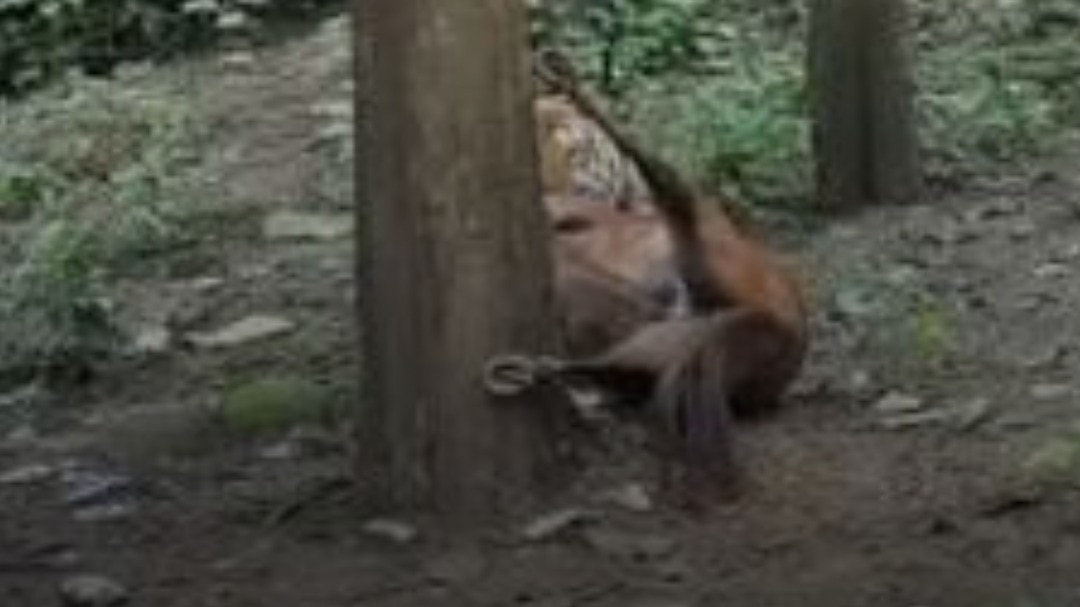
A terrifying incident occurred near Jim Corbett National Park where a tiger preyed on a horse right before the eyes of stunned tourists.
- A tiger attacked and dragged away a horse near Jim Corbett National Park.
- The incident took place in the direct presence of tourists.
- Local authorities are monitoring the situation closely.
In a chilling display of nature's raw power, a tiger was captured dragging a horse away in the presence of tourists near the Jim Corbett National Park area. The incident has sent shockwaves through the local community and the tourism industry, highlighting the unpredictable nature of wildlife encounters in the buffer zones.
Witnesses reported that the predator struck with lightning speed, catching the horse off guard. As the tourists watched in a mix of horror and fascination, the tiger successfully subdued its prey and began dragging it into the dense undergrowth. This event underscores the high-risk environment that exists even in well-monitored wildlife regions.
Why This Matters
BozokMedia analysis shows that as human encroachment increases near protected forest boundaries, the frequency of human-wildlife conflict is escalating. Such incidents not only pose a threat to livestock but also create a sense of insecurity among tourists visiting these high-profile conservation areas.
The proximity of livestock to tiger habitats significantly increases the likelihood of predatory encounters.
Historical Background: Jim Corbett National Park, established in 1936, is one of India's oldest and most significant tiger reserves. While it has been highly successful in tiger conservation, the expansion of surrounding human settlements has created a complex interface between predators and domestic animals.
Frequently Asked Questions
1. Is it safe to visit Jim Corbett after this incident?
Yes, but visitors are advised to follow strict forest department guidelines and stay within designated safari vehicles.
2. How does the forest department respond to such attacks?
The department deploys patrol teams and uses camera traps to monitor the movement of the specific tiger involved.

