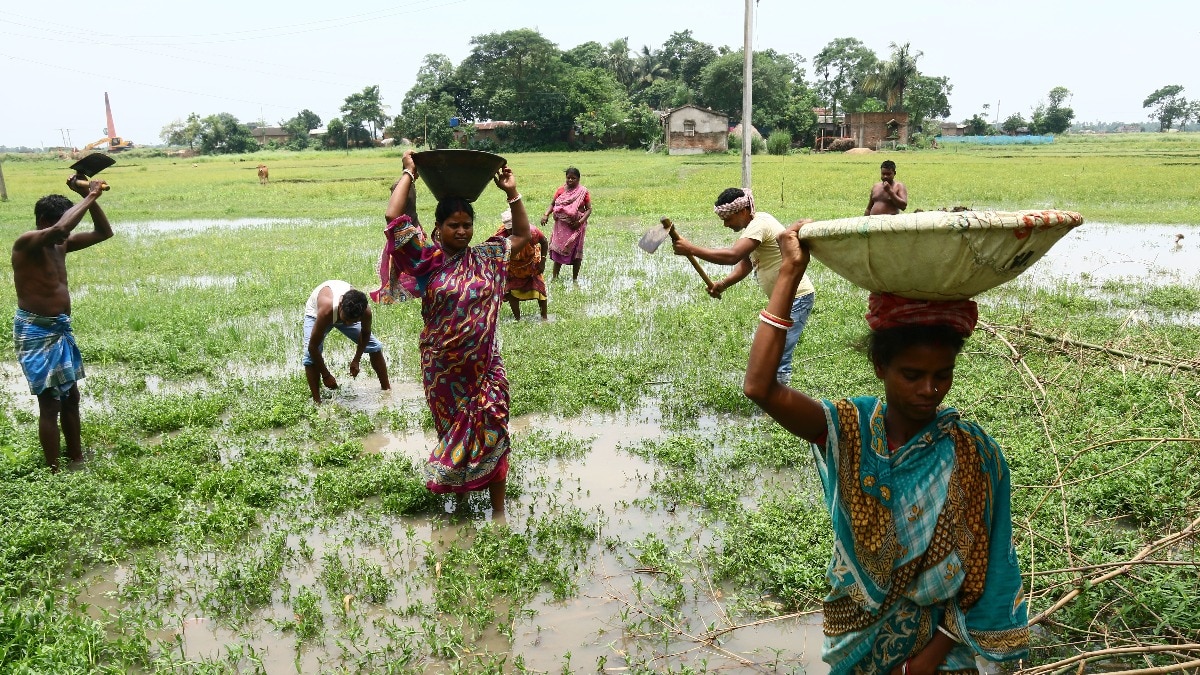
India's newly launched rural employment program VB‑G RAM G saw a near‑half decline in person‑days during its first full month, dropping from 15.33 crore to 7.67 crore in July. The sharp fall raises concerns over implementation and future job creation.
Key Takeaways
- VB‑G RAM G person‑days fell 49.94% in the first month
- July 2026 recorded 7.67 crore person‑days versus 15.33 crore a year earlier
- Government has not yet provided a detailed explanation
Background
The central government replaced the two‑decade‑old Mahatma Gandhi National Rural Employment Guarantee Scheme (MGNREGS) with the Viksit Bharat‑Guarantee for Rozgar and Ajeevika Mission (Gramin), abbreviated VB‑G RAM G, effective 1 July. The revamped scheme promises an increase in the annual guarantee from 100 to 125 days and higher wages.
First‑Month Numbers
Official data indicates that person‑days generated in July 2026 dropped to 7.67 crore, down from 15.33 crore in July 2025 – a 49.94% year‑on‑year decline. This unexpected dip has sparked questions about the scheme’s rollout and effectiveness.
Historical Background
Since its inception in 2005, MGNREGS has been a cornerstone of rural India’s employment landscape, delivering over 10 crore households with work by 2020. Yet, over the years, the scheme faced criticism for delayed payments, low wage rates, and limited asset creation, prompting the government to design a more robust successor.
Why This Matters
BozokMedia analysis shows that a sudden 50% dip in rural job creation can ripple through agricultural productivity, migration patterns, and overall rural livelihoods, making it a critical metric for policymakers.
"If this decline stems from structural bottlenecks, it could jeopardize the economic stability of millions of rural families," said senior economist Anshu Sharma.
Frequently Asked Questions
Q1: Has VB‑G RAM G actually increased wages?
A1: The scheme pledged a 25% wage hike, but actual disbursements vary by state and implementation pace.
Q2: Is the sharp decline linked to the transition from MGNREGS?
A2: While the government cites a smooth transition, the lack of detailed data suggests possible operational hiccups during the handover.

