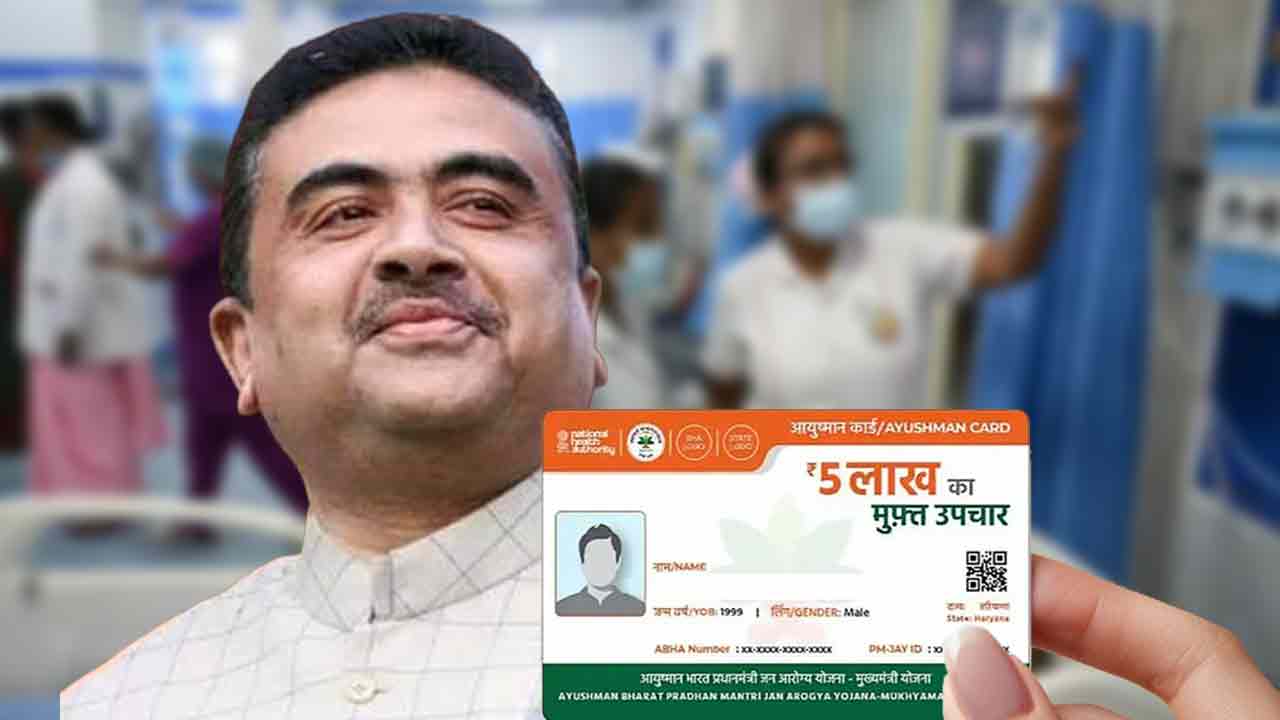
The state government has officially launched the Ayushman Bharat health insurance scheme, detailing the verification process for beneficiaries and the fallback options for those not listed.
- Approximately 1.43 crore families (6 crore individuals) will benefit from Ayushman Bharat.
- Eligible users can download cards via the official website after database verification.
- All senior citizens above 70 years are automatically covered.
- Those missing from the database can apply for the Chief Minister's Health Insurance Scheme.
In a major push towards universal healthcare, Chief Minister Subhendu Adhikari launched the central government's Ayushman Bharat health insurance scheme at the Netaji Indoor Stadium. The state administration has released a comprehensive framework on how beneficiaries are being identified and verified to ensure the benefits reach the intended marginalized sections of society.
The selection process begins with a primary screening of the project's database based on specific socio-economic indicators. Individuals whose names are already present in this database can simply download their Ayushman cards from the designated portal. However, for those not found in the initial list, the administration will cross-reference data from the National Food Security Act (NFSA) of 2013, covering three categories of ration cards.
Verification and e-KYC Protocols
For individuals identified through the NFSA database, the next critical step is e-KYC (electronic Know Your Customer). The government is conducting door-to-door verification. If the e-KYC is complete, the user must wait for card issuance or check their status online. If the process is incomplete, the beneficiary must complete the verification to qualify for the health card.
Why This Matters
BozokMedia analysis shows that by leveraging NFSA data, the government is minimizing administrative friction and targeting the most vulnerable demographics. This hybrid approach—combining a central scheme with a state-specific fallback (the CM Health Insurance Scheme)—ensures a comprehensive safety net that prevents citizens from falling into poverty due to catastrophic health expenditures.
"Integrating health insurance with existing food security databases is a textbook example of converged governance, maximizing reach while minimizing redundant data collection."
Under this scheme, eligible families can access cashless treatment up to INR 5 Lakhs per year at both government and empaneled private hospitals. The coverage includes 1,950 medical conditions, including high-cost procedures like knee replacements. Additionally, the Amrit Pharmacy will provide medicines at a discounted rate of 50% to 80%.
Eligibility is primarily extended to landless laborers, families from Scheduled Castes (SC) and Scheduled Tribes (ST), those living in kutcha houses or single-room dwellings, and households without a working male member aged 16-59. Notably, all senior citizens above 70 years are included regardless of other criteria.
| Scheme | Estimated Beneficiaries | Key Benefit |
|---|---|---|
| Ayushman Bharat | 6 Crore Citizens | ₹5 Lakh Cashless Treatment |
| CM Health Insurance | 80 Lakh Citizens | State-level Health Coverage |
Frequently Asked Questions
Q1: What should I do if my name is not in the Ayushman Bharat database?
A: If you are not listed in the project database or the NFSA records, you can apply for the Chief Minister's Health Insurance Scheme.
Q2: Can this card be used in private hospitals?
A: Yes, the card is valid at all government hospitals and empaneled private healthcare providers across the country.
