India and France have upgraded their decades-old ties to a 'Special Global Strategic Partnership'. From the acquisition of Rafale jets to potential collaboration on 6th-generation aircraft, the two nations are redefining global defense dynamics.
- India-France ties upgraded to 'Special Global Strategic Partnership'.
- Potential Indian participation in the 6th Generation Fighter Aircraft (FCAS) project.
- Strategic focus on 114 additional Rafale jets and Scorpene-class submarines.
- Shift from a buyer-seller relationship to a co-development and co-production model.
The recent meeting between Prime Minister Narendra Modi and French President Emmanuel Macron in Nice was more than a formal bilateral discussion on the sidelines of the G-20. It marked the formal elevation of their relationship to a 'Special Global Strategic Partnership', reflecting a deep-seated trust built over decades.
A Legacy of Trust
Since the 1950s, India has operated various French military assets, including the Jaguar, Mirage-2000, and now the Rafale. This history of reliability was formalized in 1998 when Prime Minister I.K. Gujral and President Jacques Chirac signed the first-ever strategic partnership between India and a Western nation, focusing on defense, nuclear energy, and space exploration.
Expanding the Defense Horizon
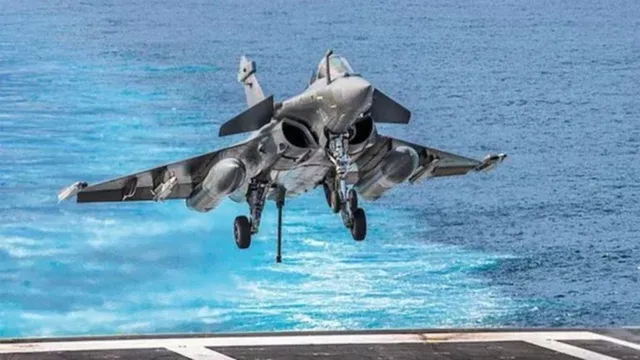
The partnership has evolved from simple procurement to complex integration. The delivery of 36 Rafale jets in 2022 and the launch of the sixth Scorpene-class submarine in early 2025 highlight the operational synergy. Furthermore, the agreement for 26 Rafale-M jets for the Indian Navy underscores the maritime dimension of this alliance.
BozokMedia analysis shows that India is aggressively pursuing a strategy of 'Co-Sovereignty'. By partnering with Safran for MRO facilities in Hyderabad and co-producing 'Hammer' missiles with BEL, India is ensuring that it doesn't just buy weapons but owns the technology and maintenance infrastructure.
"The India-France bond is unique because it is based on mutual respect for strategic autonomy, allowing both nations to collaborate without being bound by a formal military alliance."
Strategic integration has now extended into the cosmos. India has transitioned from an observer to a full participant in the France-led ASTERIX space military exercise, recognizing the growing importance of space security in modern warfare.
The 6th Generation Jet Ambition
The most significant leap is India's potential involvement in the Future Combat Air System (FCAS). While France, Germany, and Spain are the primary drivers, India's strategic needs—specifically aircraft carrier operations and nuclear deterrence—align closely with France's vision, making India a natural partner for this next-gen project.
| Feature | Traditional Partnership (Old) | Special Global Partnership (New) |
|---|---|---|
| Role | Customer (Buyer) | Co-Creator (Partner) |
| Technology | Platform Procurement | 6th Gen Jet Co-development |
| Scope | Defense & Nuclear | AI, Space & Blue Economy |
Q1: What is a 6th Generation Fighter Jet?
Answer: These are future aircraft featuring advanced AI, superior stealth, and network-centric capabilities that far exceed the current 4.5 or 5th generation jets.
Q2: What is the status of the 114 Rafale aircraft deal?
Answer: Dassault Aviation has submitted its technical and commercial proposal, which is currently under review by the Indian Ministry of Defence.