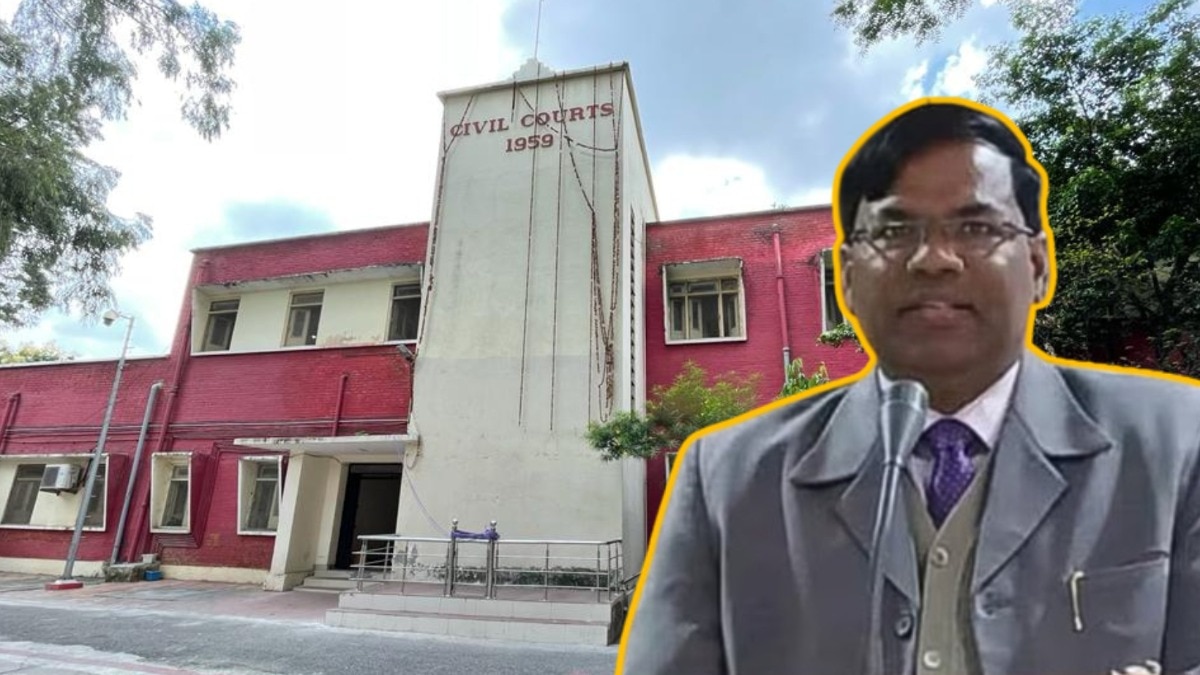
In an unprecedented judicial streak, Justice Ravi Kumar Diwakar of Muzaffarnagar has sentenced 22 individuals to death across 10 cases in just four months, sparking a national debate on the 'rarest of rare' doctrine.
- Justice Ravi Kumar Diwakar sentenced 22 people to death between April and August 2026.
- The sentences span 10 high-profile cases, including the murder of a lawyer and a home guard.
- The judge previously gained fame for the Gyanvapi mosque videographic survey order.
- All death sentences are subject to mandatory confirmation by the Allahabad High Court.
The judicial landscape of Uttar Pradesh has been shaken by the rapid succession of capital punishments handed down by Justice Ravi Kumar Diwakar. Serving at Fast Track Court No. 3 in Muzaffarnagar since November 2025, Justice Diwakar has pronounced 22 death sentences in a span of just four months. This statistical anomaly has drawn intense scrutiny from legal experts and human rights observers alike.
To put this in perspective, the Death Penalty in India: Annual Statistics Report 2025 by the Square Circle Clinic at NALSAR University of Law revealed that trial courts across the entire state of Uttar Pradesh handed down only 28 death sentences in 20 cases throughout the whole of 2025. Justice Diwakar has nearly matched the state's annual total in a fraction of the time.
The Nature of the Crimes
The 10 cases handled by Justice Diwakar involve heinous crimes that the court classified under the "rarest of rare" doctrine. Notable cases include the 2019 abduction and murder of advocate Sameer Saifi over a financial dispute of ₹40 lakh, the killing of home guard Ratiram while on duty, and the brutal murder of farmer Rajendra Saini. Additionally, a 2011 highway robbery-murder case resulted in four death sentences on July 17.
| Case Type | Date of Sentence | Number of Death Sentences |
|---|---|---|
| Advocate Sameer Saifi Murder | April 6 | 3 |
| Farmer Rajendra Saini Murder | June 20 | 2 |
| Home Guard Ratiram Murder | July 2 | 1 |
| Highway Robbery-Murder (2011) | July 17 | 4 |
Why This Matters
BozokMedia analysis shows that this surge in capital sentencing raises critical questions about judicial consistency and the application of the 'rarest of rare' framework. While fast-track courts are designed to expedite justice, the sheer volume of death penalties from a single courtroom suggests a stringent interpretative approach to sentencing that may face significant challenges during the mandatory High Court confirmation process.
The gap between trial court death sentences and High Court confirmations often highlights the tension between immediate societal retribution and long-term legal prudence.
The Profile of Justice Ravi Kumar Diwakar
Born in July 1980 and appointed as a civil judge in 2009, Justice Diwakar has a storied career across various UP districts, including Varanasi, Bareilly, and Sultanpur. He first entered the national consciousness in 2022 when he ordered the videographic survey of the Gyanvapi mosque complex, a move that placed him at the center of one of India's most volatile religious disputes. Following that order, he reportedly faced international death threats.
His tenure has not been without controversy. In March 2024, he referred to CM Yogi Adityanath as a "philosopher king" in an order regarding the 2010 Bareilly riots—a remark that was subsequently expunged by the Allahabad High Court.
Frequently Asked Questions
Q1: Will the 22 convicts be executed immediately?
No. Under Indian law, all death sentences passed by a trial court must be confirmed by the High Court before they can be carried out.
Q2: What is the 'rarest of rare' doctrine?
It is a judicial guideline used by Indian courts to ensure the death penalty is reserved only for crimes that are exceptionally brutal or shocking to the collective conscience of society.

