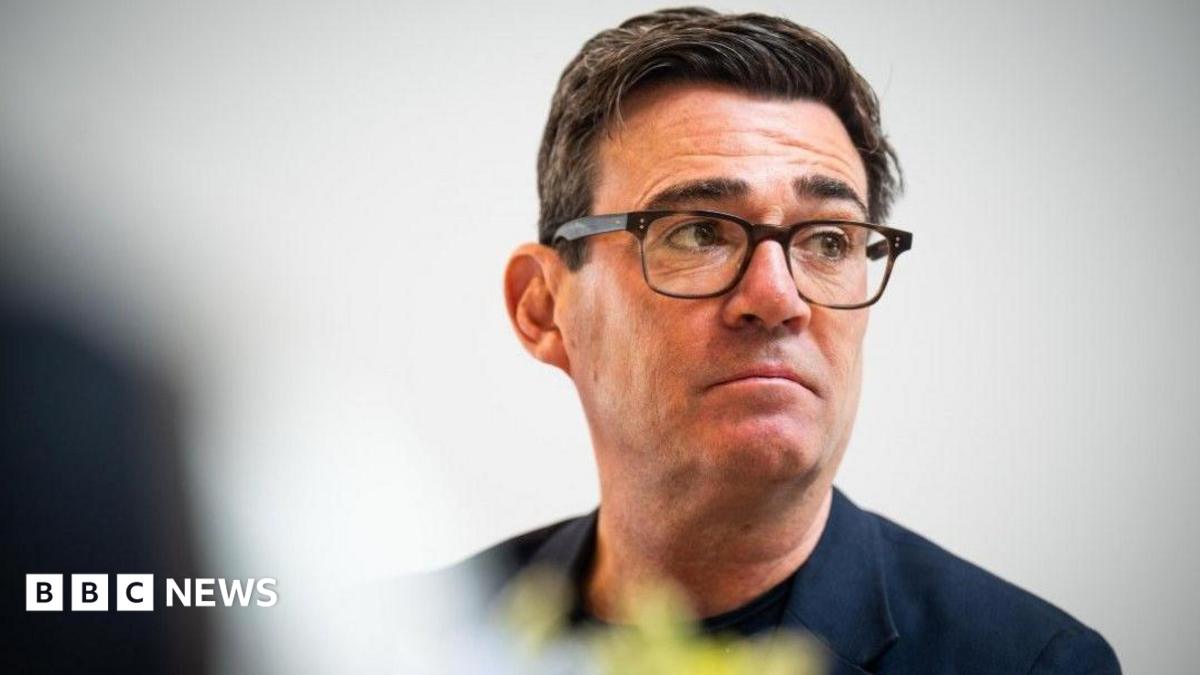
UK Prime Minister Andy Burnham has been targeted in a sophisticated impersonation scam involving a person posing as Donald Trump's Chief of Staff. The breach highlights growing vulnerabilities in high-level diplomatic communications.
- PM Andy Burnham communicated with an imposter claiming to be Susie Wiles.
- Downing Street refused to comment, citing national security protocols.
- The incident follows a history of cyber-attacks targeting Susie Wiles and other global leaders.
In a startling security lapse, Prime Minister Andy Burnham exchanged text messages with an individual posing as Susie Wiles, the Chief of Staff to US President Donald Trump. The breach, first brought to light by Politico, has raised urgent questions regarding the verification processes used by the UK government for international outreach.
According to reports, the Prime Minister engaged in a brief exchange of messages before becoming suspicious of the contact's legitimacy. Government sources have attempted to downplay the incident, asserting that "no messages of significance" were exchanged and that the matter was promptly reported to the appropriate security authorities.
Why This Matters
BozokMedia analysis shows that this incident underscores a dangerous trend of 'Social Engineering' at the highest levels of government. The transition from formal, secure diplomatic cables to informal messaging apps has created a systemic vulnerability. When a Prime Minister can be deceived by a spoofed identity, it suggests that the 'human element' remains the weakest link in the global cybersecurity chain.
The target of the impersonation, Susie Wiles, has been a recurring victim of cyber espionage. The FBI previously probed a hack of Wiles' personal phone in May last year, where an impersonator used her contact list to message other high-ranking US officials, including senators and governors. Furthermore, Wiles was targeted by a cyber espionage unit linked to Iran's Revolutionary Guards in 2024.
"The weaponization of identity in the digital age means that a single spoofed text can potentially trigger a diplomatic crisis if not caught in time."
This is not the first time a high-ranking British official has fallen for such a ruse. In 2024, former Foreign Secretary David Cameron was the victim of a hoax video call from someone pretending to be former Ukrainian President Petro Poroshenko. Lord Cameron had previously dealt with Poroshenko during his tenure as Prime Minister, making the deception particularly effective.
| Leader | Impersonated Identity | Medium | Outcome |
|---|---|---|---|
| Andy Burnham | Susie Wiles (USA) | Text Messages | Internal Security Review |
| David Cameron | Petro Poroshenko (Ukraine) | Video Call/Text | Public Disclosure |
Frequently Asked Questions
Q1: Did the Prime Minister leak any classified information?
A: Sources state that no significant information was exchanged and the communication was halted as soon as suspicion arose.
Q2: Was the official government phone used for this communication?
A: The report indicates the messages were exchanged, but it does not specify if they were on a secure government device or a personal one.