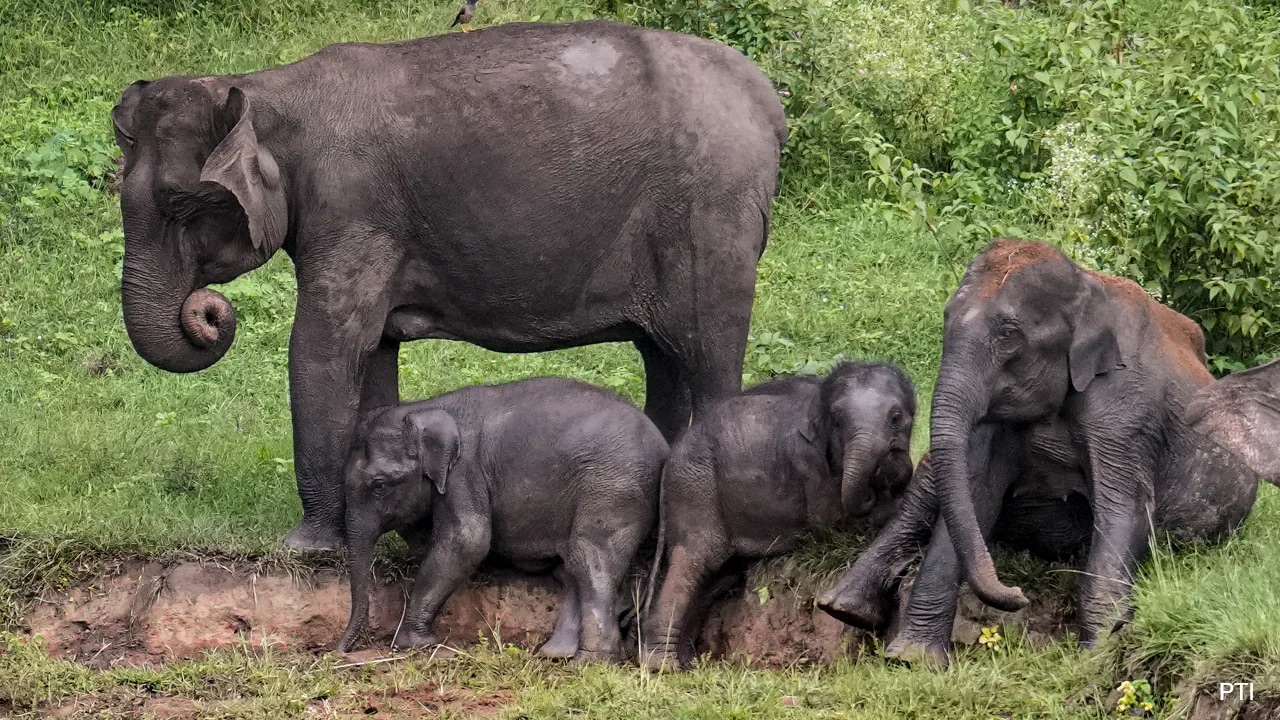
In a landmark judgment, the Supreme Court of India has emphasized that the protection of elephant corridors is paramount, ruling that agricultural losses cannot justify the obstruction of these vital migratory paths.
- Supreme Court prioritizes wildlife conservation over temporary crop losses.
- Elephant corridors are deemed essential for the survival of the species and human safety.
- Technical data from the Wildlife Institute of India (WII) supports the mapping of four critical regions.
The Supreme Court of India has delivered a decisive ruling stating that claims of crop damage by local farmers do not provide sufficient legal grounds to block or divert established elephant corridors. The court emphasized that these migratory paths are not merely strips of land but are critical biological lifelines that ensure the genetic diversity and survival of the Asian elephant population.
The ruling comes amidst increasing human-wildlife conflict in regions where agricultural expansion has encroached upon traditional migratory routes. By prioritizing the corridors, the judiciary aims to reduce long-term conflict by ensuring elephants have a designated, unobstructed path, thereby preventing them from wandering into human settlements in search of food.
Why This Matters
BozokMedia analysis shows that this verdict sets a powerful legal precedent for environmental jurisprudence in India. It signals a shift from a human-centric approach to a more holistic ecological perspective, acknowledging that the cost of crop damage is far lower than the ecological catastrophe of species extinction or the loss of human life during unpredictable elephant encounters.
"Protecting corridors is the only sustainable way to mitigate human-elephant conflict; any other approach is a temporary bandage on a deep wound."
According to the Elephant Corridors of India, 2023 report, developed with technical support from the Wildlife Institute of India (WII), the country's corridors are strategically spread across four major geographical regions. These regions are critical for seasonal movement and access to water sources.
Historically, India has struggled to balance the needs of its agrarian economy with its commitment to the Wildlife Protection Act. The encroachment of these corridors has led to fragmented habitats, forcing elephants into smaller pockets of forest, which exponentially increases the frequency of raids on farmland.
| Aspect | Without Corridors | With Protected Corridors |
|---|---|---|
| Animal Behavior | Erratic, entering villages | Predictable migratory patterns |
| Human Safety | High risk of casualties | Reduced unplanned encounters |
| Biodiversity | Genetic isolation | Healthy genetic exchange |
Frequently Asked Questions
Q1: What is an elephant corridor?
A: An elephant corridor is a narrow strip of land that connects two larger habitats, allowing elephants to move safely between them for food, water, and mating.
Q2: Will farmers be compensated for crop damage?
A: While the court ruled against blocking corridors, compensation for crop damage is typically handled by state forest departments under specific government schemes.