An American filmmaker's experience of receiving free emergency care at a rural government hospital in Odisha has highlighted the stark contrast between Indian and US healthcare costs.
- American filmmaker Mike received free emergency treatment at a rural Odisha government hospital.
- Treatment was covered under the state's Gopabandhu Jana Arogya Yojana.
- The incident highlights the vast cost disparity between US and Indian public healthcare.
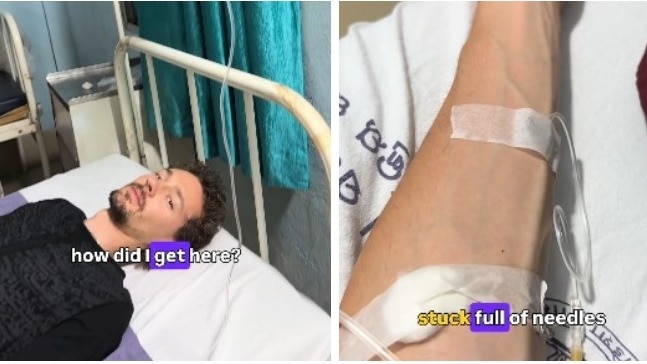
In a surprising turn of events, an American filmmaker named Mike found himself in a rural government hospital in Odisha after falling severely ill. Suffering from persistent vomiting for nearly 12 hours, Mike was administered intravenous (IV) fluids, anti-nausea medication, and injections to stabilize his condition.
The real shock came during the discharge process. Expecting a significant bill, Mike was stunned to find that the entire treatment was provided free of charge. In his personal estimation, the same set of basic medical interventions in the United States could have easily cost him several thousand dollars.
Why This Matters
BozokMedia analysis shows that this incident serves as a powerful testament to India's dual-track healthcare system. While India is aggressively marketing itself as a high-end medical tourism destination for elective surgeries, its public health infrastructure—often overlooked—provides a critical, low-cost safety net that can surprise even the most affluent foreign visitors.
"The ability of a rural Indian facility to provide immediate, cost-free stabilization to a foreign national reflects the expanding reach of state-funded health mandates."
The reason for this free care lies in the Gopabandhu Jana Arogya Yojana, a comprehensive government-funded scheme in Odisha. This initiative ensures that healthcare services at state facilities, including government medical colleges, are free for all individuals regardless of their income, social status, or place of residence. This coverage extends to diagnostics, inpatient care, and essential medicines.
Furthermore, the Niramaya programme complements this by providing free medicines to registered patients, ensuring that the cost of pharmacy bills does not hinder recovery.
It is important to note that Mike's experience was not 'medical tourism' in the traditional sense—he did not travel to India for treatment—but it illustrates the accessibility of the public network. India's system is a complex mix of world-class private hospitals and a vast, government-funded public network.
| Feature | US Healthcare (Estimated) | Odisha Govt Healthcare |
|---|---|---|
| Basic IV Treatment Cost | Thousands of Dollars | Free (Zero Cost) |
| Access Model | Insurance-based/High Out-of-pocket | Government-funded/Universal |
| Rural Availability | Limited/Expensive | Widespread (PHC/CHC Network) |
Frequently Asked Questions
Q1: Is healthcare free for all foreigners in India?
No, it depends on the facility. While some government schemes in specific states provide free care, private hospitals charge market rates.
Q2: What is the Gopabandhu Jana Arogya Yojana?
It is an Odisha state government scheme that provides free medical services and diagnostics at government healthcare facilities for all citizens and visitors.