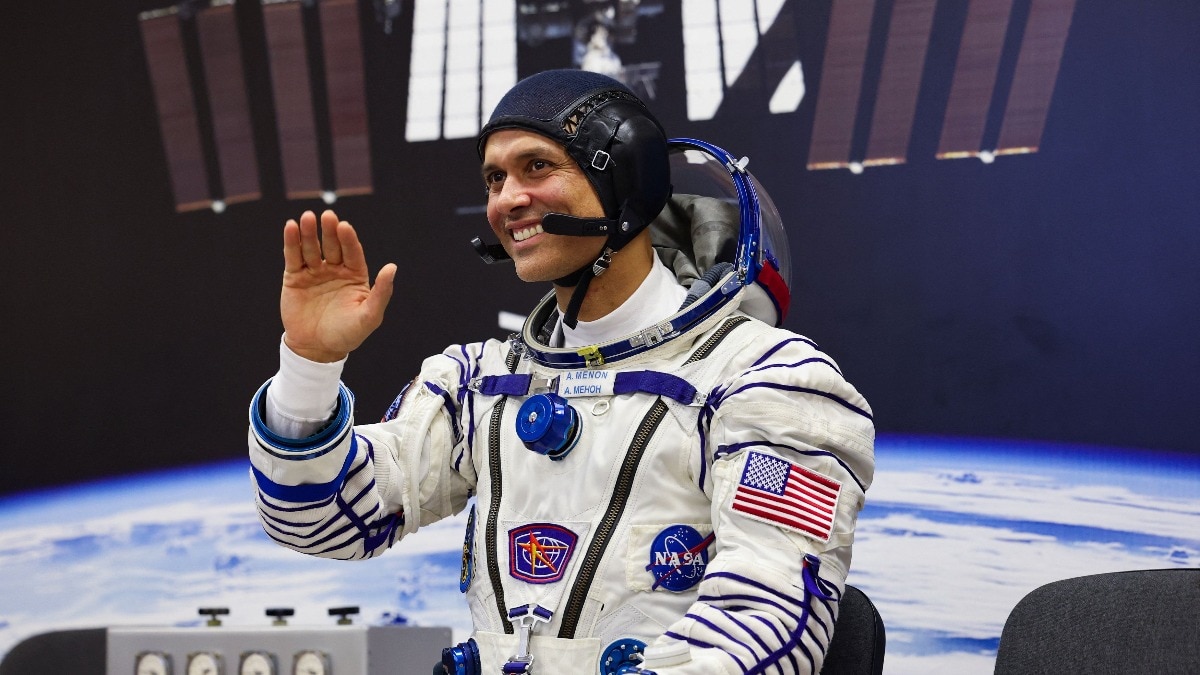
In a daring feat of endurance, astronaut Anil Menon is set to conduct his second spacewalk today, marking a rare occurrence of back-to-back missions within a 10-day window.
- Anil Menon will perform his second EVA within a 10-day span.
- The mission focuses on critical external repairs and hardware installation on the ISS.
- This rapid turnaround tests the limits of astronaut physiological recovery.
Pushing the boundaries of human endurance, Anil Menon is scheduled to exit the airlock today for his second spacewalk. Conducting two Extravehicular Activities (EVAs) within just ten days is an uncommon and grueling schedule, requiring peak physical condition and meticulous planning.
The primary objective of today's mission is to address urgent technical anomalies on the exterior of the International Space Station (ISS). The tasks involve intricate maneuvers in a microgravity environment, where precision is paramount to ensure the safety of the crew and the integrity of the station.
Why This Matters
BozokMedia analysis shows that the acceleration of EVA schedules suggests a shift toward more aggressive maintenance cycles for orbital assets. This strategy is crucial as agencies prepare for more complex deep-space missions where rapid response to hardware failure is non-negotiable.
"Performing consecutive EVAs in such a tight timeframe is a high-stakes operation that demands absolute synchronization between the astronaut and ground control."
Historically, spacewalks have been the most perilous part of any mission. From the early days of the Gemini and Apollo programs to the current ISS era, the risks of decompression and equipment failure have always been present. However, modern suits and real-time telemetry have significantly mitigated these dangers.
Menon's performance today will provide invaluable data on 'astronaut fatigue' and the efficiency of current recovery protocols. This information will be instrumental for future long-duration missions to the Moon's south pole or the Martian surface, where similar high-intensity work cycles may be required.
Frequently Asked Questions
Q1: What is an EVA?
A: EVA stands for Extravehicular Activity, referring to any task performed by an astronaut outside a spacecraft.
Q2: Why is the 10-day interval significant?
A: Most astronauts require longer recovery periods between EVAs due to the extreme physical exertion and the stress of operating in a vacuum.