From bus fare hikes in Vidisha to school mergers in Ujjain and Bhopal, Madhya Pradesh's schoolchildren are rewriting the rules of activism. Without political backing, these young voices successfully forced administrative shifts.
- Vidisha students successfully forced a rollback of increased private bus fares.
- Ujjain administration halted school mergers following student sit-ins and CM intervention.
- Bhopal students are protesting the proposed merger of DMS into the KVS network.
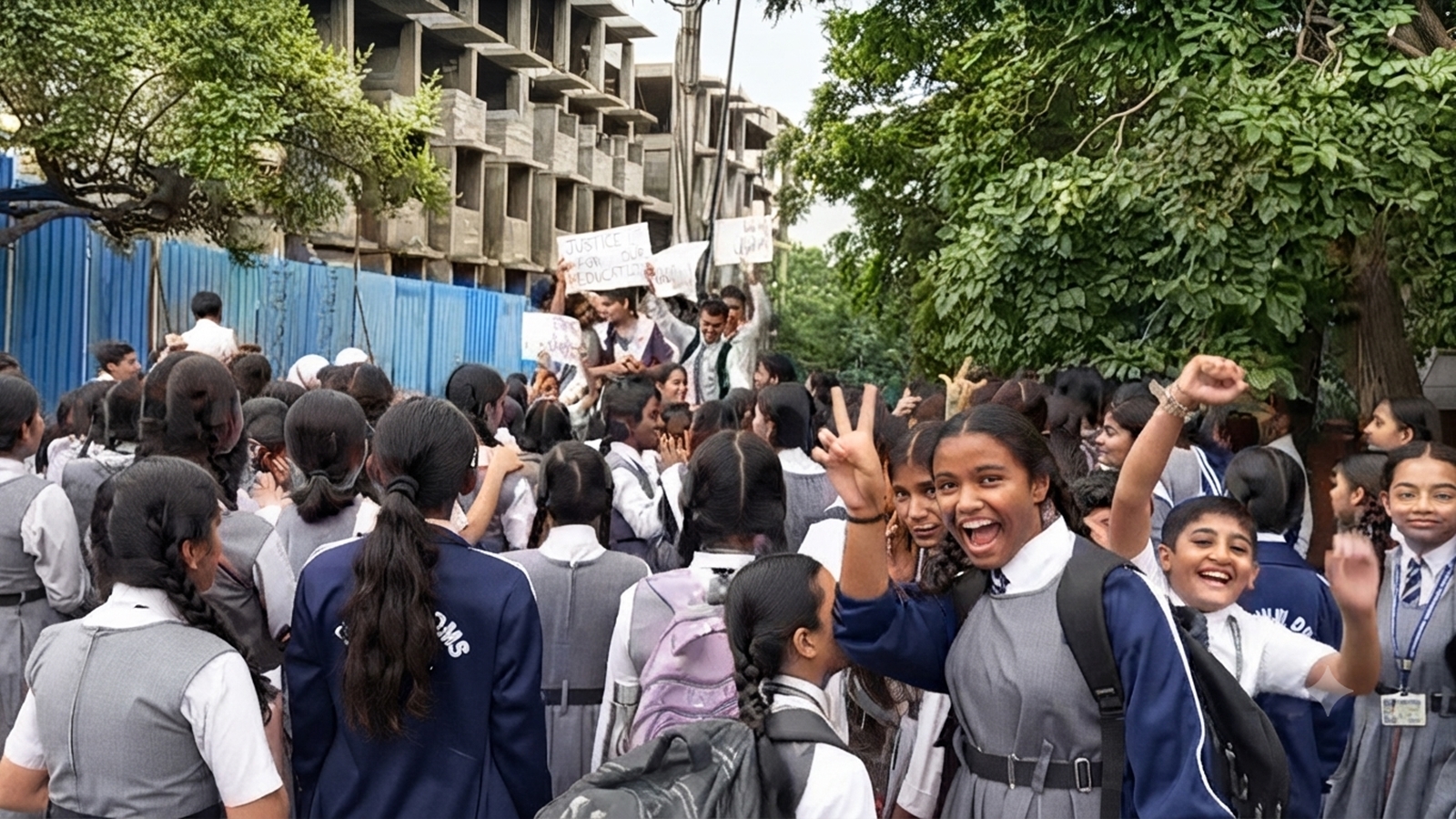
In a remarkable display of civic engagement, schoolchildren across Madhya Pradesh have bypassed traditional student unions and political cadres to confront the administration directly. This week, three distinct protests in Vidisha, Ujjain, and Bhopal highlighted a new wave of activism led by 'Gen Alpha'—students who are increasingly unwilling to accept administrative decisions that impact their education and safety.
Vidisha: Victory Against Fare Hikes
The first stir occurred at the Sironj bus stand in Vidisha district. Private bus operators, which serve students of Kanya Higher Secondary School, abruptly increased fares from ₹10-15 to ₹25. On August 12, students organized a spontaneous protest, appealing to local MLA Umakant Sharma. The demonstration was not merely about money; it was about accessibility to education. Following the protest, the Sub-Divisional Magistrate (SDM) intervened, leading to a successful negotiation that saw the fares rolled back to their original rates.
Ujjain: A Win for Student Safety
In Ujjain, the tension revolved around a state order to merge 11 schools into the Sandipani Vidyalaya in Daudkhedi, located several kilometers outside the city. Over 300 girls from the Rani Lakshmibai Government Sarafa Higher Secondary School staged a sit-in at the Collectorate, citing safety concerns and the financial burden on their parents, many of whom are daily-wage laborers. BozokMedia analysis shows that the grassroots pressure was significant enough to reach the highest levels of state power. Following instructions from Chief Minister Mohan Yadav, Collector Raushan Kumar Singh announced that the schools would remain at their current urban campuses until a suitable alternative is found.
The direct engagement of minors with administrative authorities signals a profound shift in how political agency is exercised in modern India.
Bhopal: The Battle for DMS
In the state capital, Bhopal, the focus has shifted to the legacy of the Demonstration Multi-Purpose (DMS) school. Approximately 400 students protested a recent NCERT order to merge the institution into the Kendriya Vidyalaya Sangathan (KVS). DMS is a historic institution, established in 1965 to trial innovative teaching methods. Students have raised concerns regarding the potential loss of specialized vocational courses and the stability of the current teaching staff under the new merger modalities.
Historical Background
The DMS schools, including campuses in Ajmer and Mysore, have historically served as laboratories for the National Council of Educational Research and Training (NCERT). Their unique pedagogical structure has influenced the broader Indian education system for decades, making the current merger proposal a point of significant academic contention.
Frequently Asked Questions
Question 1: Why were students in Ujjain protesting?
Answer: They were protesting the relocation of urban schools to a remote campus in Daudkhedi, which posed safety and travel challenges.
Question 2: What is the core issue in Bhopal?
Answer: Students are opposing the merger of the historic DMS school into the Kendriya Vidyalaya Sangathan (KVS) network.