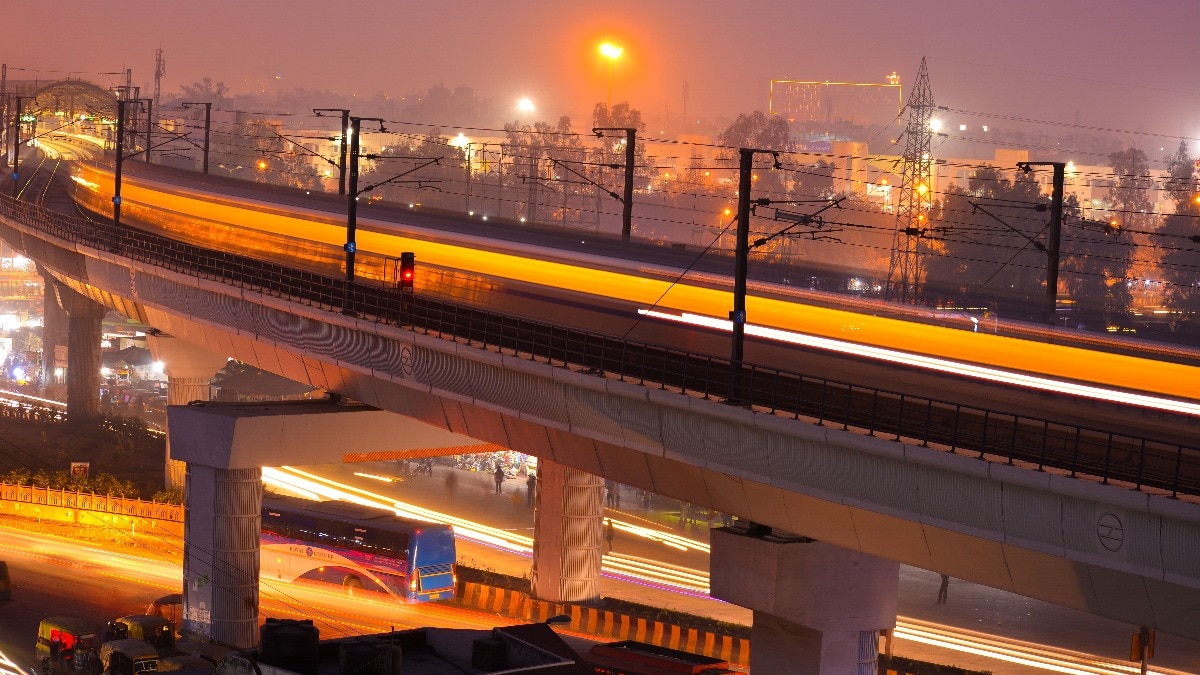
The Delhi Master Plan 2047 envisions a futuristic capital featuring 100-story landmarks, 40 lakh new housing units, and an expanded 695 km metro network.
- Introduction of 100+ story 'landmark' buildings to reshape the skyline.
- Construction of 40 lakh new housing units to meet growing demand.
- Expansion of the Metro network to a total of 695 kilometers.
- Introduction of futuristic transport: Air Taxis, Air Pods, and Inland Waterways.
- Implementation of a 'Right to Walk' network for pedestrians and cyclists.
The skyline of India's capital is set for a radical transformation. Under the newly released 'Master Plan for Delhi 2047' (MPD 2047), the city is transitioning from a sprawling urban center to a highly organized, vertical metropolis. The plan aims to curb haphazard urban sprawl by encouraging compact development along transit corridors.
A cornerstone of this vision is the permission for high-rise constructions exceeding 100 stories in specific zones, particularly near mass transit corridors and commercial hubs. These landmark buildings are designed to optimize land use while creating a distinct global identity for Delhi. However, strict height restrictions will continue in sensitive areas such as the Lutyens Bungalow Zone, Civil Lines, and near ASI-protected monuments.
Why This Matters
BozokMedia analysis shows that this master plan is a strategic response to the dual challenges of rapid urbanization and housing shortages. By integrating high-density living with high-capacity transit, the government seeks to create a sustainable urban ecosystem.
The MPD 2047 represents a paradigm shift from horizontal expansion to vertical, transit-oriented urbanism.
Transportation is poised for a revolution. The plan proposes the integration of Air Taxis and Air Pods to alleviate ground congestion, alongside the development of inland waterways in the Yamuna and Sahibi rivers. To ensure seamless movement, multi-modal transit hubs will be developed at major junctions like Anand Vihar, Sarai Kale Khan, and Kashmiri Gate.
Furthermore, the plan introduces a 'Right to Walk' initiative. This involves creating dedicated pedestrian networks equipped with multi-utility zones. These zones will provide essential amenities such as drinking water, public toilets, street vendor spaces, and cycle-sharing stations, making the city more accessible and livable for all citizens.
| Feature | MPD 2047 Target/Detail |
|---|---|
| New Housing Units | 40 Lakh Units |
| Metro Network Expansion | 695 KM Total |
| Building Heights | 100+ Floors (in designated zones) |
| New Transport Tech | Air Taxis, Air Pods, Waterways |
Frequently Asked Questions
1. Will there be restrictions on building heights in all parts of Delhi?
No, while high-rises are encouraged near metro corridors, height limits remain in Lutyens Zone, Civil Lines, and heritage areas.
2. How will the master plan address the housing crisis?
By facilitating the construction of 40 lakh new housing units over the next two decades.