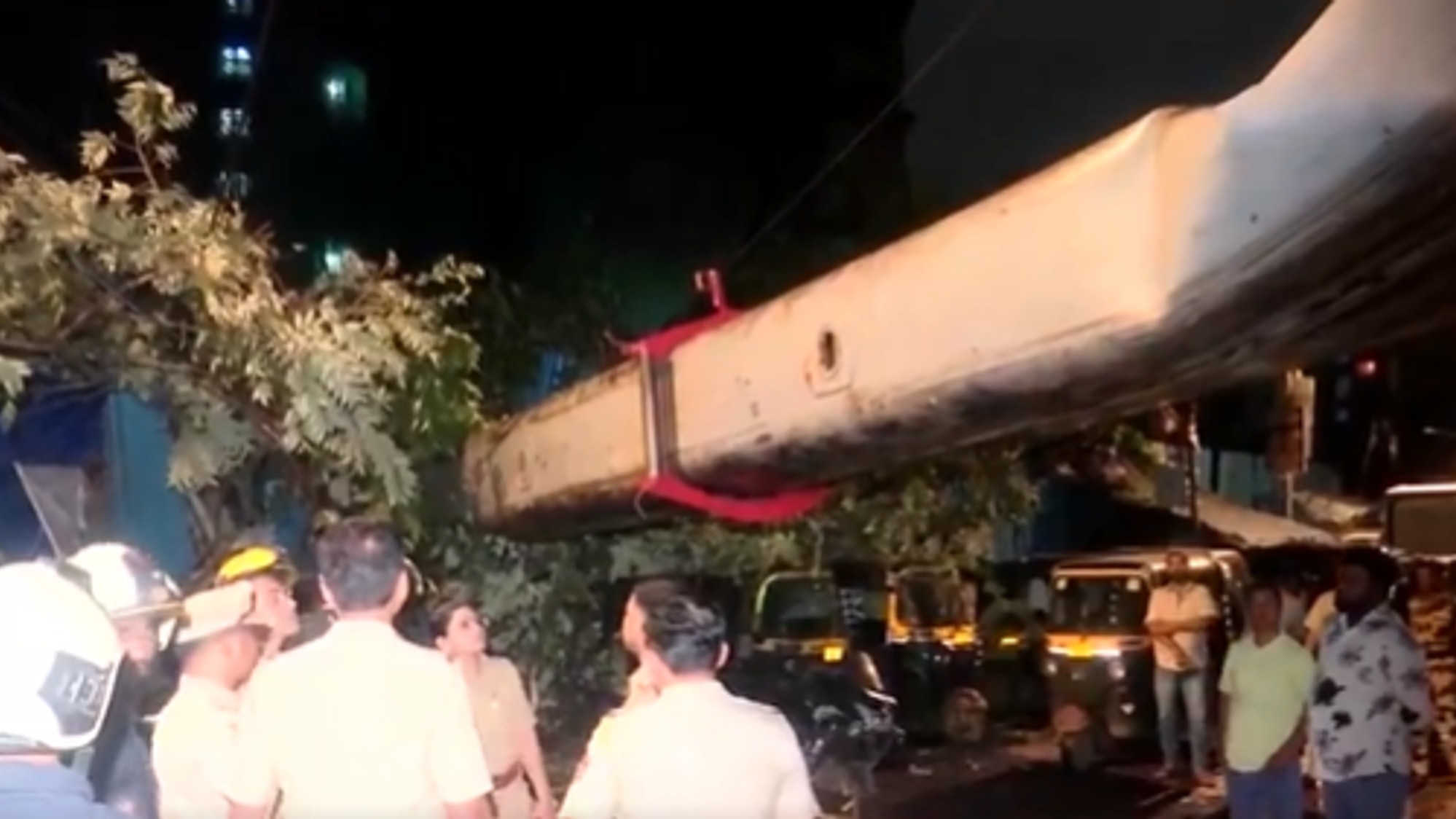
A major accident occurred in Mumbai's Kurla East when a hydraulic crane toppled onto residential structures during demolition preparations. The incident left 10 people injured, including a three-month-old infant, and disrupted railway operations.
- A hydraulic crane collapsed onto houses in Kurla East, Mumbai.
- Ten people, including a three-month-old baby and a 10-year-old boy, sustained injuries.
- The accident caused significant damage to residential buildings and parked vehicles.
- Railway services on the Kurla-Trombay route were disrupted due to damaged overhead wires.
A terrifying accident unfolded in the Kurla East area of Mumbai in the early hours of Friday, as a heavy hydraulic crane toppled onto adjacent residential structures. The incident occurred around 3:00 AM near the site of an upcoming 17-storey building in Indira Nagar, while preparations for demolition work were underway.
The impact of the collapse was devastating, injuring ten individuals. Among the injured are a three-month-old infant and a 10-year-old boy. According to medical officials, eight of the victims were rushed to the civic-run Sion Hospital, while two others were treated at Bhabha Hospital in Kurla. Fortunately, hospital authorities have reported that all victims are currently in stable condition.
Cause of the Incident and Infrastructure Damage
The Mumbai Metropolitan Region Development Authority (MMRDA), which was overseeing the demolition preparations at Bhandari Metallurgy, issued a statement regarding the mishap. They clarified that the crane tilted while being positioned at the site. The primary cause identified was soft ground at the location, which compromised the crane's stability, leading to the catastrophic tilt.
The damage extended beyond the immediate residential buildings. The falling crane struck high-tension railway overhead wires, causing a significant disruption to goods train movements on the Central Railway's single-line Kurla-Trombay route. Furthermore, structures in Qureshi Nagar, a road in Samrat Ashok Nagar, and a compound wall of a MHADA building were hit. Multiple cars parked within the vicinity were also crushed under the heavy machinery.
Structural stability assessments of the ground are non-negotiable when deploying heavy hydraulic machinery in dense urban corridors.
Why This Matters
BozokMedia analysis shows that as Mumbai undergoes rapid vertical expansion, the risks associated with demolition in high-density zones are escalating. This incident highlights the critical need for more rigorous soil testing and safety buffer zones during urban redevelopment projects to prevent loss of life and property.
Historical Background
Mumbai's landscape is changing rapidly with the replacement of older structures with high-rise towers. This transition often involves operating heavy machinery in extremely narrow lanes and near existing residential hubs, a factor that has historically contributed to several construction-related mishaps in the metropolitan region.
Frequently Asked Questions
Question 1: How is the health of the injured victims?
Answer: All ten injured persons, including the infant, are reported to be in stable condition.
Question 2: Why did the crane fall?
Answer: The MMRDA stated that the crane became unstable due to soft ground during positioning.