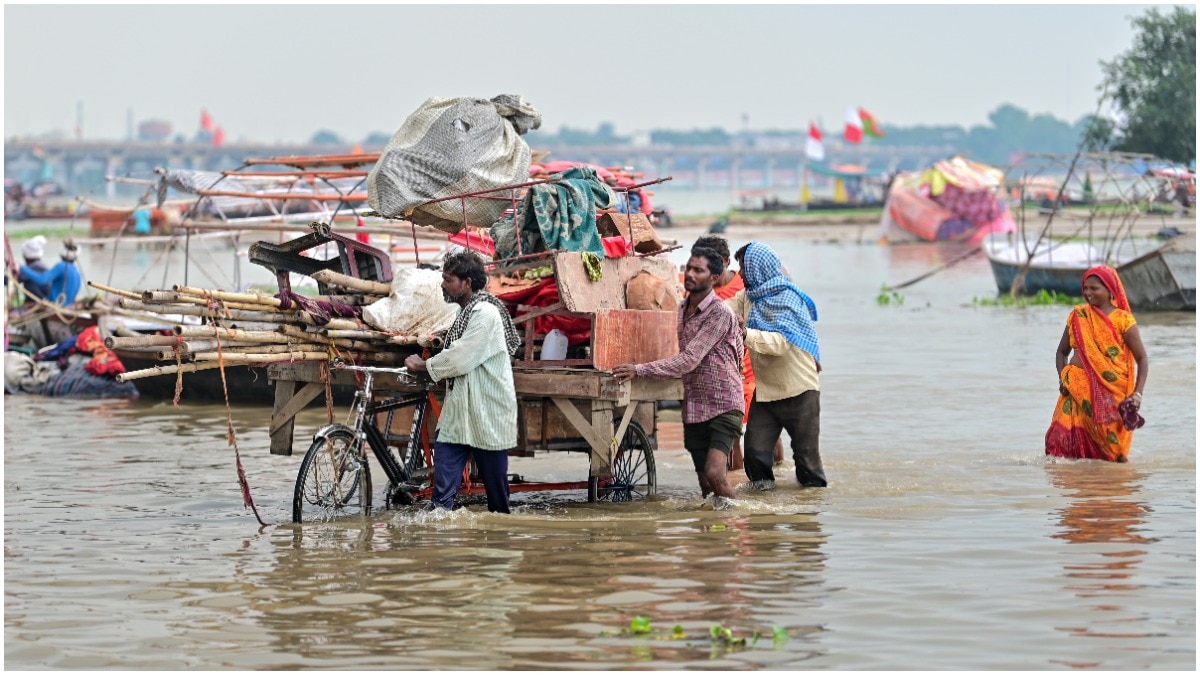
The India Meteorological Department (IMD) has warned that the monsoon will not only weaken in September but also follow an erratic pattern. The combination of El Niño and a neutral IOD poses a major threat to Kharif crops.
- September is expected to see weak and highly irregular monsoon patterns.
- The strengthening El Niño and a neutral Indian Ocean Dipole (IOD) are primary drivers.
- Significant threat to Kharif crops like soybean, maize, and pigeon pea.
- Central and Western India are likely to face rainfall deficits.
The India Meteorological Department (IMD) has issued a critical advisory stating that the South-West monsoon is showing signs of becoming increasingly erratic and weak as it moves into the month of September. This shift in weather patterns is raising alarms across the agricultural sector, as the timing and distribution of rainfall become increasingly unpredictable, complicating the harvest cycle for millions of farmers.
Drivers of Monsoon Instability
Meteorological models suggest that the current instability is driven by complex oceanic phenomena. The primary culprit is the strengthening El Niño, which is on track to become one of the most powerful of the century, potentially raising sea surface temperatures in the Pacific by up to 3°C. Furthermore, the Indian Ocean Dipole (IOD) remains in a 'neutral' phase; had it transitioned to a positive phase, it might have provided much-needed relief to the Indian subcontinent.
The monsoon is no longer just about a 'deficit'; it is about a chaotic distribution that creates simultaneous flood and drought conditions.
Why This Matters
BozokMedia analysis shows that this erratic monsoon pattern has profound implications for India's macroeconomics. The unpredictability directly impacts the production of essential Kharif crops such as soybean, maize, and pulses. A significant deficit in rainfall during this crucial month could lead to supply chain disruptions and a spike in food inflation, affecting both rural livelihoods and urban consumer prices.
Regional Rainfall Deficit Breakdown
The distribution of rainfall is highly uneven across the country. While the Northeast remains relatively stable, the heartland of India's agriculture is facing a moisture deficit.
| Region | Estimated Rainfall Deficit | Status |
|---|---|---|
| Northeast India | 26% | Relatively Better |
| Southern Peninsula | 23% | Concerning |
| North-West India | 11% | Drought Risk |
| Central India | 3% | Highly Irregular |
Currently, the monsoon trough is trapped in the Himalayan foothills, preventing moisture-laden winds from penetrating deeply into Central and Southern India. Private forecasting agency Skymet has already downgraded its seasonal rainfall forecast to 85% of the Long Period Average (LPA), down from an earlier estimate of 94%.
Historical Context
Historically, September has been a decisive month for the monsoon, determining the final yield of the Kharif season. In recent years, the increasing frequency of 'intraseasonal breaks'—periods of dry weather within the monsoon season—has become a recurring challenge due to global warming and shifting oceanic patterns.
Frequently Asked Questions
1. Will there be any improvement in rainfall in September?
Current indicators suggest that improvements will be limited, and the pattern will remain highly erratic.
2. Which states are most at risk?
States like Madhya Pradesh, Maharashtra, Karnataka, Rajasthan, and Gujarat are particularly vulnerable due to their heavy reliance on monsoon rains for Kharif crops.