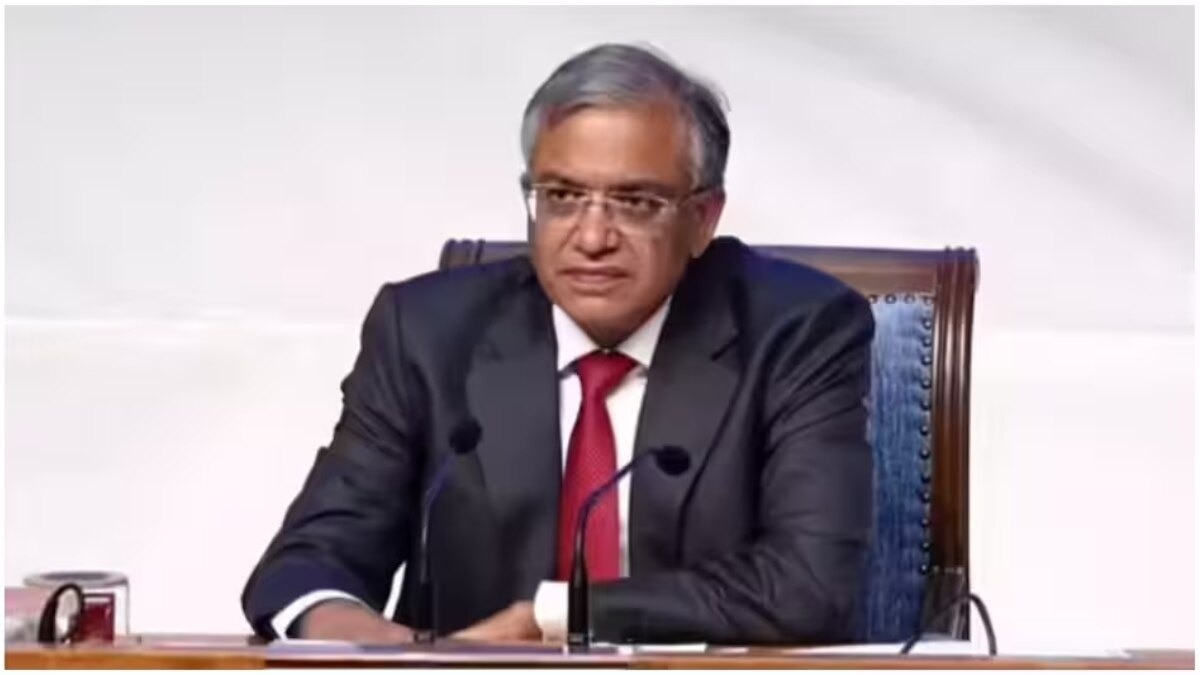
Chief Election Commissioner Gyanesh Kumar declared that India's 97‑crore voter base makes it the world's biggest family, emphasizing the massive scale of the election machinery and the role of the ECINET platform that connects 1.8 crore officials during Lok Sabha polls.
- India's 970 million voters form the world's largest democratic family
- 1.8 crore election officials linked through ECINET during Lok Sabha elections
- ECINET poised to become India's biggest app by year‑end
Chief Election Commissioner Gyanesh Kumar addressed the regional ELC 2.0 and ECINET conference in Lucknow, stating that roughly 970 million voters make India "the biggest family in the world." The remark underscored the unparalleled scale of the country's democracy.
Kumar highlighted that about 1.8 crore people work with the Election Commission during Lok Sabha polls, all connected via the ECINET platform. This network links state chief electoral officers, district officers, sub‑divisional magistrates, booth‑level officials, presiding officers, and counting officers.
Launched just four to five months ago, ECINET already boasts 2.5 crore downloads and is expected to become India’s largest app by the end of the year. The application stores election data dating back to 1951, including booth‑wise turnout, candidate vote totals, and affidavits.
Kumar compared India’s government workforce of 6.5 million to Walmart’s 2 million, noting that during Lok Sabha elections the Election Commission becomes "the largest organisation on Earth," employing 1.8 crore personnel.
Historical Background
Since the first general election in 1951, India has continuously modernised its electoral infrastructure. Electronic Voting Machines (EVMs) were introduced in 1999 and made mandatory nationwide by 2008, accelerating vote counting and enhancing transparency. This evolution has cemented India’s reputation as the world’s largest democracy.
Why This Matters
BozokMedia analysis shows that the sheer scale of India's electorate and the sophisticated ECINET network set a global benchmark for democratic administration, highlighting both logistical prowess and the challenges of ensuring transparency across billions of interactions.
"India's election machinery is not just the largest in size but also a model of digital integration for democracies worldwide," says Dr. Ananya Gupta, political analyst.
Frequently Asked Questions
Question 1: What types of data does ECINET store?
Answer: It archives comprehensive election information from 1951 onward, including booth‑level turnout, candidate vote counts, and their affidavits.
Question 2: What is the role of the 1.8 crore personnel during Lok Sabha elections?
Answer: They manage election operations, monitoring, and result tabulation across all levels, all coordinated through the ECINET platform.