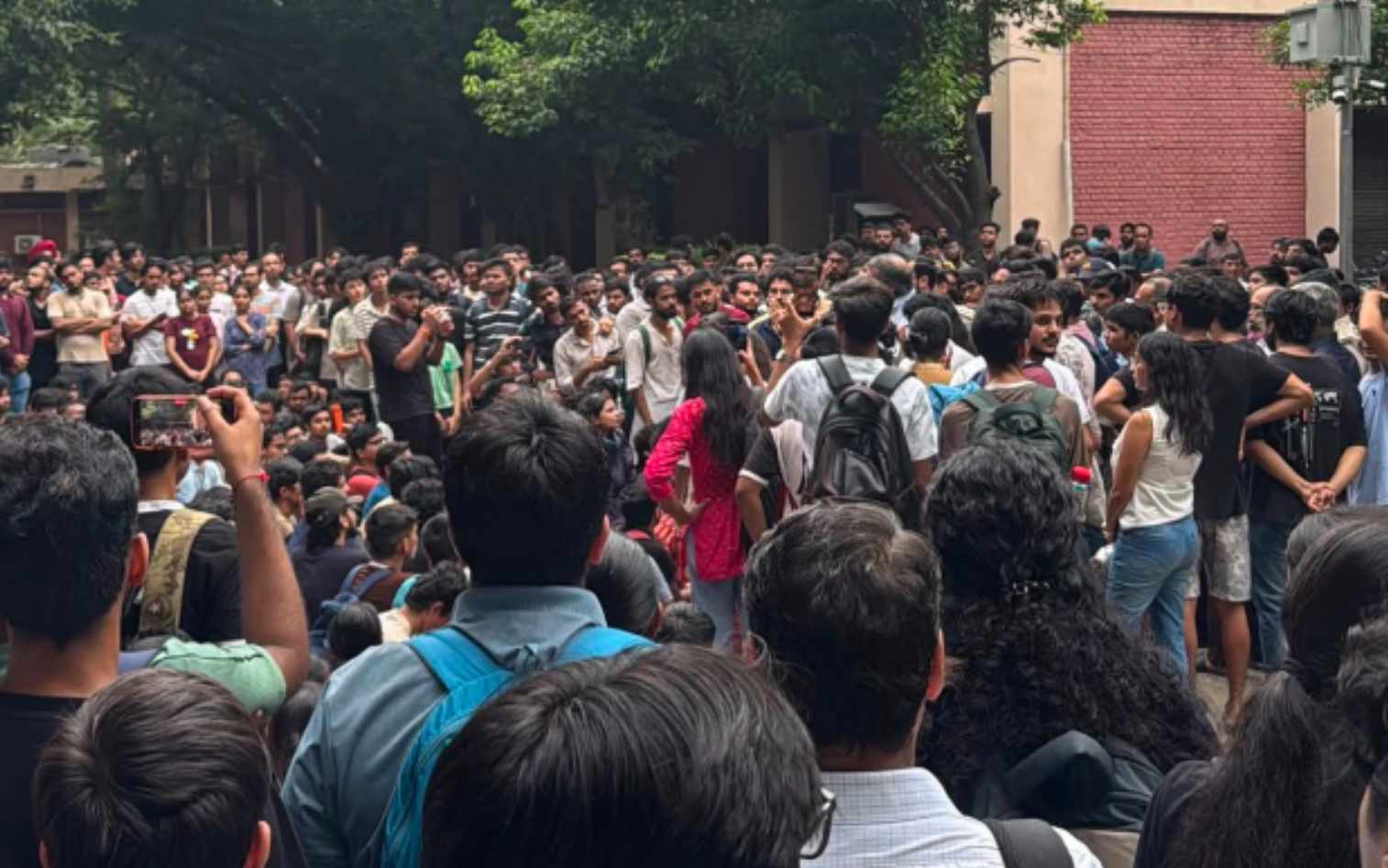
A rare and intense mobilization of students took place at IIT Delhi after the suicide of an MSc Physics student. Protesters are alleging administrative apathy and demanding the resignation of top officials.
- Rishikesh, a 31-year-old MSc Physics student, allegedly committed suicide by jumping from the 6th floor of a campus building.
- Students claim this is the 8th suicide at the institute since 2023.
- Protesters demand the resignation of Associate Dean Prof. Sreedevi Upadhyaula and ₹1 crore compensation.
- Director Rangan Banerjee has announced an inquiry committee and ₹6 lakh in compensation.
In a striking departure from the usual calm of the campus, nearly 300 students at the Indian Institute of Technology (IIT) Delhi staged a massive protest on Monday. The mobilization followed the tragic death of Rishikesh, a 31-year-old MSc Physics student, who allegedly jumped from the sixth floor of a campus building two days prior.
The intensity of the protest was fueled by a grim statistic: students allege that Rishikesh's death marks the eighth suicide at the institute since 2023. The demonstrators gathered near the Lecture Hall Complex and later shifted to the first-floor lobby outside the Director's office, demanding immediate accountability and a systemic overhaul of student welfare services.
Why This Matters
BozokMedia analysis shows that the crisis at IIT Delhi is symptomatic of a broader 'pressure cooker' environment in India's premier institutes. The allegation that a student returning from mental health treatment was denied hostel accommodation reveals a critical lack of empathy and a failure in the 'duty of care' that institutions owe to their students. Academic prestige cannot justify administrative indifference.
The narrative shared by students paints a picture of extreme hardship. Rishikesh had reportedly taken a semester-long withdrawal following his father's death and had undergone mental health treatment. However, upon his return in July, he found his name removed from the hostel rolls. Despite providing medical fitness clearances, he was allegedly forced to undergo further checks at the IIT Delhi hospital, eventually compelling him to live in rented accommodation outside the campus with his mother.
"When premier institutions treat mental health clearances as bureaucratic hurdles rather than support mechanisms, they inadvertently increase the risk of tragedy."
As the protest gained momentum, the administration cancelled all classes for the day. By 5 p.m., the crowd converged on Director Rangan Banerjee's office. While Banerjee agreed to constitute an inquiry committee, he flatly refused the demand for the resignation of Professor Sreedevi Upadhyaula, Associate Dean of Student Welfare. This decision was met with boos and hoots, especially after Prof. Upadhyaula was reportedly escorted out through a back entrance to avoid the students.
Regarding financial aid, Director Banerjee announced a compensation of ₹6 lakh and the coverage of medical expenses for Rishikesh's single mother. This offer was widely criticized by the students as insufficient, given the family's reported financial struggles. Preliminary police reports confirm that Rishikesh entered the campus at 8 a.m. on Saturday before taking a lift to the sixth floor of the Lecture Hall Complex.
Frequently Asked Questions
1. What are the primary demands of the protesting students?
The students are demanding the resignation of the Associate Dean of Student Welfare, an independent inquiry into the deaths, and ₹1 crore compensation for the victim's family.
2. How did the IIT Delhi administration respond?
Director Rangan Banerjee announced the formation of an inquiry committee and a compensation of ₹6 lakh for the student's mother.