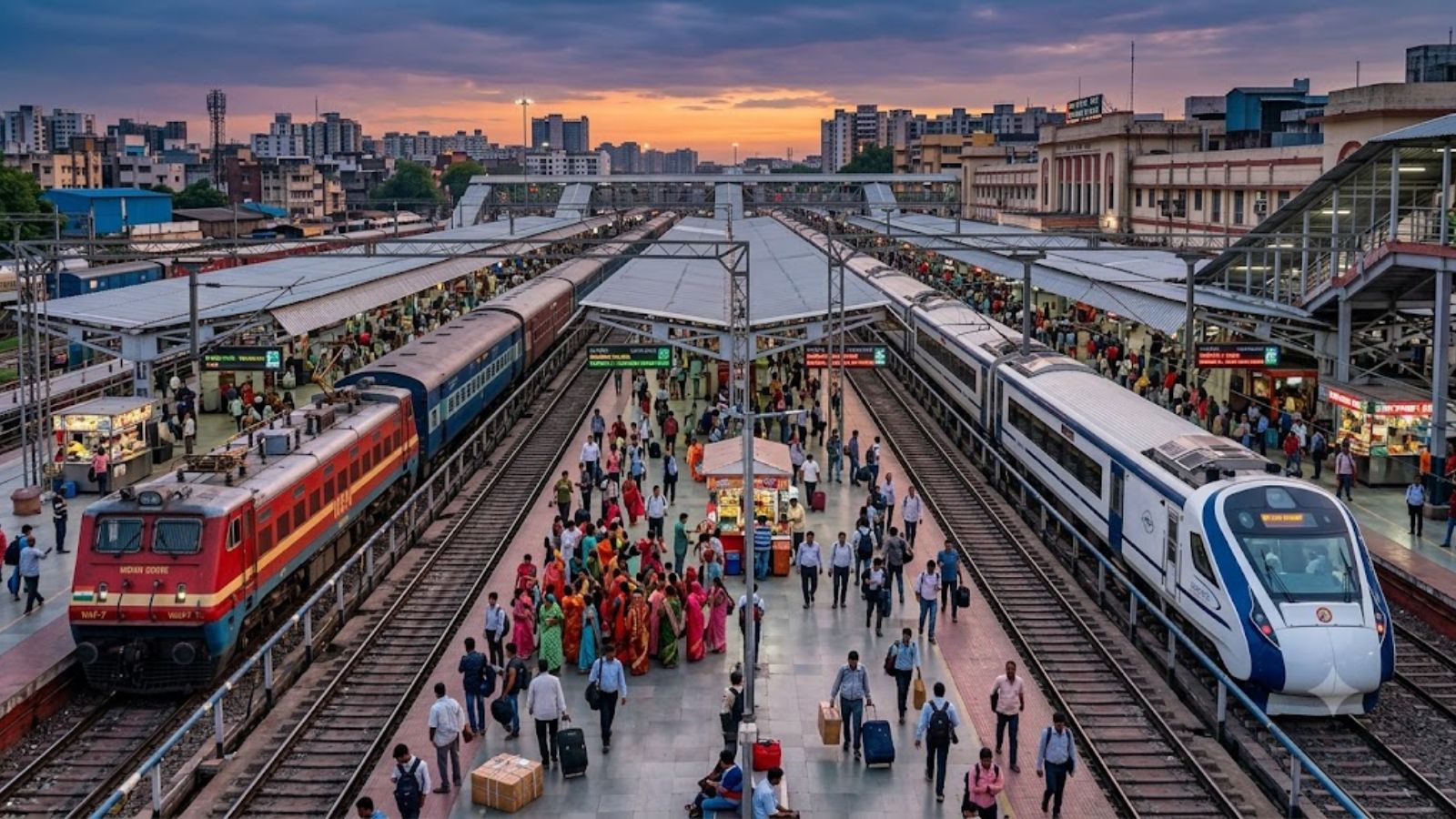
In a major move to enhance cleanliness, Indian Railways has doubled the penalty for littering at stations and on trains to Rs 1,000. Failure to pay may lead to court proceedings and higher fines.
- Littering fine increased from ₹500 to ₹1,000.
- Non-payment can lead to court fines up to ₹2,000.
- Prohibited acts include spitting, washing clothes, and defacing property.
Indian Railways has officially implemented a significant hike in penalties for activities that compromise cleanliness at railway premises. Aiming to foster passenger awareness and maintain hygiene standards, the Ministry of Railways has increased the fine for littering on trains and at stations to Rs 1,000.
According to a gazette notification issued on August 24, the amendment to the 'Indian Railways (Penalties for activities affecting cleanliness at railway premises) Rules, 2012' marks a stricter approach to sanitation. Previously, the maximum fine was capped at Rs 500. Under the new 2026 amendment rules, the penalty is now set at Rs 1,000. Crucially, if a violator refuses to pay, they can be produced before a competent court, which holds the authority to impose a fine of up to Rs 2,000.
Prohibited Activities Under New Rules
The revised regulations clearly outline several activities that are now subject to heavy penalties to ensure the sanctity of railway property:
- Throwing or leaving litter outside designated bins.
- Spitting, urinating, or defecating in public areas.
- Cooking, bathing, or washing utensils/clothes on premises.
- Defacing train coaches with posters, writing, or drawings.
- Feeding animals or birds without specific authorization.
Why This Matters
BozokMedia analysis shows that this regulatory shift is a direct response to the growing challenges of managing sanitation amidst increasing passenger footfall. By doubling the financial deterrent, the Railways seeks to shift passenger psychology from negligence to accountability. This move is expected to reduce maintenance costs and improve the overall travel experience for millions of commuters.
Stricter financial penalties are essential tools in enforcing civic discipline within massive public transit networks.
The enforcement of these rules is delegated to authorized officials, including Station Masters, Station Managers, and Ticket Collectors from the Commercial Department. This ensures that the rules are actively monitored across all railway jurisdictions.
Historical Background
Since the inception of the Railways Act, 1989, the government has continuously updated its penal codes to address evolving challenges. The 2012 cleanliness rules were a landmark in formalizing sanitation penalties, but as the network expanded, the need for higher deterrents became evident to combat widespread littering and vandalism.
Frequently Asked Questions
1. Who is authorized to collect the fine?
Station Masters, Station Managers, and Ticket Collectors are among the officials authorized to enforce and collect these penalties.
2. Does this apply to vendors as well?
Yes, authorized vendors and hawkers are legally required to maintain dustbins and ensure proper waste disposal.