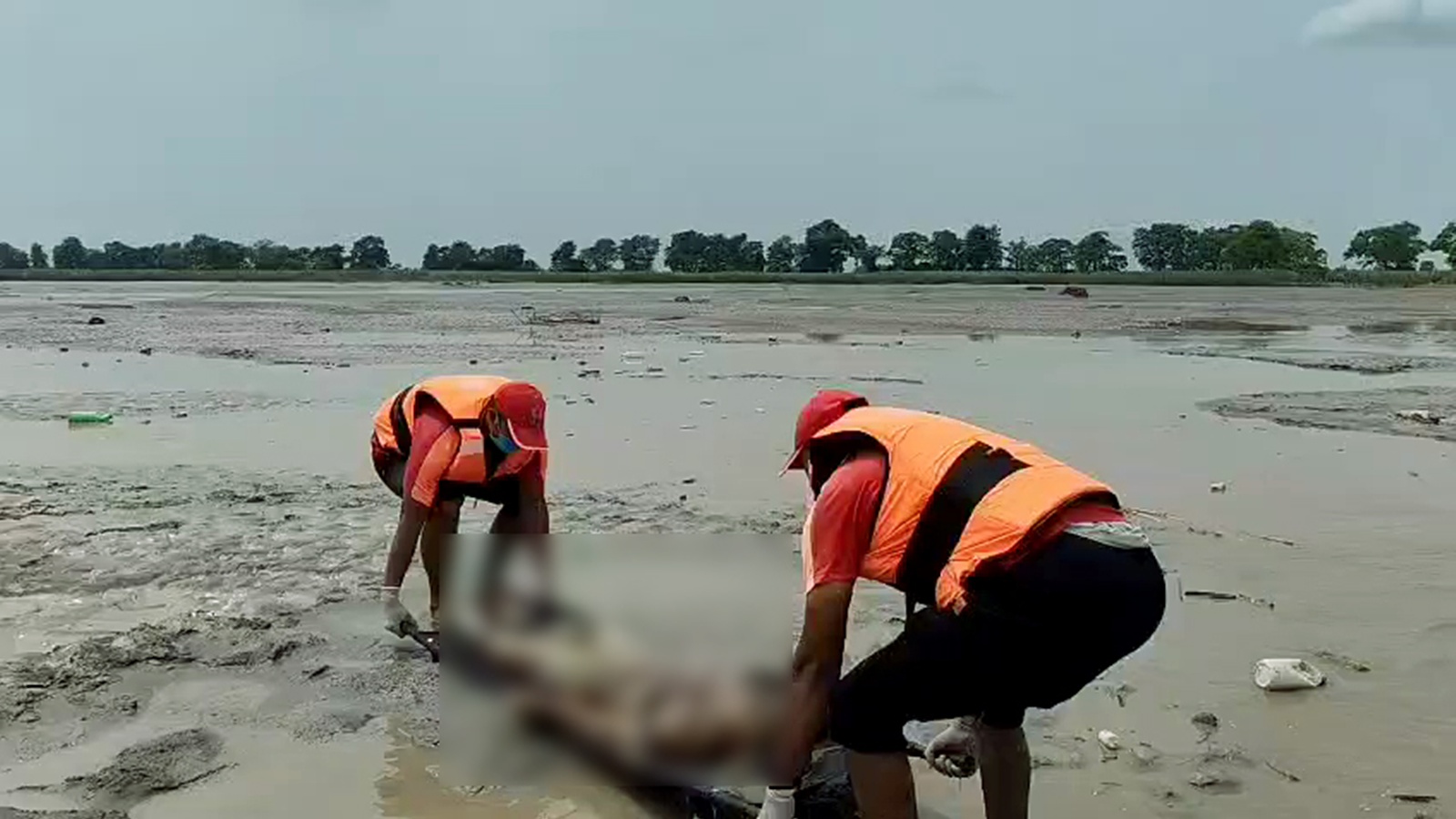
Following devastating flash floods in Nepal, three unidentified bodies have been recovered from the Gandak River in Uttar Pradesh's Kushinagar district. Authorities are coordinating with Nepal to establish their identities.
- Three bodies were recovered from the Gandak River in Kushinagar, UP.
- The bodies are suspected to have drifted from flood-hit regions in Nepal.
- SDRF monitoring teams spotted the bodies near the Madanpur-Sukrauli area.
- Authorities are working with Nepal officials to identify the deceased.
In a grim development following the catastrophic flash floods in Nepal, three bodies were recovered from the Gandak River in the Kushinagar district of Uttar Pradesh on Saturday. Officials believe the deceased drifted into Indian territory as a direct consequence of the massive surge in water levels in the neighboring country.
The recovery operation took place near barrage pier number 3 in the Madanpur-Sukrauli area of Khadda. According to Khadda SHO Sandeep Singh, the bodies were first spotted by the monitoring teams of the State Disaster Response Force (SDRF). Following the discovery, police and administrative teams moved swiftly to secure the site and begin the recovery process.
Why This Matters
BozokMedia analysis shows that transboundary river systems like the Gandak create a complex humanitarian challenge during extreme weather events. When flash floods occur upstream in the Himalayas, the downstream impact in India involves not just rising water levels, but the movement of debris and unidentified casualties across international borders.
As of now, the identities of the three individuals remain unknown. The Kushinagar administration has shared all available details with the authorities in the neighboring districts of Nepal to facilitate a swift identification process. This comes just a day after four decomposed bodies were found in the neighboring Maharajganj district, highlighting the scale of the tragedy.
The movement of debris and remains across borders necessitates a highly synchronized international response between India and Nepal during monsoon-driven disasters.
Beyond the human loss, the Gandak River is carrying significant amounts of debris. Officials reported seeing vehicles, household goods, gas cylinders, furniture, and large logs floating downstream. While villagers have gathered along the banks to retrieve washed-up items, the administration has issued a stern warning against entering the river due to unpredictable currents.
Historical Background
The current crisis was triggered on August 26, 2026, when a sudden surge in the Bhotekoshi River in the Rasuwa region of Nepal caused massive flash floods. This surge subsequently fed into the Trishuli and Gandak river systems, causing a ripple effect of destruction through the downstream plains of India.
Frequently Asked Questions
1. Where were the bodies found?
The bodies were found near the Madanpur-Sukrauli area in the Kushinagar district of Uttar Pradesh.
2. What is being done to identify the victims?
Local authorities are in active communication with the Nepal administration to match the recovered bodies with missing persons reports.