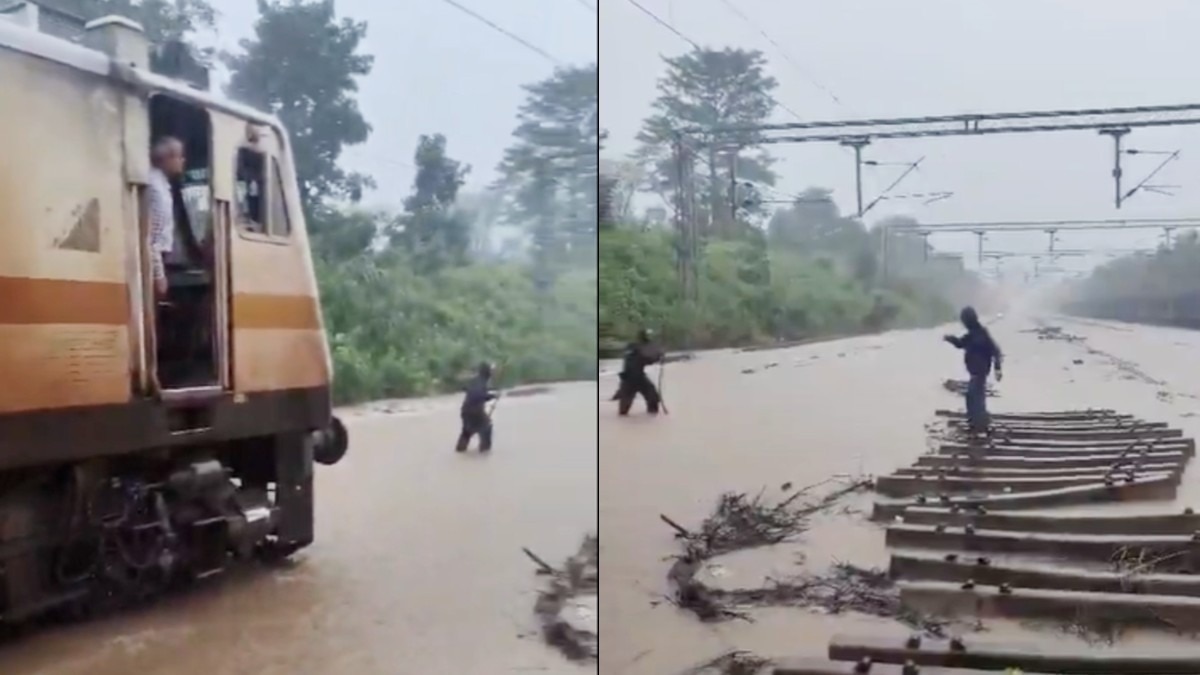
Severe flooding has submerged railway tracks under 3 feet of water, forcing railway personnel to manually guide trains using red flags to ensure safety during torrential rains.
- Railway tracks are submerged under approximately 3 feet of floodwater.
- Personnel are manually signaling trains with red flags due to high risk.
- Severe weather conditions pose a significant threat to rail operations.
In a harrowing display of the impact of extreme weather, heavy rainfall has caused massive flooding on railway tracks, with water levels reaching up to 3 feet. This flooding has created a precarious situation for both the railway infrastructure and the passengers traveling through these zones.
As the tracks became invisible under the rising water, railway workers were forced to step into the deluge. To prevent potential accidents, these brave individuals were seen walking ahead of the moving locomotives, wielding red flags to signal speed restrictions and provide visual guidance to the loco pilots. This manual intervention is a desperate measure to navigate the unseen dangers beneath the water's surface.
Why This Matters
BozokMedia analysis shows that such incidents are a direct consequence of inadequate drainage infrastructure along critical rail corridors. When water accumulates on tracks, it doesn't just slow down trains; it threatens the very foundation of the railway system by eroding the track bed.
Operating trains through deep floodwater is one of the most dangerous scenarios for a loco pilot, as the track stability cannot be visually verified.
The primary danger lies in the 'unseen' hazards. Flooding can hide broken rails, displaced sleepers, or debris that can lead to immediate derailment. Furthermore, the pressure of moving water against the side of a train can cause instability at high speeds.
Historical Background
Historically, monsoon-related disruptions have been a recurring nightmare for railway networks globally. As climate change leads to more intense and concentrated rainfall events, older railway drainage systems are struggling to cope, leading to frequent 'washouts' where the ballast and soil beneath the tracks are swept away by rushing water.
Frequently Asked Questions
Question 1: Why are workers using red flags instead of electronic signals?
Answer: Heavy rain and flooding can sometimes interfere with visibility or the reliability of trackside signaling, making manual physical signaling a necessary safety backup.
Question 2: What is the biggest risk during track flooding?
Answer: The biggest risk is derailment caused by the track being washed out or the train hitting an underwater obstacle.